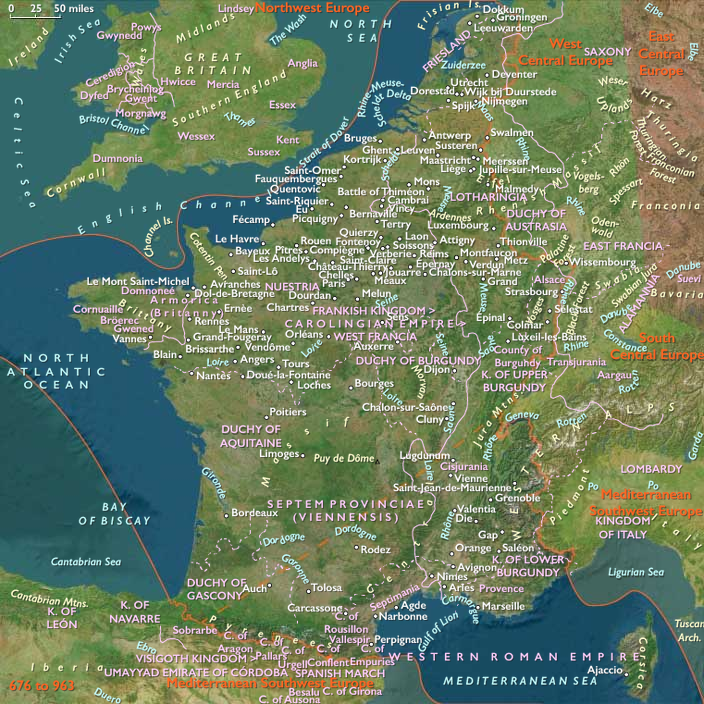
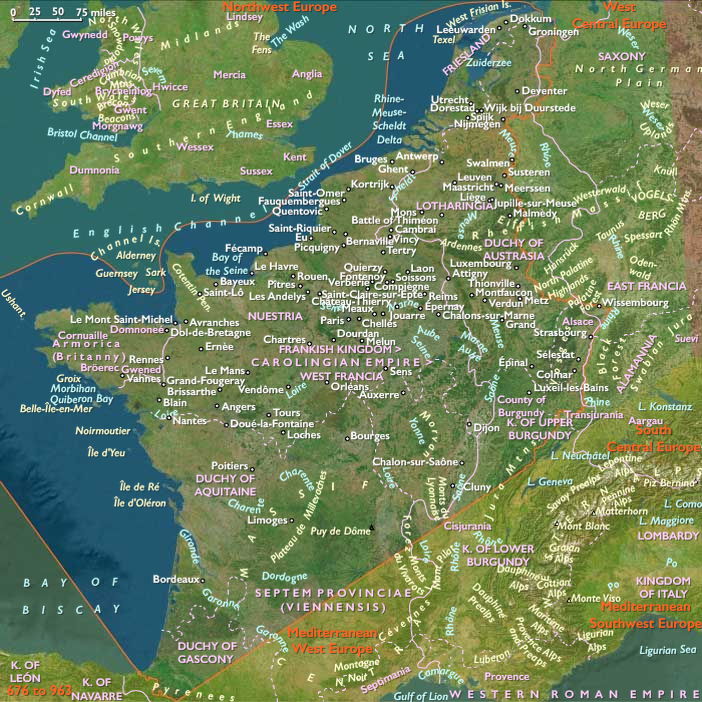
The Sack of Rouen (841): The First Viking Incursion into the Lower Seine
In 841, Danish Vikings launch their first recorded raid into the lower Seine Valley, marking the beginning of sustained Norse incursions into northern France. Their primary target is Rouen, a major trading and religious center in the region.
The Raid on Rouen
- A Danish fleet sails up the Seine, exploiting the river as an easy route into the Frankish interior.
- The Vikings sack Rouen, looting its monasteries, churches, and settlements.
- The attack signals the vulnerability of West Francia, which is already destabilized by the ongoing Carolingian civil war between Charles the Bald and Lothair I.
Consequences of the 841 Viking Raid
- The lower Seine becomes a frequent target for future Viking incursions, leading to further raids on Paris and other settlements in the following decades.
- Frankish rulers struggle to mount an effective defense, as they are preoccupied with internal conflicts and territorial disputes.
- The raid on Rouen foreshadows the eventual Norse occupation of Normandy, culminating in the granting of lands to Viking leader Rollo in 911, leading to the formation of the Duchy of Normandy.
The 841 sack of Rouen is a turning point in Viking expansion, marking the beginning of their long-term presence in what would become one of the most Viking-influenced regions of medieval France.