
Danger Cave, located in the Bonneville Basin …
Years: 7677BCE - 7534BCE
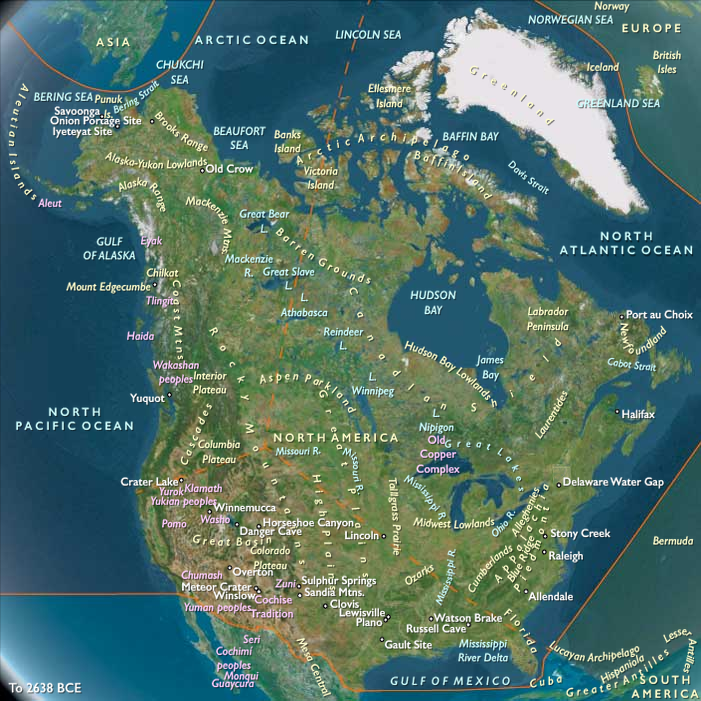
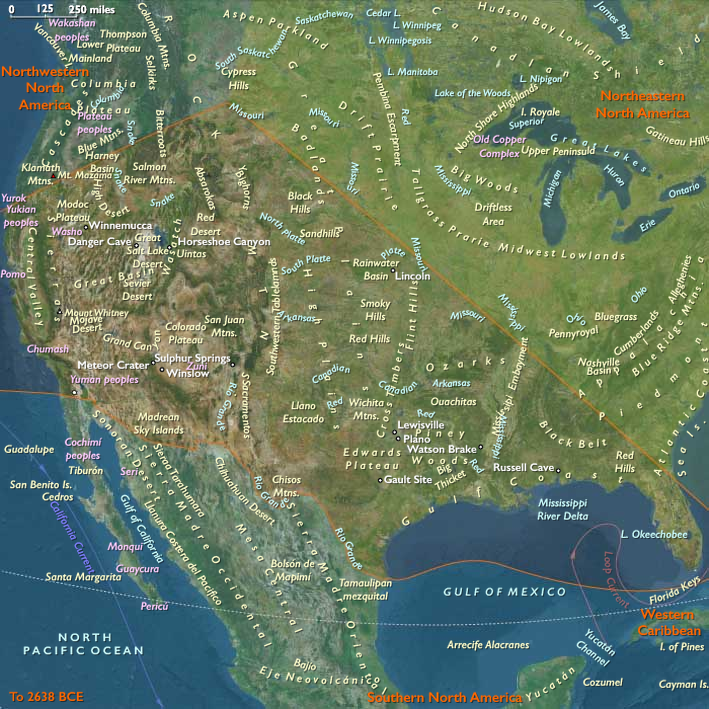
Danger Cave, located in the Bonneville Basin of western Utah around the Great Salt Lakes region, features artifacts of the Desert Culture from about 9500 BCE until around 500 CE.
Through carbon-14 dating, it has been determined that there is very little evidence of human life in the Danger Cave area in 11,000 BP, but there is much evidence of human life by 9000 BP.
The extremely dry conditions in the cave proved ideal for the preservation of artifacts such as pieces of course fabric, twine, basket fragments, and bone and wooden tools that Jennings’ team uncovered.
Identifiable fragments of sixty-eight plant species that still grow within ten miles of site where also found among the artifacts.
While the preservation of the cave is excellent, the stratigraphy of the cave is muddled.
Prehistoric occupations throughout the history of the caves have led to repeatedly modified ground surfaces.
Occupants would dig into the previous layers for storage pits and create suitable living spaces.
The data collected from the cave suggested that the Desert Culture had a sparse population, with small social units numbering no more than twenty-five to thirty people.
The focus on survival prevented the inhabitants from building permanent structures, developing complicated rituals, or amassing extensive personal property.
The Desert Culture will persist for thousands of years despite the hardships they face, and eventually became the basis for other early Utah cultures such as the Fremont.
Locations
Groups
Topics
Commodoties
Subjects
- Commerce
- Environment
- Labor and Service
- Conflict
- Faith
- Government
- Technology
- Anthropology
- Archaeology
- Human Migration
Regions
Subregions
Related Events
Showing 3 events out of 3 total
Years: 7677BCE - 7534BCE
Locations
Groups
Topics
Commodoties
Subjects
- Commerce
- Environment
- Labor and Service
- Conflict
- Faith
- Government
- Technology
- Anthropology
- Archaeology
- Human Migration
Regions
Subregions