
Filters:
Dagobert I Founds the Abbey of Saint-Denis …
Years: 635 - 635
Dagobert I Founds the Abbey of Saint-Denis (635 CE)
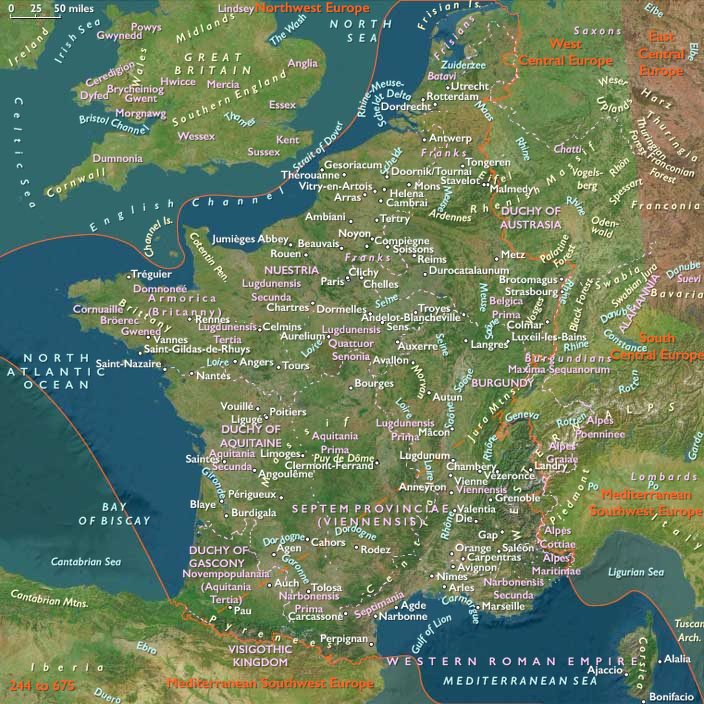
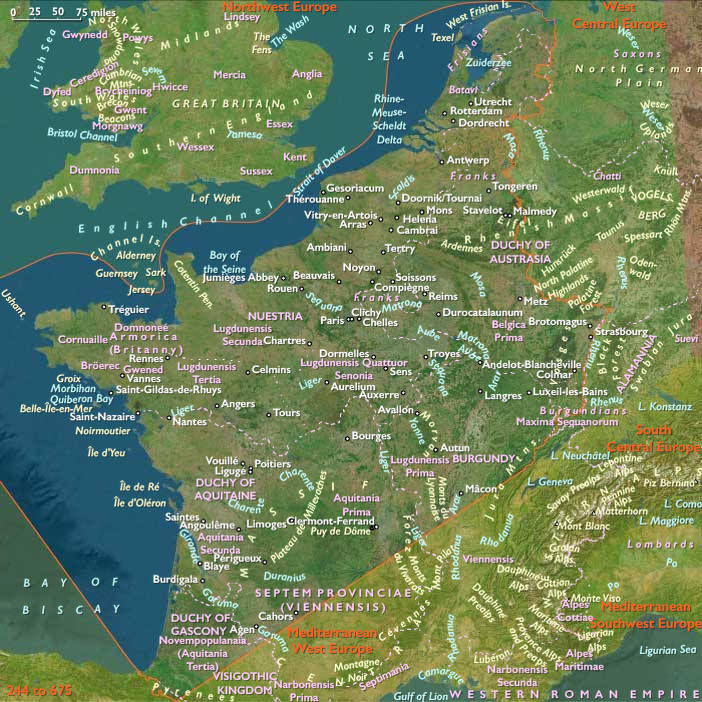
In 635 CE, King Dagobert I establishes the Abbey of Saint-Denis in the suburbs of Paris, dedicating it to Saint Denis, the third-century martyr and first Bishop of Paris, venerated as the Apostle of France. This act strengthens the connection between the Merovingian monarchy and the Church, reinforcing Paris as a religious and political center.
1. The Importance of Saint Denis
- Saint Denis, a third-century missionary and bishop, was believed to have been beheaded by Roman authorities on Montmartre.
- According to legend, he carried his severed head several miles before collapsing at the site where the abbey was built.
- He became one of the most revered saints in Frankish Christianity, symbolizing royal protection and divine favor.
2. The Abbey as a Royal Burial Site
- Dagobert chooses Saint-Denis as the future royal necropolis, ensuring that it becomes the burial site for Frankish kings.
- He himself is later buried at Saint-Denis in 639 CE, beginning a tradition that will continue through the Carolingians and Capetians, making the abbey the final resting place of French royalty for centuries.
3. The Political and Religious Significance
- The foundation of Saint-Denis Abbey reinforces the Merovingian monarchy’s alliance with the Church, securing ecclesiastical support for royal authority.
- It helps elevate Paris as a central religious city, further strengthening Frankish identity around Catholicism.
- The abbey later becomes one of the most important monastic institutions in medieval France, serving as a center for learning, pilgrimage, and royal ceremonies.
Conclusion: A Lasting Symbol of French Kingship
Dagobert I’s foundation of the Abbey of Saint-Denis in 635 CE marks a pivotal moment in Frankish religious and political history. By dedicating it to France’s patron saint, he establishes a spiritual and dynastic center that will endure as the primary royal burial site and a symbol of the sacred nature of kingship in medieval France.
Locations
People
Groups
- Franks
- Christianity, Chalcedonian
- Aquitaine, (Frankish) Duchy of
- Roman Empire, Eastern: Heraclian dynasty
- Austrasia, Frankish Kingdom of
Topics
Subjects
Regions
Subregions
Years: 635 - 635
Locations
People
Groups
- Franks
- Christianity, Chalcedonian
- Aquitaine, (Frankish) Duchy of
- Roman Empire, Eastern: Heraclian dynasty
- Austrasia, Frankish Kingdom of
Topics
Subjects
Regions
Subregions