
Cypriot subordination to Assyria, probably nominal, lasts …
Years: 669BCE - 658BCE
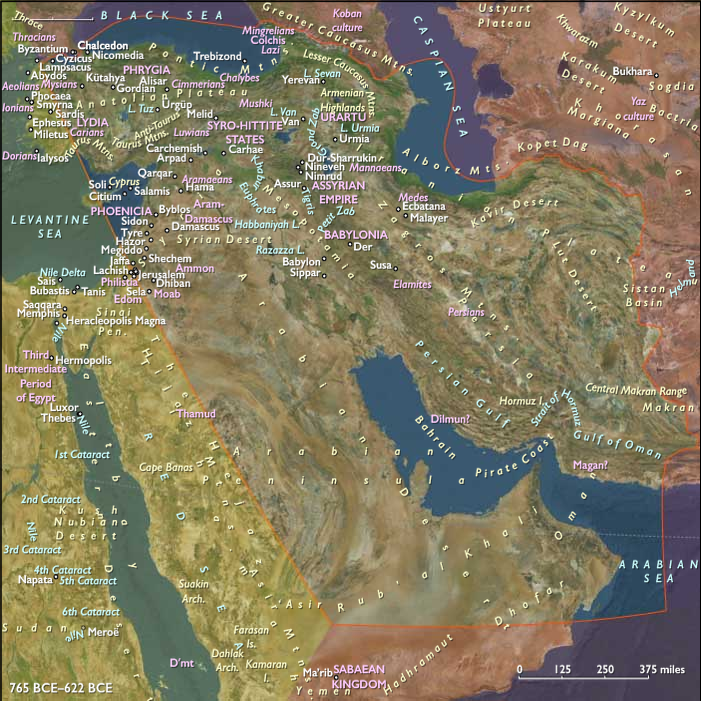
Cypriot subordination to Assyria, probably nominal, lasts until about 663, after which Cyprus enjoys a period of complete independence and massive development.
Epic poetry grows increasingly popular, and much is written on the island; the semi-legendary Stasinus of Cyprus, credited with the authorship of the lost epic poem Cypria, is highly regarded among the poets of this literary style in the seventh century.
The eleven-book Cypria, presupposing an acquaintance with the events of the Homeric poem, confined itself to what preceded the Iliad, and thus formed a kind of introduction.
It contained an account of the Judgment of Paris, the rape of Helen, the abandonment of Philoctetes on the island of Lemnos, the landing of the Achaeans on the coast of Asia Minor, and the first engagement before Troy.
It is possible that the "Trojan Battle Order" (the list of Trojans and their allies, Iliad 2.816-876, which formed an appendix to the "Catalogue of Ships") is abridged from that in the Cypria, which is known to have contained a list of the Trojan allies.
Bronze work, ironwork, delicate jewelry, and ivory work are characteristic of this period, and among its notable works are the ivory throne and bedstead excavated from a royal tomb at Salamis dating from about 700 BCE.
Locations
Groups
Topics
Subjects
Regions
Subregions
Years: 669BCE - 658BCE
Locations
Groups
Topics
Subjects
Regions
Subregions