
The first Muslim threat to European entrenchment …
Years: 1108 - 1251
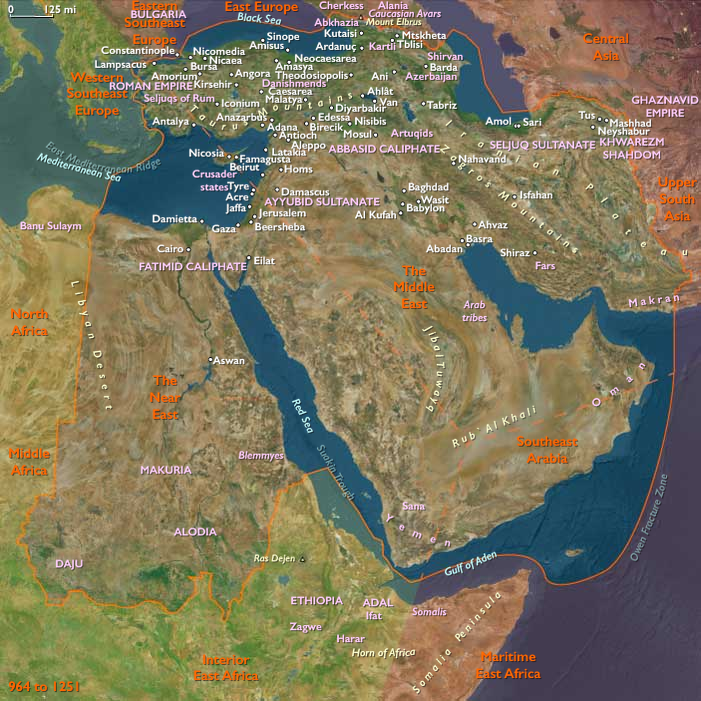
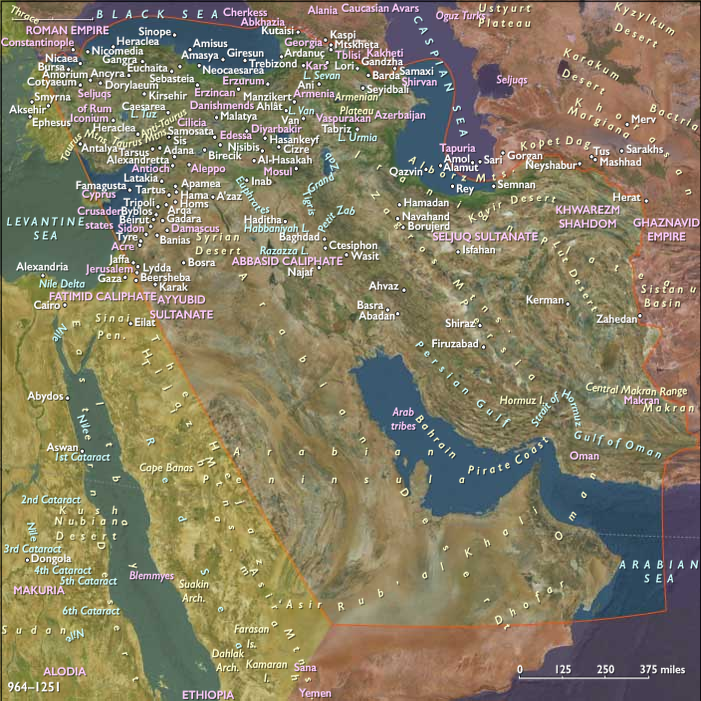
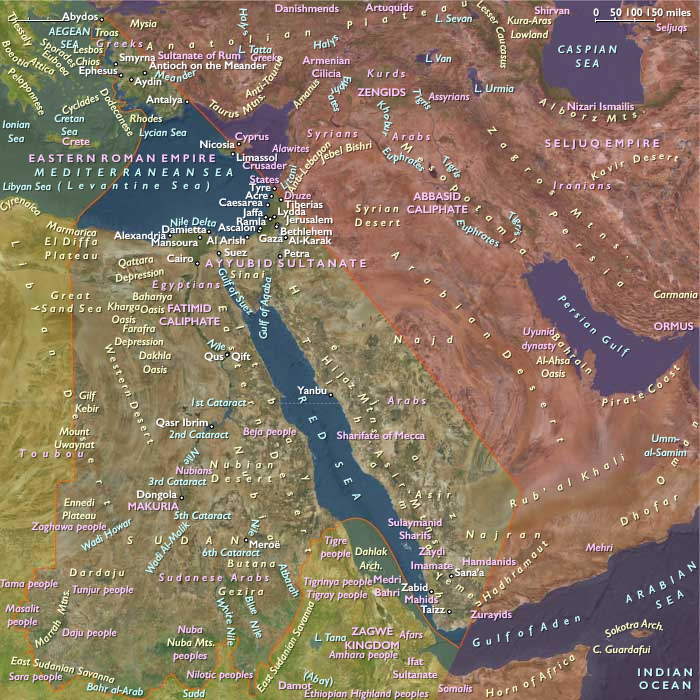
The first Muslim threat to European entrenchment comes not from within Greater Syria but from Zangi, the emir of Mosul (in modern Iraq).
Zangi takes Edessa in 1144, and his son, Nur ad Din (light of the faith), secures Damascus, extending the realm from Aleppo to Mosul.
When the last Shia Fatimid caliph dies, Nur ad Din secures Egypt as well.
Eliminating Sunni-Shia sectarianism, the political rivalry that has so aided the European venture, he invokes jihad, holy war, as a unifying force for Arabs in Greater Syria and Egypt.
The jihad is to liberate Jerusalem, the third holiest city to Muslims, who call it Bayt al Quds (house of holiness) in memory of Muhammad's stopping there on his night journey to heaven.
It falls to Nur ad Din's lieutenant, Saladin (Salah ad Din al Ayubbi, meaning rectitude of the faith), to recapture Jerusalem.
Locations
People
Groups
- Semites
- Aramaeans
- Arab people
- Khorasan, Greater
- Christians, Miaphysite (Oriental Orthodox)
- Christianity, Chalcedonian
- Oghuz Turks
- Islam
- Muslims, Sunni
- Umayyad Caliphate (Damascus)
- Muslims, Shi'a
- Syrian people
- Umayyad Caliphate (Harran)
- Abbasid Caliphate (Kufa)
- Abbasid Caliphate (Baghdad)
- Roman Empire, Eastern: Macedonian dynasty
- Hamdanid Dynasty
- Aleppo, Hamdanid Emirate of
- Druze, or Druse, the
- Seljuq Empire (Isfahan)
- Roman Empire, Eastern: Non-dynastic and Comnenid dynasty
- Roman Empire, Eastern: Doukid dynasty
- Roman Empire, Eastern: Komnenos dynasty, restored
- Edessa, County of
- Antioch, Principality of
- Jerusalem, Latin Kingdom of
- Tripoli, County of
- Mosul, Zengi's Emirate of
- Zengid dynasty of Syria
Topics
Subjects
Regions
Subregions
Years: 1108 - 1251
Locations
People
Groups
- Semites
- Aramaeans
- Arab people
- Khorasan, Greater
- Christians, Miaphysite (Oriental Orthodox)
- Christianity, Chalcedonian
- Oghuz Turks
- Islam
- Muslims, Sunni
- Umayyad Caliphate (Damascus)
- Muslims, Shi'a
- Syrian people
- Umayyad Caliphate (Harran)
- Abbasid Caliphate (Kufa)
- Abbasid Caliphate (Baghdad)
- Roman Empire, Eastern: Macedonian dynasty
- Hamdanid Dynasty
- Aleppo, Hamdanid Emirate of
- Druze, or Druse, the
- Seljuq Empire (Isfahan)
- Roman Empire, Eastern: Non-dynastic and Comnenid dynasty
- Roman Empire, Eastern: Doukid dynasty
- Roman Empire, Eastern: Komnenos dynasty, restored
- Edessa, County of
- Antioch, Principality of
- Jerusalem, Latin Kingdom of
- Tripoli, County of
- Mosul, Zengi's Emirate of
- Zengid dynasty of Syria
Topics
Subjects
Regions
Subregions