
Croesus' relations with Greece are close, and …
Years: 561BCE - 550BCE
Croesus' relations with Greece are close, and his bimetallic system may owe something to the fact that Greece has itself now produced its first silver coins.
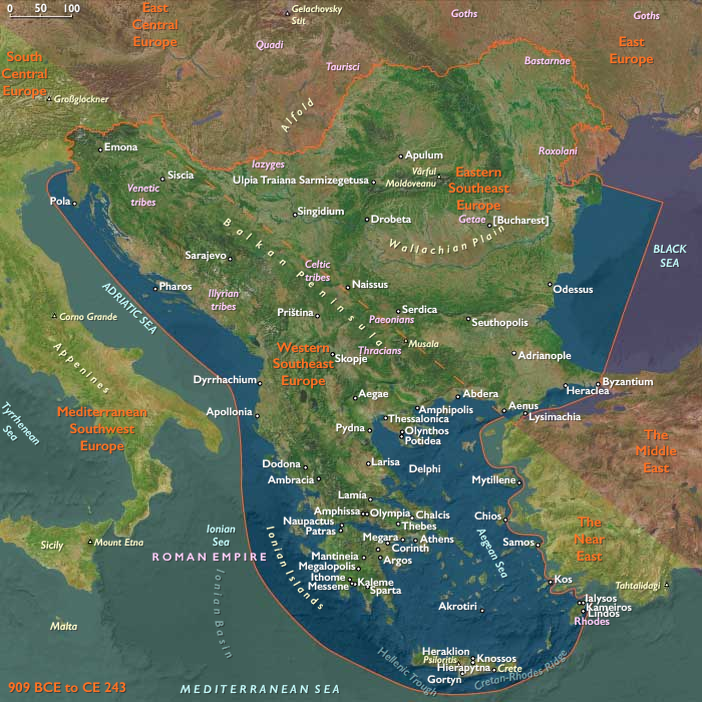
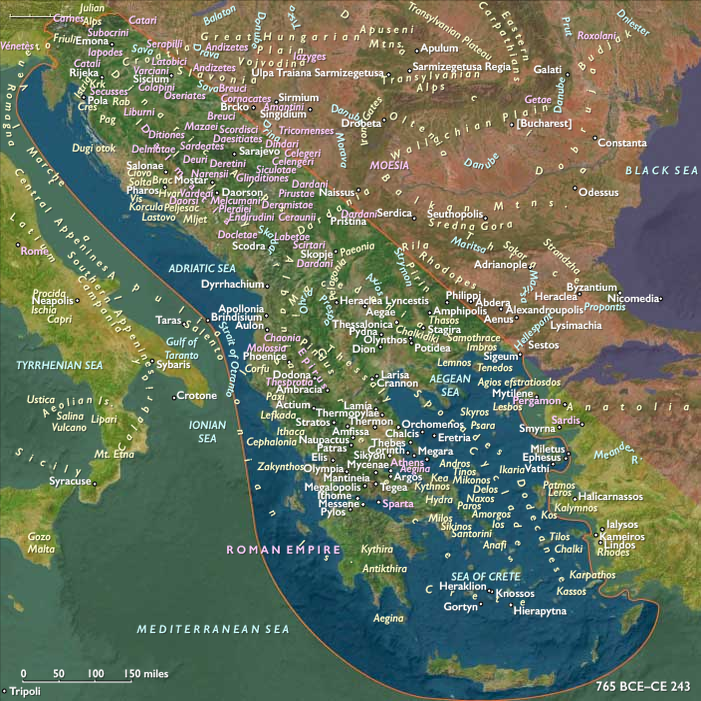
The oldest are of the island of Aegina, with, obverse, a turtle-associated with Aphrodite-and, reverse, an incuse square. (Tradition—e.g., in Julius Pollux, the second-century-CE Greek scholar, and elsewhere—regards these as struck by Pheidon of Argos in virtue of his supremacy over Aegina; but the coins are too late to claim association with him in Aegina. They begin no earlier than the late seventh century, when Aeginetan maritime ascendancy is growing, incidentally spreading the Aeginetan weight standard for coinage, based on a drachma of about six grams, over much of the Peloponnese and also the Aegean, where similar currency is produced in the islands.)
Aegina, inhabited since around 3000 BCE, in Neolithic times, becomes a leading maritime power during the sixth century BCE because of its strategic position, and its silver coins become currency in most of the Dorian states.
Locations
People
Groups
Topics
Commodoties
Subjects
Regions
Subregions
Years: 561BCE - 550BCE
Locations
People
Groups
Topics
Commodoties
Subjects
Regions
Subregions