
Crete, as the target of Muslim attacks …
Years: 824 - 824
Crete, as the target of Muslim attacks since the first wave of the Muslim conquests in the mid-seventh century, had in 654 suffered a first raid in 674/675 another; parts of the island had been temporarily occupied between 705 and 715 during the reign of the Umayyad Caliph al-Walid I.
The island had never been conquered, however, and despite occasional raids in the eighth century it has remained securely in imperial hands; a quiet cultural backwater, Crete is too distant from the Arab naval bases in the Levant for an effective expedition against it to be undertaken.
A group of Andalusian exiles at some point in the second half of the reign of Emperor Michael II, who reigns from 820 to 829, land on Crete and begin its conquest.
These exiles, with a long history of wanderings behind them, are the survivors of a failed revolt in 818 against the emir Al-Hakam I of Córdoba.
In the aftermath of its suppression, the citizens of the Cordovan suburb of al-Rabad had been exiled en masse.
Some had settled in Fez in Morocco, but others, numbering over ten thousand, had taken to piracy, probably joined by other Andalusians.
Some of the latter group, under the leadership of Umar ibn Hafs ibn Shuayb ibn Isa al Balluti, commonly known as Abu Hafs, had landed in Alexandria and had taken control of the city until 827, when they had been besieged and expelled by the Abbasid general Abdullah ibn Tahir al-Khurasani.
The exact chronology of their landing in Crete is uncertain.
Following the Muslim sources, it is usually dated to 827 or 828, after the Andalusians' expulsion from Alexandria.
Byzantine sources, however seem to contradict this, placing their landing soon after the suppression of the large revolt of Thomas the Slav (821–823).
Further considerations regarding the number and chronology of the campaigns launched against the invaders and prosopographical questions of the imperial generals that headed them have led other scholars like Vassilios Christides and Christos Makrypoulias to propose an earlier date, around 824.
The Andalusians and their families, under the terms of their agreement with Ibn Tahir, had left Alexandria in forty ships.
Historian Warren Treadgold estimates them at some twelve thousand people, of whom about three thousand would be fighting men.
The Andalusians according to Byzantine historians were already familiar with Crete, having raided it in the past.
They also claim that the Muslim landing was initially intended as a raid, and was transformed into a bid for conquest when Abu Hafs himself set fire to their ships.
This is probably later invention, however, as the Andalusian exiles had brought their families along.
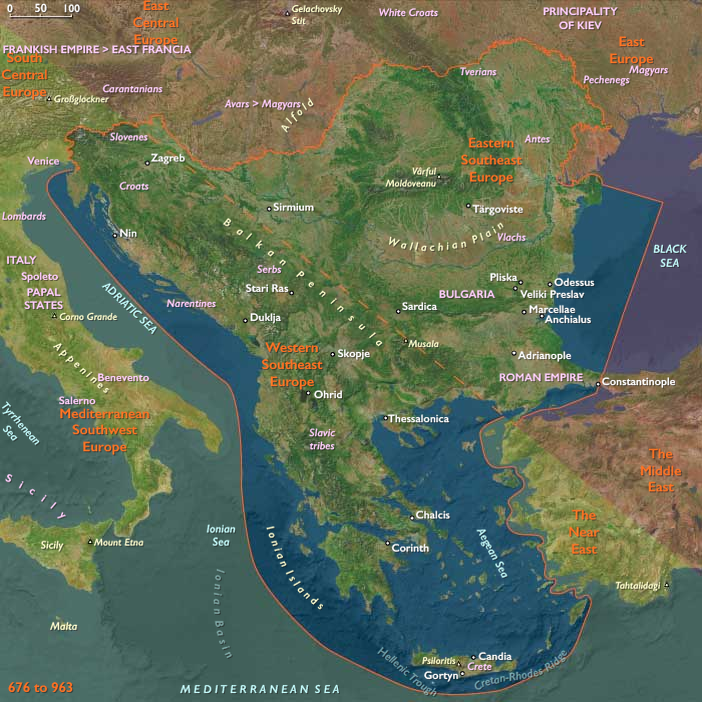
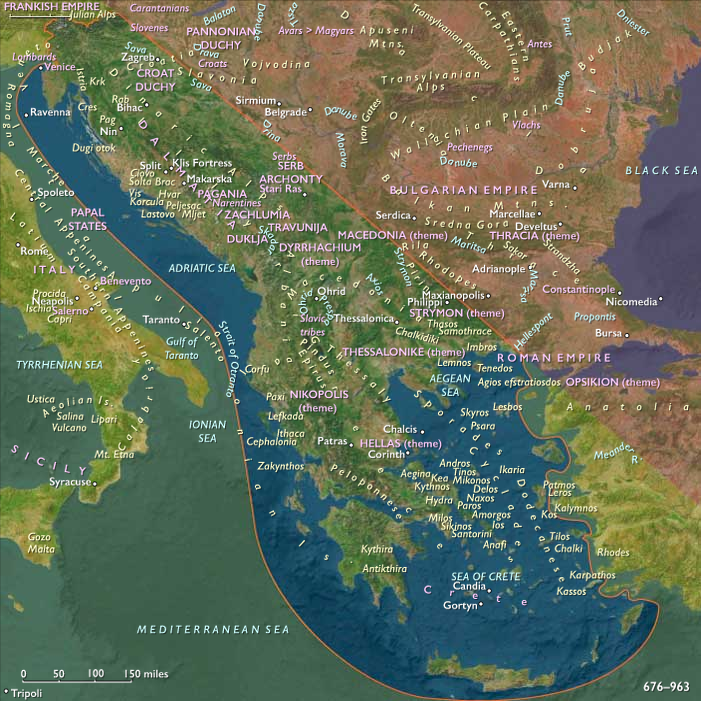
The Andalusians' landing-place is also unknown; some scholars think that it was at the north coast, at Suda Bay or near where their main city and fortress Chandax (”Castle of the Moat", modern Heraklion) will later be built, but others think that they most likely landed on the south coast of the island, then moved to the more densely populated interior and the northern coast.
Archbishop Cyril of Gortyn is assassinated and his city so thoroughly devastated it will never be reoccupied.
People
Groups
- Saracens
- Córdoba, Umayyad Emirate of
- Roman Empire, Eastern: Phrygian or Armorian dynasty
- Crete, Emirate of
Topics
Commodoties
Subjects
- Commerce
- Watercraft
- Engineering
- Labor and Service
- Conflict
- Mayhem
- Faith
- Government
- Technology
- Piracy
Regions
Subregions
Related Events
Showing 10 events out of 54420 total
Years: 824 - 824
People
Groups
- Saracens
- Córdoba, Umayyad Emirate of
- Roman Empire, Eastern: Phrygian or Armorian dynasty
- Crete, Emirate of
Topics
Commodoties
Subjects
- Commerce
- Watercraft
- Engineering
- Labor and Service
- Conflict
- Mayhem
- Faith
- Government
- Technology
- Piracy
Regions
Subregions