
The Murder of García Sánchez and the …
Years: 1037 - 1037
The Murder of García Sánchez and the Castilian Succession Crisis (1029–1037 CE)
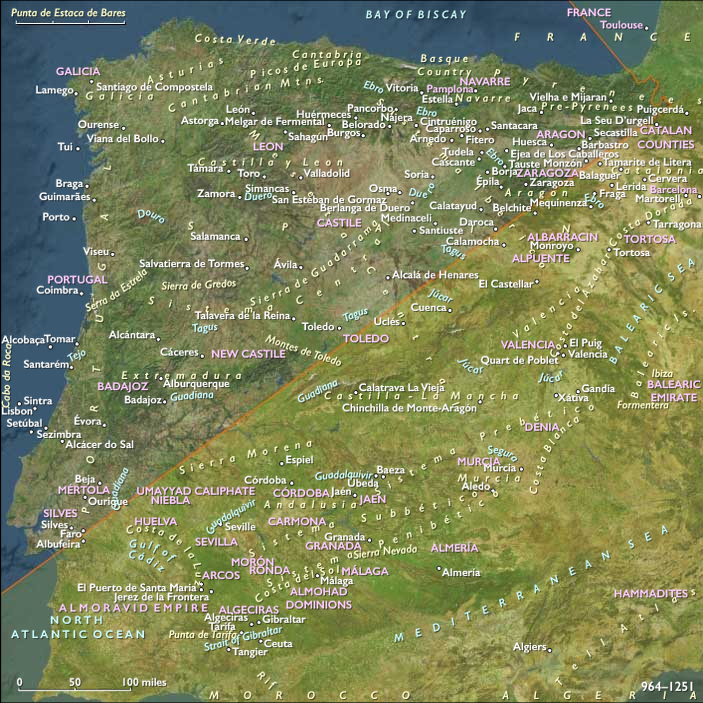
In 1029 CE, Count García Sánchez of Castile is set to marry Sancha of León, the elder sister of Bermudo III of León. This marriage, seemingly sanctioned by Sancho III of Navarre, is meant to strengthen ties between Castile and León. However, before the marriage takes place, García Sánchez is assassinated in the city of León.
Following the count’s death, Sancho III of Navarre seizes the opportunity to claim Castile in the name of his wife, placing their son, Ferdinand, as the new Count of Castile. This move reflects Sancho III’s growing ambition, as he expands his influence, sometimes in his son’s name and at other times for his own gain.
Territorial Disputes and the Forced Marriage of Ferdinand and Sancha
Sancho III moves aggressively to seize contested lands between the Cea and Pisuerga Rivers, an area long disputed between León and Castile. After forcing a marriage between his son, Ferdinand, and Sancha of León in 1032, these disputed lands become part of Castile as part of Sancha’s dowry.
By 1034, Sancho III captures León itself, forcing Bermudo III to flee into Galicia. When Sancho dies in 1035, Navarre’s dominance over the northern Iberian Peninsula begins to wane, allowing Bermudo III to reclaim his throne in León.
The Battle of Tamarón (1037) and the Union of León and Castile
Determined to recover the disputed territories, Bermudo III launches a campaign against Castile and his brother-in-law, Ferdinand. On September 4, 1037, at the Battle of Tamarón, Bermudo III is defeated and killed.
An autopsy of his remains suggests he may have fallen from his horse and suffered a fatal blow from infantry spears or pikes.
With Bermudo III’s death, the Kingdom of León is left without a direct heir. Ferdinand of Castile, claiming the vacant throne through the rights of his wife, Sancha, declares himself King of León, thereby uniting Castile and León under his rule. This marks a crucial turning point in the political evolution of Christian Iberia, as Castile, once a mere county, now assumes a leading role in the Reconquista.
Locations
People
Groups
Topics
Commodoties
Subjects
Regions
Subregions
Years: 1037 - 1037
Locations
People
Groups
Topics
Commodoties
Subjects
Regions
Subregions