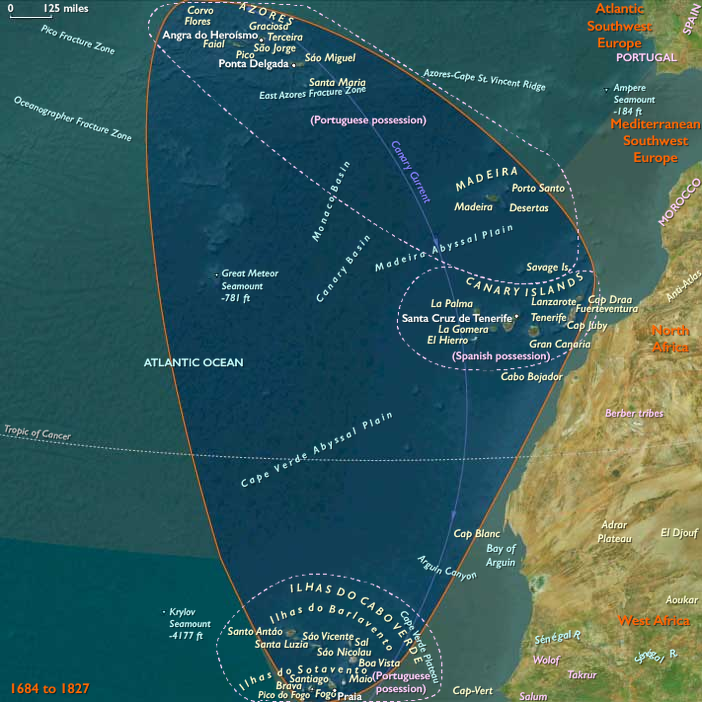
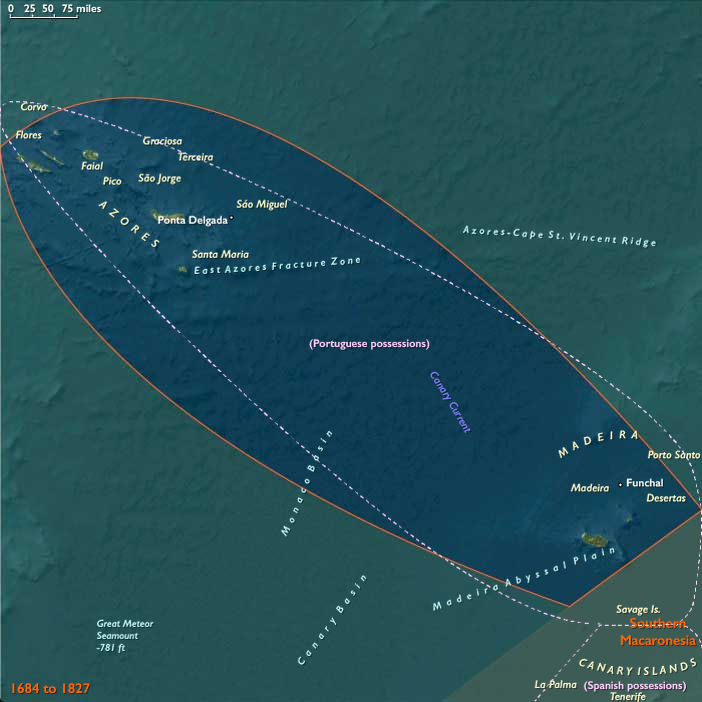
The Cook expedition made its first port …
Years: 1772 - 1772
August
Locations
People
- Charles Clerke
- Georg Forster
- George Vancouver
- James Burney
- James Cook
- Joseph Banks
- Tobias Furneaux
- William Bayly
- William Hodges
- William Wales
Groups
Topics
- Exploration of Oceania, European
- Voyages of scientific exploration, European and American
- Cook, Second Voyage of James
Subjects
Regions
Subregions
Related Events
Filter results
Showing 10 events out of 10 total
Maritime East Africa (1780–1791 CE): Omani Authority, European Rivalries, and Local Resistance
From 1780 to 1791 CE, Maritime East Africa—spanning the Swahili Coast, Comoros, Madagascar, Mauritius, Seychelles, and Somali coastal cities—experiences heightened European maritime rivalries, continued Omani control, robust trade networks, and ongoing local resilience and resistance.
European Rivalries in the Indian Ocean
The strategic competition between Britain and France intensifies significantly, especially around Mauritius (Isle de France) and Réunion (Île Bourbon). Both islands serve as vital naval and economic bases for the French, fueling British efforts to challenge and disrupt French shipping routes and commercial activities.
Omani Dominance on the Swahili Coast
Omani authority remains strong along the Swahili Coast, with Zanzibar maintaining its central role as the region's most influential trade hub. Clove production expands further, powered by extensive plantations reliant on enslaved labor, enriching the Omani elite and reinforcing Zanzibar’s economic importance.
Continued Resistance in Mombasa
In Mombasa, the Omanis sustain their hold through Fort Jesus, yet tensions persist with indigenous populations. Frequent localized rebellions illustrate ongoing discontent, reflecting broader regional struggles against external domination.
Political Rivalries and Trade Prosperity in Comoros
The Comoros Islands remain divided among competing sultanates, characterized by internal strife. Despite these political fractures, the islands continue flourishing economically, driven by trade in spices, ambergris, enslaved individuals, and agricultural produce, attracting merchants from Europe, Arabia, and East Africa.
Madagascar: Indigenous Strength and Autonomy
In Madagascar, indigenous polities, notably the Merina Kingdom, successfully maintain autonomy. Malagasy communities continue resisting European incursions, instead developing their internal agricultural resources and strengthening regional trade networks.
Somali Coastal Cities: Strategic Diplomacy
Mogadishu, Merca, and Baraawe preserve their independence and prosperity by navigating diplomatic and commercial relationships with Omani and European traders. These Somali cities skillfully leverage their strategic location, ensuring their economic well-being despite increasing external pressures.
Seychelles and Mauritius: Strategic European Settlements
Mauritius sees steady economic and strategic development under French rule, anchored by extensive sugar production and the fortified port of Port Louis. The Seychelles continues attracting attention for potential resources, with sporadic visits by European navigators laying groundwork for future settlement efforts.
Cultural Resilience Across the Region
Local societies on the Swahili Coast and neighboring regions remain culturally robust. Despite external influences from Omani and European entities, indigenous communities integrate new economic practices without losing their distinct identities, exemplifying resilience and adaptation.
Legacy of the Era
Between 1780 and 1791 CE, Maritime East Africa faces intensified European competition, sustained Omani dominance, and resilient local autonomy. These patterns establish a foundation for the critical transformations that will unfold in the subsequent decades.

Maritime East Africa (1792–1803 CE): Intensifying European Rivalries and Omani Consolidation
From 1792 to 1803 CE, Maritime East Africa—including the Swahili Coast, Comoros, Madagascar, Mauritius, Seychelles, and Somali coastal cities—witnesses increased European strategic competition, solidification of Omani political authority, and ongoing local resistance and economic dynamism.
Heightened European Naval Competition
The rivalry between Britain and France in the Indian Ocean region becomes more acute, particularly around strategic islands such as Mauritius (Isle de France) and Réunion (Île Bourbon). Both islands continue to serve as crucial naval bases and trading centers for the French, becoming frequent targets for British naval interference.
Strengthened Omani Rule on the Swahili Coast
Omani dominance consolidates further along the Swahili Coast. Zanzibar reinforces its central economic role, thriving from its expanding trade in cloves, ivory, and the continuing demand for enslaved labor. This economic strength enables the Omanis to maintain robust administrative and military structures throughout the region.
Persistent Local Resistance in Mombasa
In Mombasa, continued local resistance challenges Omani authority. Despite the presence of Fort Jesus and strong Omani military oversight, periodic rebellions highlight enduring tensions and a local determination to maintain autonomy.
Political Instability and Prosperity in the Comoros
The Comoros Islands experience ongoing political instability due to competing sultanates, yet their strategic maritime position enables sustained economic prosperity. Trade remains vigorous in commodities such as spices, ambergris, enslaved persons, and agricultural goods, drawing European and Arab traders alike.
Madagascar: Autonomous Kingdoms and Resilience
The indigenous kingdoms of Madagascar, notably the Merina Kingdom, persistently resist European attempts at domination. These Malagasy societies further strengthen their agricultural base, trade networks, and political structures, effectively maintaining their autonomy and limiting foreign influence.
Somali Coastal Cities: Diplomatic Autonomy
Somali coastal centers such as Mogadishu, Merca, and Baraawe sustain their independence through adept diplomatic maneuvering and vibrant maritime commerce. Their strategic positions ensure continued prosperity and autonomy amid growing external pressures.
Seychelles and Mauritius: European Economic and Naval Importance
Mauritius remains under French control, with Port Louis thriving as a naval stronghold and prosperous economic center focused on sugar production. Meanwhile, the Seychelles attract increased European navigational interest due to their strategic location and resources, foreshadowing future colonial ambitions.
Cultural Vitality and Integration
Across the Swahili Coast and broader Maritime East Africa, local cultures persistently integrate external influences while maintaining distinct identities. Islam continues to be a unifying cultural and religious force, underpinning social resilience amid shifting political and economic conditions.
Legacy of the Era
The period from 1792 to 1803 CE is marked by intensifying European competition, reinforced Omani rule, resilient indigenous kingdoms, and sustained regional economic vitality. These developments lay the critical groundwork for transformations in Maritime East Africa in the nineteenth century.
Egypt makes incursions along the coast and seeks at various times to control the Red Sea ports.
Europeans, chiefly British and French, show interest in the Horn of Africa.
The competition for trade, differences over how to respond to Egypt's activities, and the readier availability of modern arms are important factors in the conflicts of the period.
Ethiopia's Gonder state consists of the northern and central highlands and the lower elevations immediately adjacent to them at the beginning of the nineteenth century.
This area is only nominally a monarchy, as rival nobles fight for the military title of ras (roughly, marshal; literally, head in Amharic) or the highest of all nonroyal titles, ras-bitwoded, that combines supreme military command with the duties of first minister at court.
These nobles often are able to enthrone and depose princes who carry the empty title of nəgusä nägäst, "King of Kings."
The seventeenth through nineteenth century is a period not only of migration but also of integration, as groups borrow usable techniques and institutions from each other.
In the south, too, Islam has made substantial inroads.
Many Oromo chieftains find Islam a useful tool in the process of centralization as well as in the building of trade networks.
The Uncertain Transition Between the Second and Third Cholera Pandemics (1830s–1840s)
The timeline between the end of the Second Cholera Pandemic (1826–1837) and the beginning of the Third Cholera Pandemic (1839–1860) is not universally agreed upon. Some sources suggest a gradual decline of the second pandemic, while others argue that a new surge from Bengal in 1839 marked the start of the third pandemic.
Competing Interpretations of the Pandemic Transition
-
The Traditional View (Second Pandemic Ends in 1837, Third Begins in 1846)
- Many historical epidemiological studies define the Second Cholera Pandemic as ending by 1837, when cases in Europe, Africa, and the Americas subsided.
- They identify the beginning of the Third Cholera Pandemic around 1846, when a new global outbreak spread from Bengal to Russia, Iran, and Europe.
-
The Alternative View (A Bengal Surge in 1839 Marks the Third Pandemic)
- Some sources argue that cholera never fully disappeared after the second pandemic, and a surge from Bengal in 1839 triggered a new wave of infections, making it the start of the Third Cholera Pandemic.
- This perspective suggests that cholera remained endemic in South Asia, with waves of outbreaks periodically spilling into other regions.
What is Agreed Upon?
- Regardless of the precise starting date, cholera remained a global threat throughout the 19th century, with recurring outbreaks in Europe, the Middle East, Asia, and the Americas.
- The 19th century’s successive cholera pandemics led to significant developments in public health, including:
- Quarantine measures.
- Improvements in sanitation and water supply.
- The eventual scientific discovery of cholera’s bacterial cause by John Snow in the 1850s.
Conclusion – A Pandemic Without Clear Borders
Because cholera remained endemic in India and persisted in various regions, the transition between the Second and Third Cholera Pandemics is difficult to pinpoint with certainty. Whether 1839 or 1846 marks the start of the Third Cholera Pandemic, it is clear that cholera was an ongoing global crisis throughout the 19th century, shaping public health policies worldwide.
Kassa Hailu, son of a lesser noble from Qwara, a district on the border with Sudan, is a major figure in Gondar in the mid-nineteenth century.
Beginning about 1840, Kassa alternates between life as a brigand and life as a soldier of fortune for various nobles, including Ras Ali, a Christian of Oromo origin who dominates the court in Gondar.
Kassa becomes sufficiently effective as an army commander to be offered the governorship of a minor province.
He also marries Ali's daughter, Tawabech.
Nonetheless, Kassa eventually rebels against Ali, occupies Gondar in 1847, and compels Ali to recognize him as chief of the western frontier area.
In 1848 he attacks the Egyptians in Sudan; however, he suffers a crushing defeat, which teaches him to respect modern firepower.
Initiated by Dejazmach Wube Haile Maryam to overthrow Ras Ali II as Regent of the Emperor of Ethiopia and gain control of the country, this confused battle is won by Ras Ali, but at a steep price, and this victory fails to cement his position as the most powerful nobleman of his time.
His enemies are still operating in Gojjam, Damot, Dembiya, and Lasta; the clergy is still hostile to him, and his own Christian subjects in Begemder and Amhara are even more disaffected.
To secure the Abuna's help, he will be forced to free Dejazmach Wube and go to war against his ally Dejazmach Merso to help Wube recover his territories.
His Moslem allies in Welo, alarmed at the Christian Birru Aligaz being invested on their borders, will likewise grow disaffected.
Ras Ali will be forced to seek help elsewhere, and seek it from the Egyptians, who at the moment Are consolidating their hold on Sudan.
Although in the short term a beneficial move, this will only serve to further erode his local support, leading to a vicious cycle leading to Ras Ali's eventual defeat by a competent rival—the future Emperor Tewodros I.
During this era, regional princes, and noble lords of diverse ethnic and religious backgrounds have vied with each other for power and control of the Gondarine Emperor.
A puppet Emperor of the Solomonic dynasty would be enthroned in Gondar by one nobleman, only to be dethroned and replaced by another member of the Imperial dynasty when a different regional prince was able to seize Gondar and the reins of power.
Regions such as Gojjam and Shewa are ruled by their own branches of the Imperial dynasty and, in Shewa, the local prince goes as far as assuming the title of King.
In Wollo, competing royal powerful Oromo and Muslim dynasties also vie for power.
Nevertheless, a semblance of order and unity has been maintained in northern Ethiopia during the era of the Princes by the powerful rases of the Were Sheik dynasty of Wollo such as Ras Ali the Great and Ras Gugsa who control Gondar and the Emperor.
Kassa had begun his career in this era as a shifta (outlaw), but after amassing a sizable force of followers, had been able to not only restore himself to his father's previous fief of Qwara but had been able to control all of Dembiya.
Moreover, he had gained popular support by his benevolent treatment of the inhabitants in the areas he controls.
This had garnered notice of the nobleman in control of Gondar, Ras Ali II of Yejju of Wollo.
Empress Menen Liben Amede, wife of Emperor Yohannes III, and the daughter of Ras Ali had arranged for Kassa to marry her granddaughter, Tewabech Ali.
She had awarded him all of Ye Meru Qemas in the hopes of binding him firmly to her son and herself.
Although all sources and authorities believe that Kassa truly loved and respected his wife, his relationship with his new in-laws deteriorated largely because of the disdainful treatment he repeatedly received from the Empress Menen.
By 1852, he had rebelled against Ras Ali and, in a series of victories—Gur Amaba, Takusa, Ayshal, and Amba Jebell —over the next three years he had handily defeated every army the Ras and the Empress sent against him.
At Ayshal he had captured the Empress Menen, and Ras Ali had fled.
Kassa had announced that he was deposing Emperor Yohannes III, then marched on his greatest remaining rival, Dejazmach Wube Haile Maryam of Semien.
Following the defeat of Dejazmach Wube, Kassa is crowned Emperor by Abuna Salama III in the church of Derasge Maryam on February 11, 1855.
He takes the throne name of Tewodros II, attempting to fulfill a prophecy that a man named Tewodros will restore the Ethiopian Empire to greatness and rule for forty years.
Tewodros had refused to acknowledge an attempt to restore the former Emperor Sahle Dengel in the place of the hapless Yohannes III, who had acknowledged Tewodros immediately.
Yohannes III is treated well by Tewodros, who seems to have had some personal sympathy for him.
His views on Sahle Dengel are not known but are not likely to have been sympathetic.
Years: 1772 - 1772
August
Locations
People
- Charles Clerke
- Georg Forster
- George Vancouver
- James Burney
- James Cook
- Joseph Banks
- Tobias Furneaux
- William Bayly
- William Hodges
- William Wales
Groups
Topics
- Exploration of Oceania, European
- Voyages of scientific exploration, European and American
- Cook, Second Voyage of James