
Filters:
Archaeological finds in the region south of …
Years: 1396 - 1539
Archaeological finds in the region south of Lake Ontario, radio-carbon dated to the thirteenth century, indicate settlements that are characteristic of the Iroquoian culture (long huts built of wood).
Some archaeological historians postulate a seventh-or eighth-century migration, resulting from the Mesoamerican exports of temple-building, the death cult and developed agricultural techniques.
Other speculations equate the movement with the Hopewell cult of the fifth and sixth centuries.
Some archaeological historians postulate a seventh-or eighth-century migration, resulting from the Mesoamerican exports of temple-building, the death cult and developed agricultural techniques.
Other speculations equate the movement with the Hopewell cult of the fifth and sixth centuries.
Groups
- Guanahatabey
- Arawak peoples (Amerind tribe)
- Kalinago (Amerind tribe)
- Iroquois (Haudenosaunee, also known as the League of Peace and Power, Five Nations, or Six Nations)
- Wyandot, or Wendat, or Huron people (Amerind tribe)
- Mohawk people (Amerind tribe)
- Lakota, aka Teton Sioux (Amerind tribe)
- Susquehannock (Amerind tribe)
- Catawba people (Amerind tribe)
- Caddo (Amerind tribe)
- Tuscarora (Amerind tribe)
- Yuchi (Amerind tribe)
- Dakota, aka Santee Sioux (Amerind tribe)
- Cherokee, or Tsalagi (Amerind tribe)
- Seneca (Amerind tribe)
- Cayuga people(Amerind tribe)
- Onondaga people (Amerind tribe)
- Oneida people (Amerind tribe)
Regions
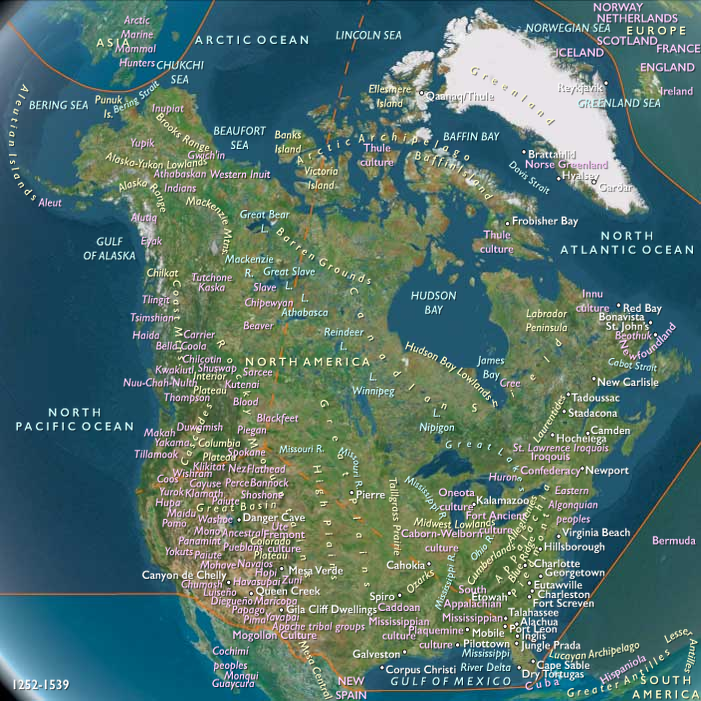
Subregions
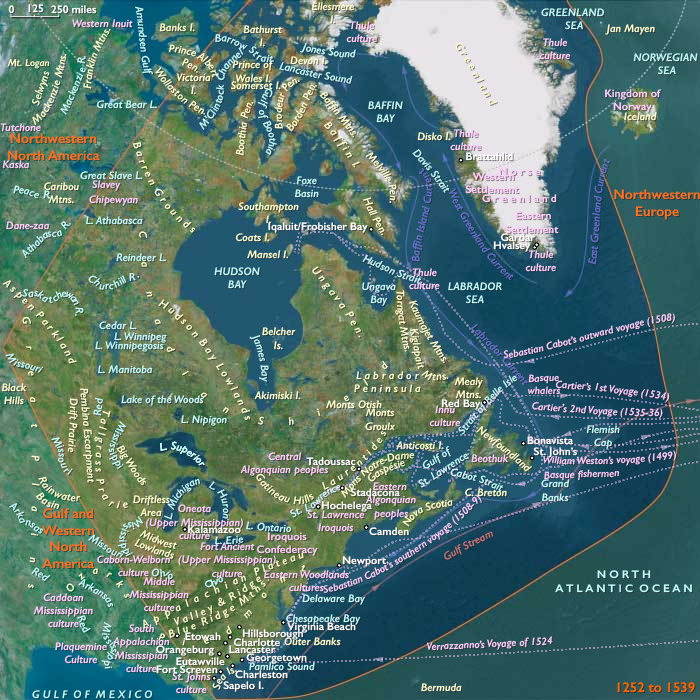
Years: 1396 - 1539
Groups
- Guanahatabey
- Arawak peoples (Amerind tribe)
- Kalinago (Amerind tribe)
- Iroquois (Haudenosaunee, also known as the League of Peace and Power, Five Nations, or Six Nations)
- Wyandot, or Wendat, or Huron people (Amerind tribe)
- Mohawk people (Amerind tribe)
- Lakota, aka Teton Sioux (Amerind tribe)
- Susquehannock (Amerind tribe)
- Catawba people (Amerind tribe)
- Caddo (Amerind tribe)
- Tuscarora (Amerind tribe)
- Yuchi (Amerind tribe)
- Dakota, aka Santee Sioux (Amerind tribe)
- Cherokee, or Tsalagi (Amerind tribe)
- Seneca (Amerind tribe)
- Cayuga people(Amerind tribe)
- Onondaga people (Amerind tribe)
- Oneida people (Amerind tribe)
Regions
Subregions