
Iceland may originally have been settled as …
Years: 868 - 879
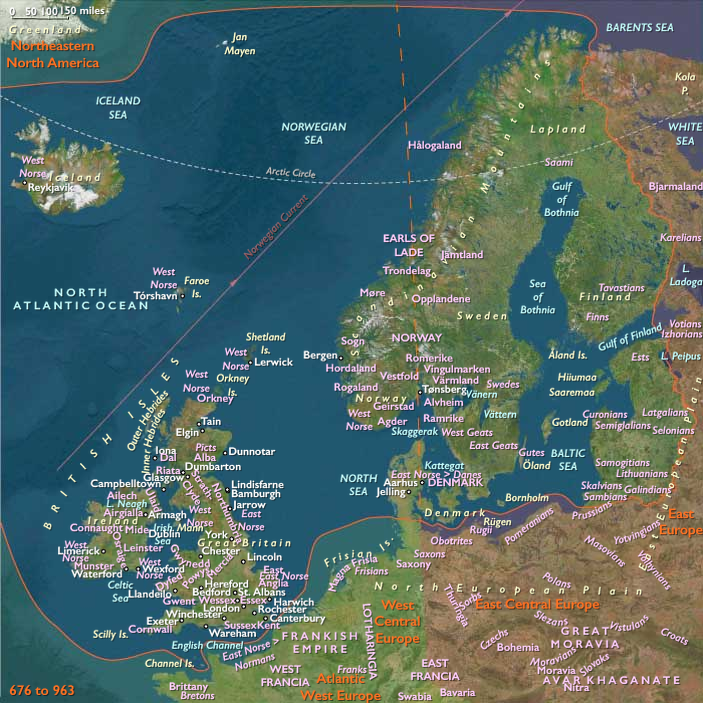
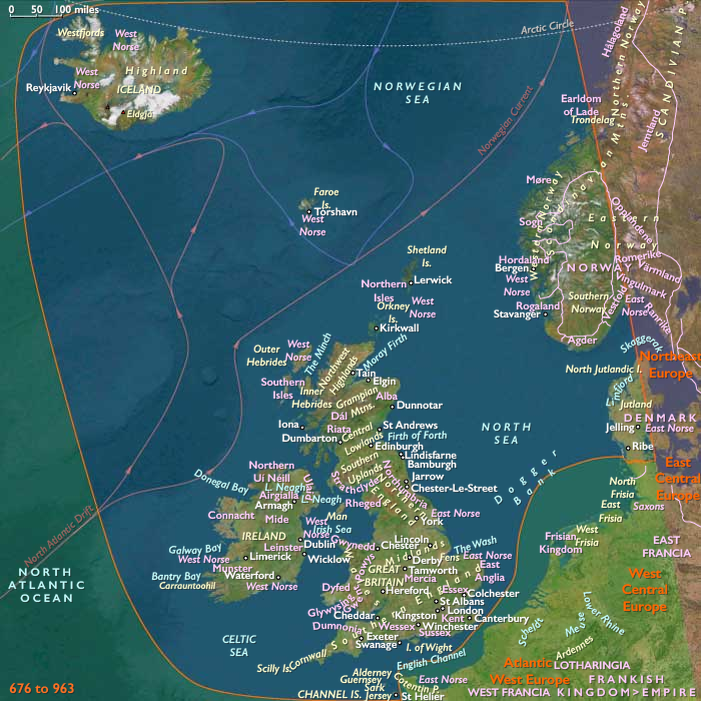
Iceland may originally have been settled as early as the second half of the seventh century, as suggested by controversial results of recent carbon dating work, published in the journal Skírnir.
Celtic monks known as the Papar, possibly members of a Hiberno-Scottish mission, already live in Iceland when the Norse settlers arrive, according to both the Icelandic sagas Landnámabók and Íslendingabók.
The medieval chronicler Ari Thorgilsson will state that Ingólfur Arnarson had been the first Nordic settler in Iceland, but mentioned that "Papar—i.e., Irish monks and hermits—had been in the country before the Norsemen.
He wrote that they left because they did not want to live among the newly arrived pagans.
Recent archaeological excavations have revealed the ruins of a cabin in Hafnir on the Reykjanes peninsula.
Carbon dating indicates that it was abandoned somewhere between 770 and 880, suggesting that Iceland was populated well before 874.
This archaeological find may also indicate that the monks left Iceland before the Norse arrived.
Swedish Viking explorer Garðar Svavarsson is the first to circumnavigate Iceland in 870 and establish that it is an island.
He stays over winter and builds a house in Húsavík.
Garðar departs the following summer but one of his men, Náttfari, decides to stay behind with two slaves.
Náttfari settles in what is now known as Náttfaravík and becomes the first permanent resident of Iceland.
Ingólfur Arnarson in the year 874 builds his homestead in present-day Reykjavík.
Ingólfr is followed by many other emigrant settlers, largely Norsemen and their thralls, many of whom are Irish or Scoti.
Landnáma (written two to three centuries after the settlement) contains a long story about Ingólf's settlement.
The book claims he left Norway after becoming involved in a blood feud.
He had heard about a new island which Garðarr Svavarsson, Flóki Vilgerðarson and others had found in the Atlantic Ocean.
With his step brother Hjörleifr Hróðmarsson, he sailed for Iceland.
When land was in sight, he threw his high seat pillars (a sign of his being a chieftain) overboard and promised to settle where the gods decided to bring them ashore.
Two of his slaves then searched the coasts for three years before finding the pillars in the small bay that will eventually become Reykjavík.
In the meantime, Hjörleifr had been murdered by his Irish slaves because of his ill-treatment.
Ingólfr hunted them down and killed them in the Westman Islands (Vestmannaeyjar, named after the slaves).
Ingólfr was said to settle a large part of the southwestern part of Iceland, but after his settlement nothing more was known.
His son, Bjorsteinn Ingólfsson, is a major chieftain and is said to have founded the first thing, or parliament, in Iceland.
It is a forerunner of the Althingi.
The name Ingolf, similar to the name Adolf that means "aristocratic wolf", would be translated as "royal or kingly wolf."
Landnámabók lists four hundred and thirty-five men as the initial settlers, the majority of them settling in the northern and southwestern parts of the island.
Locations
Groups
- Irish people
- Christianity, Chalcedonian
- Norse
- Danes (Scandinavians)
- Scottish people
- Norway, independent Kingdom of
- Iceland, pre-Commomwealth
Topics
Commodoties
Subjects
Regions
Subregions
Related Events
Showing 5 events out of 5 total
Years: 868 - 879
Locations
Groups
- Irish people
- Christianity, Chalcedonian
- Norse
- Danes (Scandinavians)
- Scottish people
- Norway, independent Kingdom of
- Iceland, pre-Commomwealth
Topics
Commodoties
Subjects
Regions
Subregions