
The Arabs realize the commercial advantages of …
Years: 676 - 819
The Arabs realize the commercial advantages of peaceful relations with Nubia and use the treaty to ensure that travel and trade proceed unhindered across the frontier.
The treaty also contains security arrangements whereby both parties agree that neither will come to the defense of the other in the event of an attack by a third party.
The treaty obliges both to exchange annual tribute as a goodwill symbol, the Nubians in slaves and the Arabs in grain.
This formality is only a token of the trade that develops between the two, not only in these commodities but also in horses and manufactured goods brought to Nubia by the Arabs and in ivory, gold, gems, gum arabic, and cattle carried back by them to Egypt or shipped to Arabia.
Acceptance of the treaty does not indicate Nubian submission to the Arabs, but the treaty does impose conditions for Arab friendship that eventually permits Arabs to achieve a privileged position in Nubia.
For example, provisions of the treaty allow Arabs to buy land from Nubians south of the frontier at Aswan.
Arab merchants establish markets in Nubian towns to facilitate the exchange of grain and slaves.
Arab engineers supervise the operation of mines east of the Nile in which they use slave labor to extract gold and emeralds.
Muslim pilgrims en route to Mecca travel across the Red Sea on ferries from Aydhab and Suaykin, ports that also receive cargoes bound from India to Egypt.
Locations
Groups
- Nubians
- Arab people
- Blemmyes
- Aksum (or Axum), Kingdom of
- Egypt (Roman province)
- Makuria, Kingdom of
- Nobatia, Kingdom of
- Egypt, Diocese of
- Christians, Monophysite
- Christianity, Chalcedonian
- Coptic Orthodox Church of Alexandria
- Alodia, or Alwa (Subah, or Soba), Kingdom of
- Egypt, Eastern Roman (Byzantine)
- Roman Empire, Eastern: Heraclian dynasty
- Islam
- Rashidun Caliphate
- Egypt in the Middle Ages
Topics
Commodoties
- Weapons
- Hides and feathers
- Gem materials
- Domestic animals
- Grains and produce
- Strategic metals
- Slaves
- Aroma compounds
Subjects
Regions
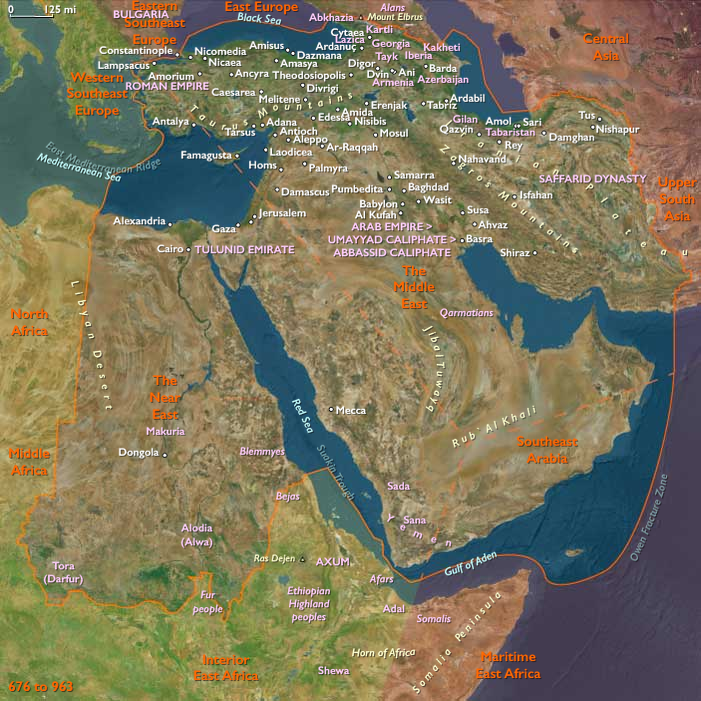
Subregions
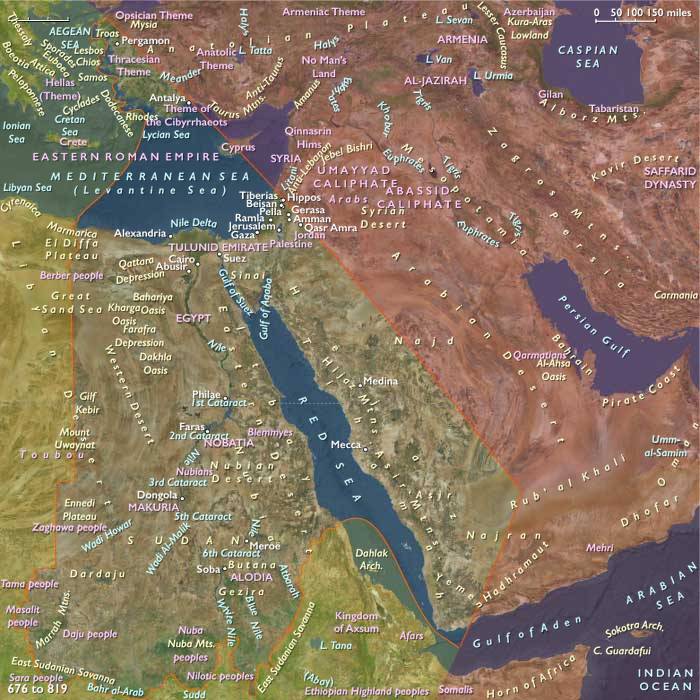
Years: 676 - 819
Locations
Groups
- Nubians
- Arab people
- Blemmyes
- Aksum (or Axum), Kingdom of
- Egypt (Roman province)
- Makuria, Kingdom of
- Nobatia, Kingdom of
- Egypt, Diocese of
- Christians, Monophysite
- Christianity, Chalcedonian
- Coptic Orthodox Church of Alexandria
- Alodia, or Alwa (Subah, or Soba), Kingdom of
- Egypt, Eastern Roman (Byzantine)
- Roman Empire, Eastern: Heraclian dynasty
- Islam
- Rashidun Caliphate
- Egypt in the Middle Ages
Topics
Commodoties
- Weapons
- Hides and feathers
- Gem materials
- Domestic animals
- Grains and produce
- Strategic metals
- Slaves
- Aroma compounds
Subjects
Regions
Subregions