
Construction of Kamakura’s Kencho Temple, Japan's first …
Years: 1253 - 1253
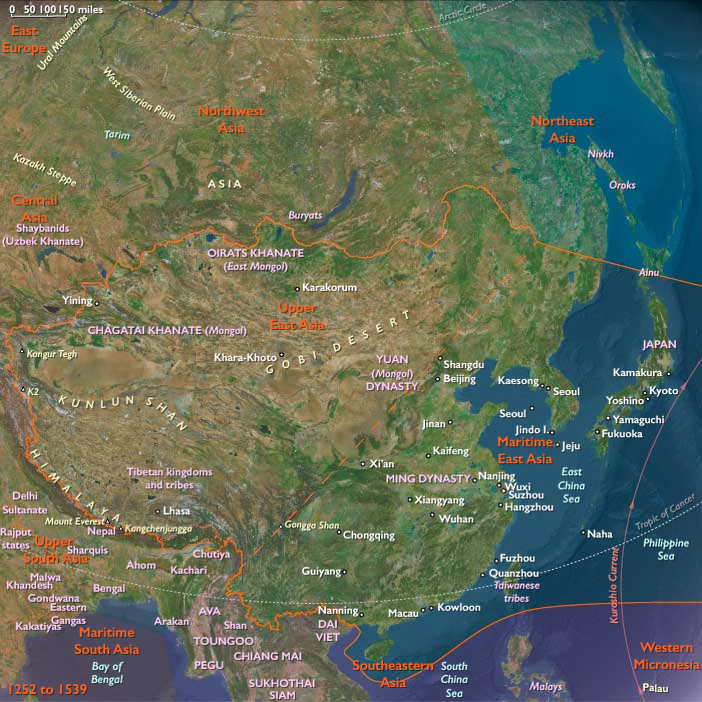
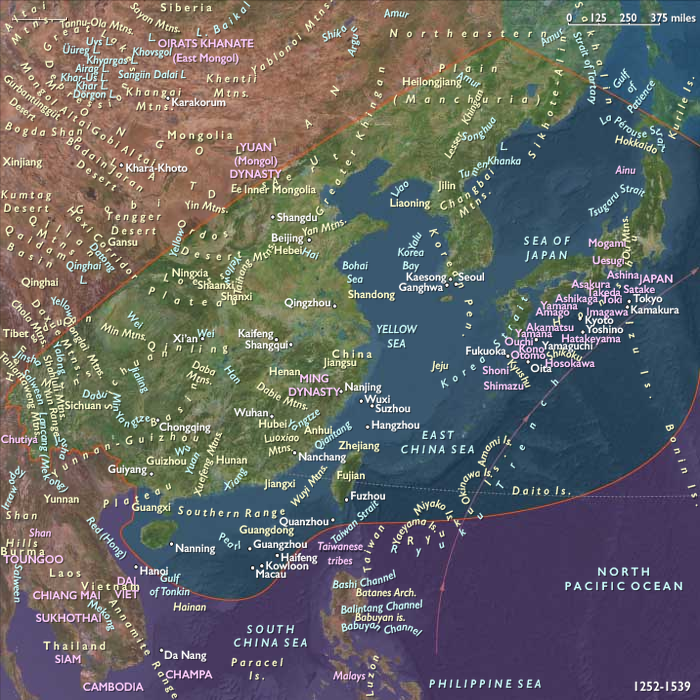
Construction of Kamakura’s Kencho Temple, Japan's first seminary exclusively for Buddhist priests of the Zen sect, is completed in 1253.
Chinese Chan monk Lanxi Daolong (Rankei Doryu), a master of the Yogi line of the Rinzai lineage who had traveled to Japan in 1246 and founded the Joraku-ji and Kencho-ji monasteries, accepts an invitation from Hojo Tokiyori, supreme commander of the shogunate in Kamakura, to become the Kencho-ji’s first abbot.
Zennichimaro, born in the fishing village of Kominato in the province of Awa, had begun his Buddhist study at a nearby temple, Seichoji, at age eleven.
At his formal ordination at sixteen, he took the Buddhist name Zeshō-bō Renchō.
He left Seichoji shortly thereafter to study in Kamakura and several years later traveled to western Japan for more in-depth study in the Kyoto–Nara area, where Japan's major centers of Buddhist learning were located.
During this time, he became convinced of the pre-eminence of the Lotus Sutra and in 1253, returned to Seichoji.
On April 28, he expounds Nam(u) Myōhō Renge Kyō for the first time, marking his Sho Tempōrin ("first turning the wheel of the Law").
With this, he proclaims that devotion to and practice of the Lotus Sutra is the only correct form of Buddhism for the present time period.
At the same time he changes his name to Nichiren, wherein the kanji character for nichi means "sun" and that for I means "lotus".
The significance of this choice, as Nichiren himself explained it, is manifold and rooted, among other things, in passages from the Lotus Sutra.
After making his declaration, which all schools of Nichiren Buddhism regard as marking their foundation.
Nichiren begins propagating his teachings in Kamakura, Japan's de facto capital since it is the residence of the shikken (regent for the shogun) and the seat of the apparatus of government.
He gains a fairly large following here, consisting of both priests and laity, and many of his lay believers come from among the samurai class.
Nichiren Buddhism will develop into a major Japanese Buddhist stream encompassing several schools of often widely conflicting doctrine.
Locations
People
Groups
Topics
Subjects
Regions
Subregions
Years: 1253 - 1253
Locations
People
Groups
Topics
Subjects
Regions
Subregions