
The Monastery of Santa Maria da Vitória …
Years: 1388 - 1388
The Monastery of Santa Maria da Vitória at Batalha (1388): A Masterpiece of Late Gothic and Manueline Architecture
The Monastery of Santa Maria da Vitória, commonly known as Batalha Monastery, is one of Portugal’s greatest architectural achievements. Built to commemorate the decisive Portuguese victory at the Battle of Aljubarrota (1385), its construction began in 1388 under King John I of Portugal.
A Symbol of National Triumph
- John I vowed to build the monastery in gratitude for the victory against Castile, which secured Portugal’s independence.
- The site chosen for construction was Batalha (meaning “battle”), near the Aljubarrota battlefield, reinforcing its significance as a symbol of Portuguese resilience.
- The monastery would also serve as the royal burial church for the House of Aviz, Portugal’s ruling dynasty in the 15th century.
Architectural Style: A Blend of Late Gothic and Manueline Influences
- The monastery’s design was inspired largely by the English Perpendicular Gothic style, reflecting Portugal’s strong alliance with England.
- Over time, Manueline elements—a uniquely Portuguese late Gothic style characterized by ornamental maritime and natural motifs—were integrated into the structure.
- The intricate stonework, ribbed vaulting, elaborate pinnacles, and magnificent stained glass windows make Batalha one of the finest Gothic masterpieces in Portugal.
A Lasting Legacy: The Aviz Dynasty's Royal Pantheon
- John I of Portugal and Philippa of Lancaster, along with their renowned sons—including Prince Henry the Navigator—are buried in the Founder’s Chapel (Capela do Fundador).
- The monastery became a center of royal patronage, hosting some of Portugal’s finest artisans and architects over the next two centuries.
- Its unfinished chapels (Capelas Imperfeitas), begun under King Duarte, remain an extraordinary example of Portugal’s evolving architectural styles.
A UNESCO World Heritage Site
- Today, Batalha Monastery is a UNESCO World Heritage Site, recognized for its historical, artistic, and symbolic significance.
- It stands as a monument to Portugal’s independence, the House of Aviz, and the age of exploration and maritime expansion that would follow in the 15th and 16th centuries.
The Monastery of Batalha remains one of the greatest expressions of Portuguese Gothic architecture, a lasting testament to the national pride and artistic innovation of medieval Portugal.
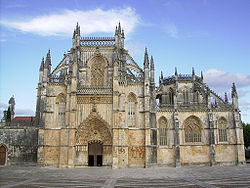
Batalha Monastery is one of the most important Gothic sites in Portugal. (Photo taken 27 August 2006, by pereiraalexandre20)
Locations
People
Groups
Topics
Subjects
Regions
Subregions
Years: 1388 - 1388
Batalha Monastery is one of the most important Gothic sites in Portugal. (Photo taken 27 August 2006, by pereiraalexandre20)
Locations
People
Groups
Topics
Subjects
Regions
Subregions