
Constantine's walls have by the end of …
Years: 400 - 400
January
Constantine's walls have by the end of the fourth century become too confining for the wealthy and populous metropolis.
Patriarch John of Constantinople, known posthumously as Chrysostom (Golden Mouth), writes that many nobles have ten to twenty houses and own one to two thousand slaves.
Doors are often made of ivory, floors are of mosaic or are covered in costly rugs, and beds and couches are overlaid with precious metals.
Aelia Eudoxia, the Frankish wife of Arcadius, emperor of the Eastern Roman Empire, is designated augusta on January 9, 400, enabling her to wear the purple paludamentum and be depicted in Roman currency.
The religious iconography of the Roman Empire begins to borrow from the emperor's court at Constantinople, portraying Christ no longer as a youthful shepherd but as an enthroned emperor and judge with a dignified beard.
The Virgin Mary, whose cult now begins to develop rapidly, appears crowned and robed like the empress, and saints attired like courtiers approach the throne of God with veiled hands, in imitation of the custom in the courts of Eastern monarchs.
From about 400, biblical themes replace mythological and historical subjects on Christian sarcophagi.
Crowded, superimposed scenes, or niches, separated by small columns, and enclosing figures, supplant the continuous narrative of the Roman sarcophagi.
Locations
People
Groups
- Christianity, Nicene
- East, or Oriens, Praetorian prefecture of
- Roman Empire: Theodosian dynasty (Constantinople)
- Roman Empire, Western (Milan)
Topics
- Middle Subatlantic Period
- Late Antiquity
- Migration Period
- Hun Raids on the Roman Empire
- Fall of the Western Roman Empire
Commodoties
Subjects
- Origins
- Commerce
- Symbols
- Sculpture
- Painting and Drawing
- Environment
- Labor and Service
- Conflict
- Mayhem
- Faith
- Government
- Technology
- History
- Movements
- Mythology
- Theology
Regions
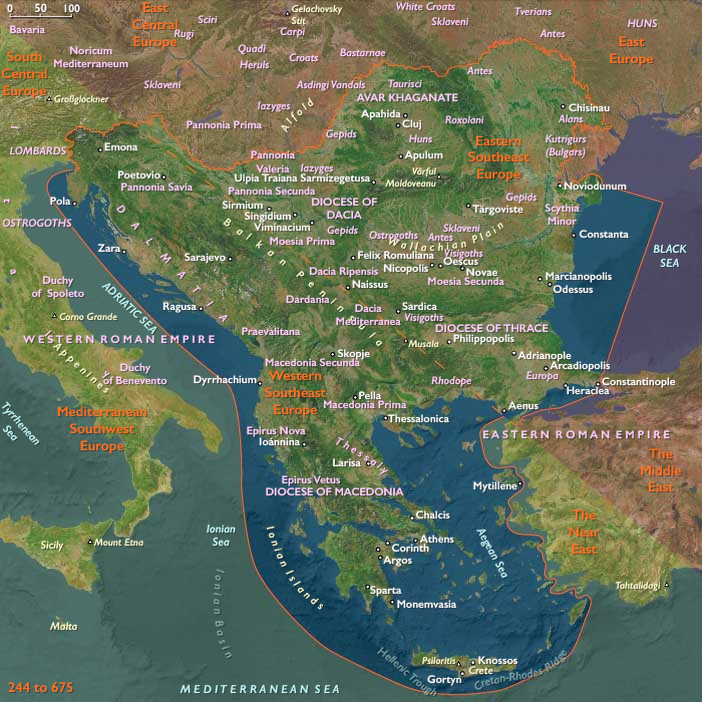
Subregions
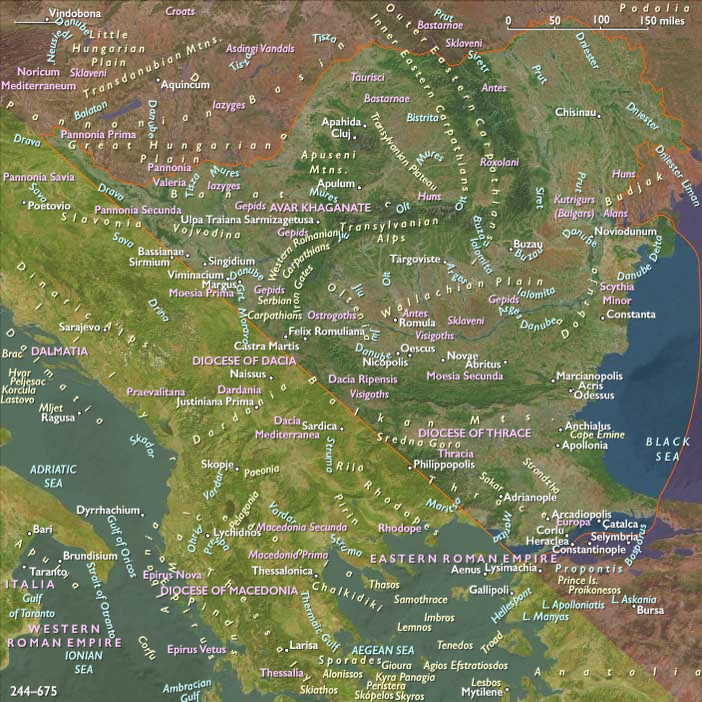
Related Events
Showing 5 events out of 5 total
Years: 400 - 400
January
Locations
People
Groups
- Christianity, Nicene
- East, or Oriens, Praetorian prefecture of
- Roman Empire: Theodosian dynasty (Constantinople)
- Roman Empire, Western (Milan)
Topics
- Middle Subatlantic Period
- Late Antiquity
- Migration Period
- Hun Raids on the Roman Empire
- Fall of the Western Roman Empire
Commodoties
Subjects
- Origins
- Commerce
- Symbols
- Sculpture
- Painting and Drawing
- Environment
- Labor and Service
- Conflict
- Mayhem
- Faith
- Government
- Technology
- History
- Movements
- Mythology
- Theology
Regions
Subregions