
Constantine of Mananalis, a dualistic community near …
Years: 685 - 685
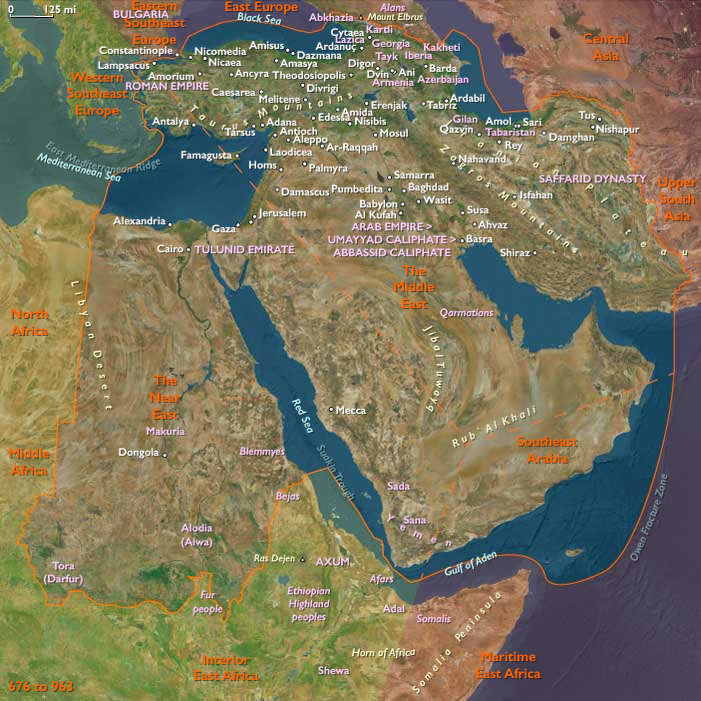
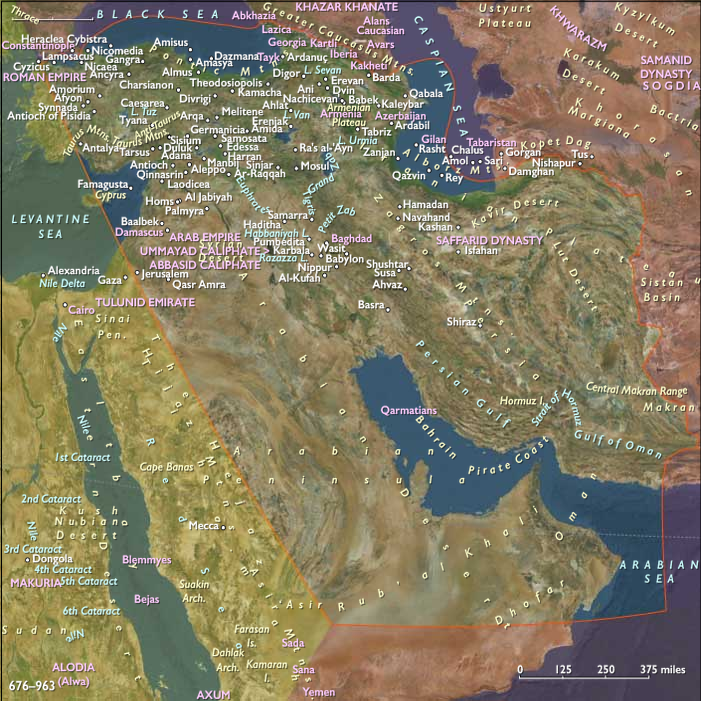
Constantine of Mananalis, a dualistic community near Samosata, had studied the Gospels and Epistles, combined dualistic and Christian doctrines, and, upon the basis of the former, vigorously opposed the formalism of the church.
Regarding himself as called to restore the pure Christianity of Paul, he had adopted the name Silvanus, one of Paul’s disciples, and about the year 660 had established his first congregation at Kibossa, near Colonia in western Armenia thus founding the Paulician sect.
Constantine-Silvanus directs the Paulician movement until his death in 684, which occurs by stoning after his arrest by soldiers sent by the emperor Constantine IV to suppress heresy.
Having insisted that the New Testament (as he interpreted it) should be the only written source of religious guidance, Constantine-Silvanus leaves no known writings.
His duality of names will be imitated by subsequent Paulician leaders.
Simeon, the court official who had executed the order, is himself converted, and, adopting the name Titus, becomes Constantine’s successor.
The dualistic sect, holding Gnostic and Manichaean beliefs and subject to sporadic persecutions, flourishes between 650 and 872 in Anatolia, spreading from Armenia to the Eastern Themes of the Empire.
The Gnostic dualistic sect called Bogomilism, the synthesis of Armenian Paulicianism and the Bulgarian Slavonic Church reform movement, would emerge in Bulgaria between 927 and 970 and spread throughout the Empire into Serbia, Bosnia, Italy and France; Bogomilism will eventually morph into Catharism, a name given to a religious sect with Gnostic elements that will appear in the Languedoc region of France in the eleventh century and flourish in the twelfth and thirteenth centuries.
Locations
People
Groups
- Gnosticism
- Manicheanism
- Christianity, Chalcedonian
- Roman Empire, Eastern: Heraclian dynasty
- Paulicians
Topics
Subjects
Regions
Subregions
Years: 685 - 685
Locations
People
Groups
- Gnosticism
- Manicheanism
- Christianity, Chalcedonian
- Roman Empire, Eastern: Heraclian dynasty
- Paulicians
Topics
Subjects
Regions
Subregions