
Conrad, shortly after the council, swears an …
Years: 1095 - 1095
April
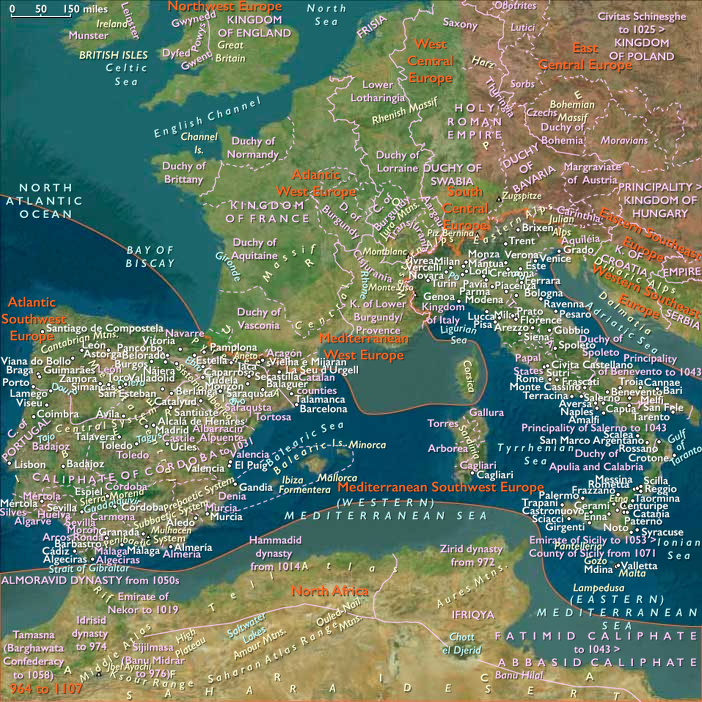
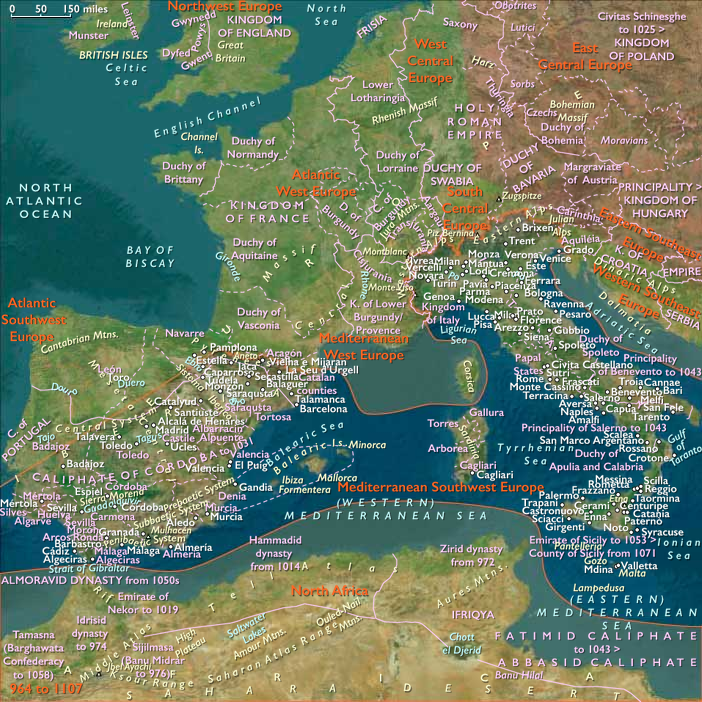
Conrad, shortly after the council, swears an oath of loyalty to Pope Urban II on April 10 at Cremona and serves as the Pope's strator (groom), leading the Pope's horse as a symbolic gesture of humility first performed, according to tradition, by Constantine I.
The duty of the strator had not been performed for a pope since the ninth century, and is revived specifically for Conrad.
In a second meeting at Cremona on April 15, Conrad swears an oath, either of "security" or of "fealty", to the pope, guaranteeing the "life, limb and Roman papacy" to Urban.
This oath is customary for kings who will be crowned emperor, but Conrad goes further and promises to forsake lay investiture.
Urban in turn promises Conrad "his advice and aid in obtaining the kingship and the crown of the empire", probably a promise to crown him in the future, after he has control of the kingdom.
By these actions Conrad has transformed himself from a rebellious son to a papally sponsored anti-king and supporter of the Reform movement.
Locations
People
- Antipope Clement III
- Boniface del Vasto
- Conrad II of Italy
- Eupraxia of Kiev
- Henry IV, Holy Roman Emperor
- Pope Urban II
- Welf II
Groups
- Lombards (West Germanic tribe)
- Saxons
- Saxony, Duchy of
- Tuscany, Margravate of
- Normans
- German, or Ottonian (Roman) Empire
- Italy, Kingdom of (Holy Roman Empire)
- Pataria
- Christians, Roman Catholic
- Bavaria, Welf Duchy of
Topics
Commodoties
Subjects
Regions
Subregions
Years: 1095 - 1095
April
Locations
People
- Antipope Clement III
- Boniface del Vasto
- Conrad II of Italy
- Eupraxia of Kiev
- Henry IV, Holy Roman Emperor
- Pope Urban II
- Welf II
Groups
- Lombards (West Germanic tribe)
- Saxons
- Saxony, Duchy of
- Tuscany, Margravate of
- Normans
- German, or Ottonian (Roman) Empire
- Italy, Kingdom of (Holy Roman Empire)
- Pataria
- Christians, Roman Catholic
- Bavaria, Welf Duchy of
Topics
Commodoties
Subjects
Regions
Subregions