
Conrad, born on February 12, 1074, at …
Years: 1088 - 1088
January
Conrad, born on February 12, 1074, at Hersfeld Abbey while his father, Henry IV, was fighting against the Saxon Rebellion, had been baptized in the abbey three days later.
After his victory against the Saxons, Henry had arranged for an assembly at Goslar on Christmas Day 1075 to swear an oath recognizing Conrad as his successor.
After the death of Duke Godfrey IV of Lower Lorraine on February 22, 1076, Henry had refused to appoint the late duke's own choice of successor, his nephew, Godfrey of Bouillon, and instead named his two-year-old son Duke of Lower Lorraine.
He did appoint Albert III of Namur, the deceased duke's brother-in-law, as his son vice-duke (vicedux) to perform the daily functions of government.
He also allowed the march of Antwerp to pass to Godfrey of Bouillon.
The total absence of Conrad from his duchy has caused or abetted the decline of ducal authority in it.
In 1082, while Conrad was in Italy, the peace of God had been introduced into the diocese of Liège.
Conrad had passed Christmas 1076 at Besançon with his parents.
Early the next year, he had accompanied his father across the Alps on the way to Canossa, because there was no one in Germany to whom Henry could have entrusted his son.
Conrad had subscribed to his first royal charter in 1079.
When Henry returned to Germany, Conrad had remained in Italy to act as a pledge to the imperialist party there.
He had been placed in the care of Archbishop Tedald of Milan and Bishop Denis of Piacenza, both excommunicated prelates and opponents of Pope Gregory VII.
In October 1080, Conrad had been present in the camp when a force from northern Italy defeated the troops of Marchioness Matilda of Tuscany near Mantua.
The Saxon lords who had supported the kingship of the late Rudolf of Swabia against Henry gathered in December 1080 "to discuss the state of their kingdom [Saxony]" in Bruno of Merseburg's words.
Henry had sent envoys to the Saxons asking them to accept his son Conrad as their king, and in exchange he promised never to enter Saxony.
(Conrad was apparently back in Germany.)
Otto of Northeim, speaking for the Saxons, "desired neither the son nor the father" since he had "often seen a bad calf begotten by a bad ox."
Henry had in December 1080 entered Italy, where he endeavored to wed his son to a daughter of Robert Guiscard.
He had offered Robert the march of Fermo as well, but no marriage could be agreed to since the duke had refused to do homage for his duchy of Apulia.
Again Henry left Conrad in Italy (July 1081), this time in the care of the lay princes "to watch over the province for him", according to the Annales Brunwilarenses and Annales Patherbrunnenses.
Conrad had returned to Germany in 1087 and, on May 30, had been crowned king in Aachen by Archbishop Sigwin of Cologne.
The ceremony was attended by Albert of Namur, Godfrey of Bouillon and Duke Magnus of Saxony, according to the Annales Weissenburgenses.
The last reference to Conrad as duke of Lower Lotharingia (dux Lothariorum) comes from a charter issued at Aachen shortly before his coronation, after which Henry had appointed Godfrey of Bouillon duke in his place.
On December 27, shortly after Conrad’s departure from Germany, his mother dies at thirty-six in Mainz.
By January 1088, Conrad has returned to Italy, with Bishop Ogerius of Ivrea as his chancellor and advisor.
The passing of Bertha perhaps provokes the rupture between Conrad and his father.
Locations
People
Groups
- Lombards (West Germanic tribe)
- Saxons
- Saxony, Duchy of
- Tuscany, Margravate of
- Normans
- German, or Ottonian (Roman) Empire
- Italy, Kingdom of (Holy Roman Empire)
- Christians, Roman Catholic
- Bavaria, Welf Duchy of
Topics
Commodoties
Subjects
Regions
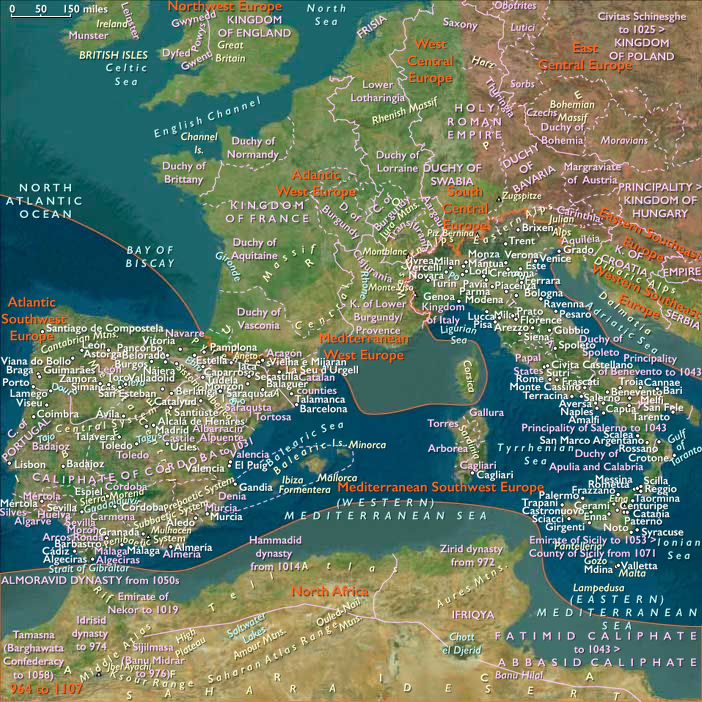
Subregions
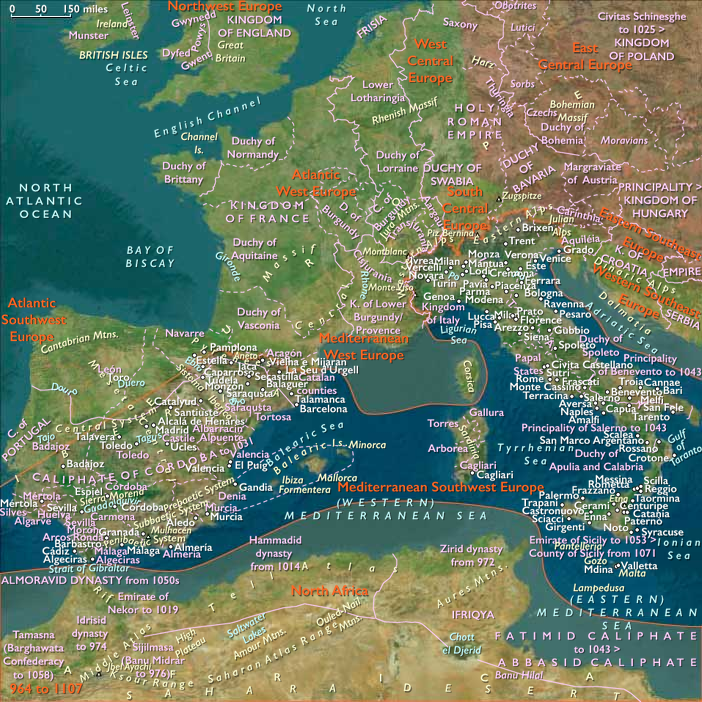
Years: 1088 - 1088
January
Locations
People
Groups
- Lombards (West Germanic tribe)
- Saxons
- Saxony, Duchy of
- Tuscany, Margravate of
- Normans
- German, or Ottonian (Roman) Empire
- Italy, Kingdom of (Holy Roman Empire)
- Christians, Roman Catholic
- Bavaria, Welf Duchy of
Topics
Commodoties
Subjects
Regions
Subregions