
Both sides, in the course of this …
Years: 1540 - 1683
Both sides, in the course of this conflict, request assistance from the VOC, which now faces a momentous decision.
The company seeks political stability and a reliable supply of such key products as rice and teak, and it determines for the first time in more than a half-century that, in order to obtain them, intervention in Mataram's internal affairs is necessary.
Company officials view Javanese kingship through a European lens as a relatively absolutist, centralized form of rule that legitimates succession by, if not strict primogeniture, then something very close to it.
This is a misreading of Javanese (and, indeed, other Indonesian) cultural custom, but nonetheless the VOC gradually comes to see itself as the upholder of order (tradition) and to justify its actions in terms of favoring continuity rather than change.
It makes its choices accordingly, often with the ironic result of creating rather than solving discord and of weakening rather than strengthening the sorts of order it hoped to achieve.
In any case, the VOC decides in 1676 to back the forces of Amangkurat I, who dies soon after having fled to VOC-controlled territory on the Pasisir, and then to support his rebellious son as successor, a project requiring five more years of warfare to complete.
The company gains treaties promising, among other things, access to the products and trading rights it sought, as well as repayment of all its military costs.
That these treaty obligations prove difficult to fulfill does not negate the fact that the VOC has now embarked on a course that will slowly and expensively intertwine its own fate with that of Mataram.
The dark legacy of Amangkurat's tyrannical misrule thus lies not only in eighty years of turbulence in Javanese life, punctuated by three destructive wars of succession, but also in the establishment of patterns of Dutch entanglement in indigenous affairs that are to outlive the VOC itself.
Locations
People
Groups
- Bugis
- Hinduism
- Buddhism
- Indian people
- Malays, Ethnic
- Javanese people
- Acehnese people
- Osing people
- Dutch people
- Islam
- Bali, Kingdom of
- English people
- Tidore, Sultanate of
- Aceh, or Atjeh, Sultanate
- Blambangan, Kingdom of
- Ternate, Sultanate of
- Balinese
- Makassar people
- Banjarmasin, Sultanate of
- Banten Sultanate
- Mataram, Sultanate of
- Netherlands, United Provinces of the (Dutch Republic)
- East India Company, British (The Company of Merchants of London Trading into the East Indies)
- Dutch East India Company in Indonesia
- Dutch East India Company (Vereenigde Oostindische Compagnie or VOC in Dutch, literally "United East Indies Company")
- England, (Stuart) Kingdom of
Topics
Commodoties
Subjects
Regions
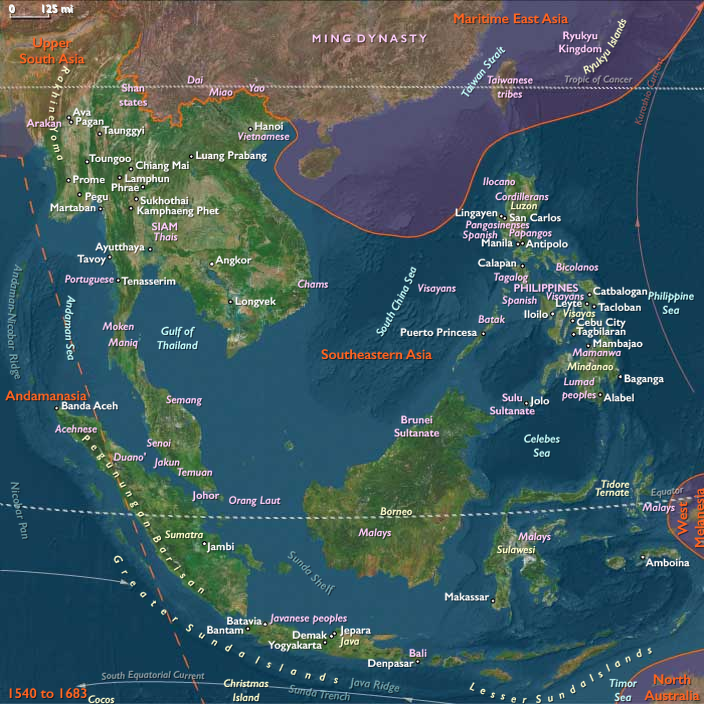
Subregions
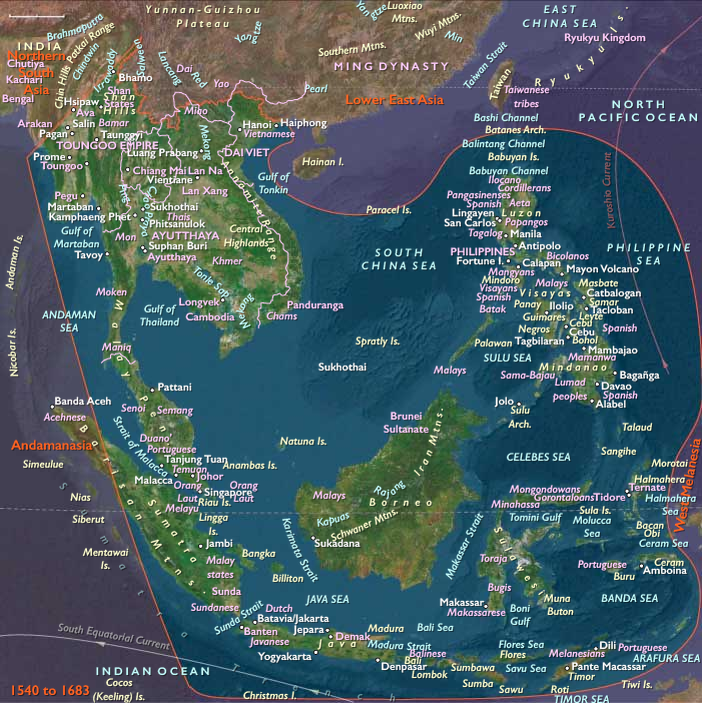
Years: 1540 - 1683
Locations
People
Groups
- Bugis
- Hinduism
- Buddhism
- Indian people
- Malays, Ethnic
- Javanese people
- Acehnese people
- Osing people
- Dutch people
- Islam
- Bali, Kingdom of
- English people
- Tidore, Sultanate of
- Aceh, or Atjeh, Sultanate
- Blambangan, Kingdom of
- Ternate, Sultanate of
- Balinese
- Makassar people
- Banjarmasin, Sultanate of
- Banten Sultanate
- Mataram, Sultanate of
- Netherlands, United Provinces of the (Dutch Republic)
- East India Company, British (The Company of Merchants of London Trading into the East Indies)
- Dutch East India Company in Indonesia
- Dutch East India Company (Vereenigde Oostindische Compagnie or VOC in Dutch, literally "United East Indies Company")
- England, (Stuart) Kingdom of
Topics
Commodoties
Subjects
Regions
Subregions