
Increased Muslim-Christian Communication and the First Latin …
Years: 1132 - 1143
Increased Muslim-Christian Communication and the First Latin Translation of the Qur’an (Early 12th Century)
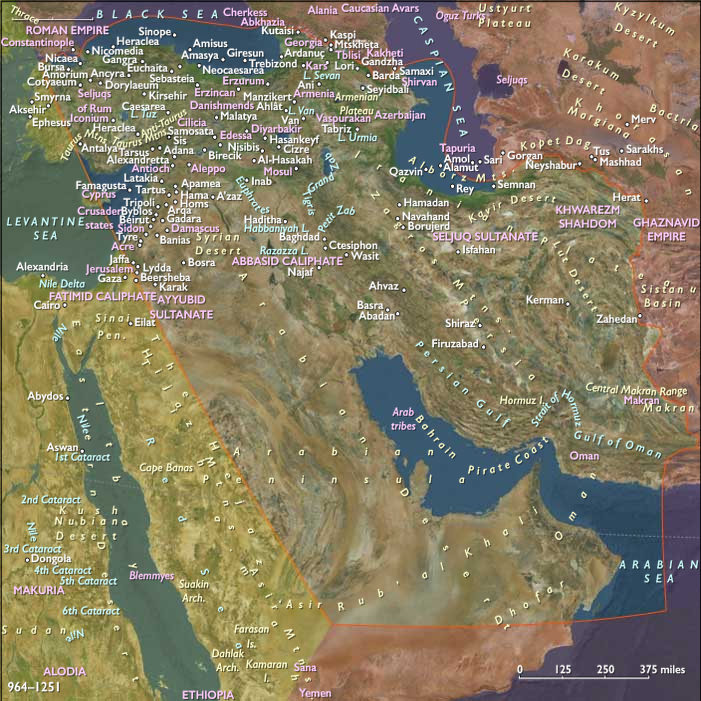
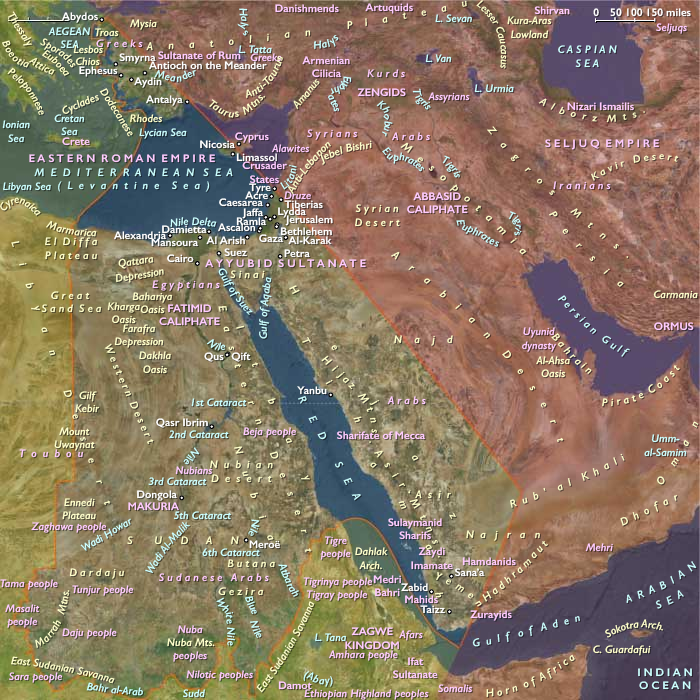
During the early 12th century, contact between Muslims and Christians increased dramatically, driven by a combination of trade, diplomacy, warfare, and intellectual exchange. While the Crusades had created a highly conflicted relationship between the two civilizations, they also fostered cross-cultural interactions, particularly in Spain, Sicily, and the Levant, where Christian and Muslim scholars exchanged ideas.
This period of heightened engagement culminated in the first Latin translation of the Qur’an, marking a significant intellectual milestone in Christian understanding of Islam.
Factors Leading to Increased Communication
-
The Reconquista and the Crusades
- As Christian forces expanded into Muslim territories in Spain and the Levant, they came into contact with Islamic knowledge, administration, and culture.
- Captured Muslim libraries provided access to scientific, philosophical, and theological works, including texts on astronomy, medicine, and mathematics.
-
The Translation Movement in Spain
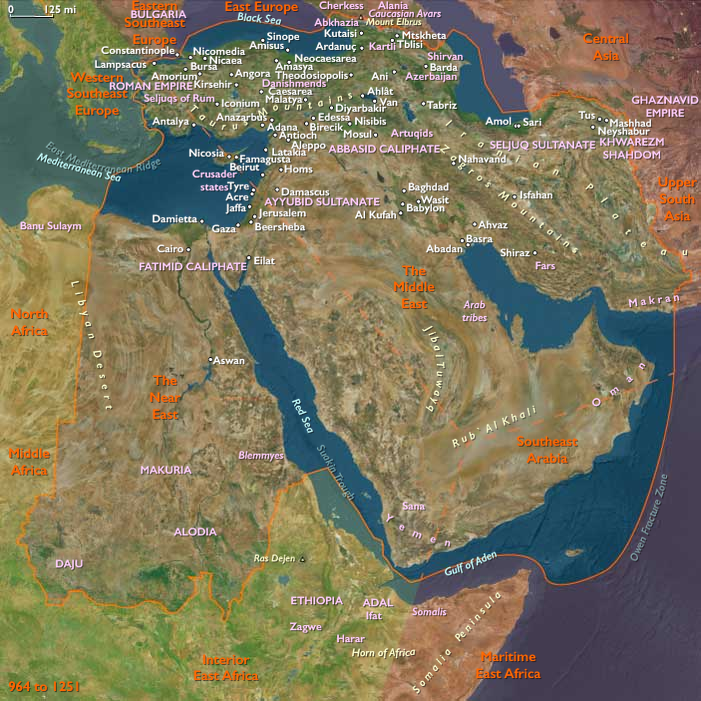
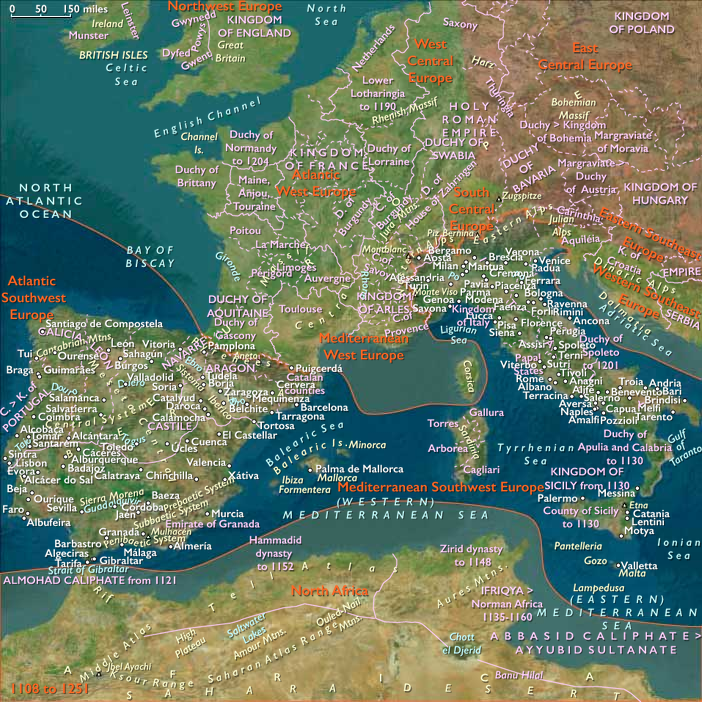
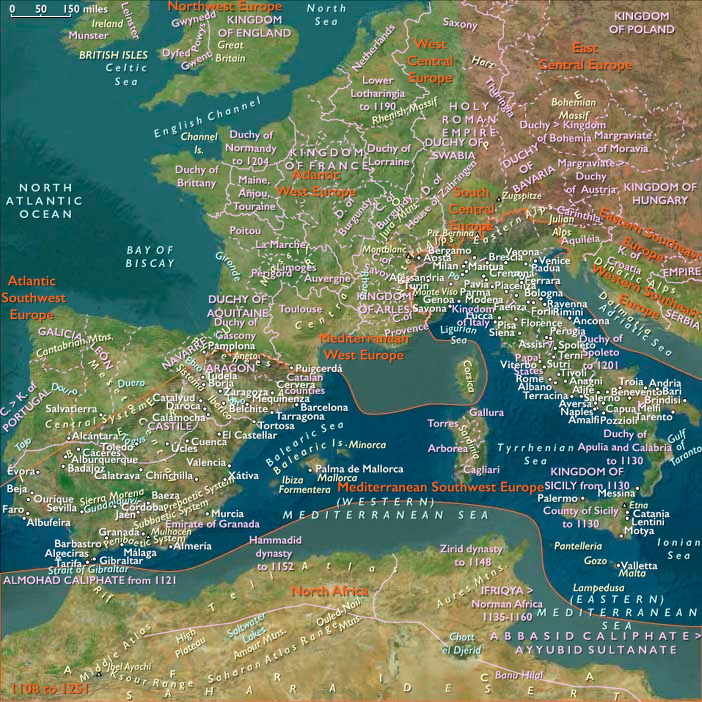
- Cities such as Toledo, Seville, and Barcelona became major centers for the translation of Arabic texts into Latin.
- Jewish, Christian, and Muslim scholars worked together to translate philosophical and scientific works, including those of Aristotle, Avicenna (Ibn Sina), and Averroes (Ibn Rushd).
-
The Rise of Christian Curiosity About Islam
- With continued military and cultural engagement, European scholars and churchmen sought to better understand Islamic beliefs.
- Some viewed this as a way to refute Islam, while others approached it with scholarly interest.
The First Latin Translation of the Qur’an (c. 1143 CE)
- The first known Latin translation of the Qur’an was commissioned by Peter the Venerable, the abbot of Cluny, who saw the importance of understanding Islam through its sacred text.
- The translation was completed by Robert of Ketton, an English scholar active in Toledo, in 1143 CE.
- This "Lex Mahumet pseudoprophete" (The Law of Muhammad the False Prophet) became the primary source for European knowledge of the Qur’an for centuries.
- Although its purpose was largely polemical, seeking to refute Islam, the translation allowed European scholars to engage with Islamic theology and philosophy on a deeper level.
Impact of This Intellectual Exchange
- The translation of the Qur’an into Latin marked a turning point in European knowledge of Islam, shifting from purely military confrontation to theological and academic engagement.
- The broader translation movement introduced Greek and Arabic knowledge into Western Europe, fueling the 12th-century Renaissance and shaping medieval Scholasticism.
- Over time, these exchanges influenced Christian theology, philosophy, and science, bridging the intellectual traditions of East and West.
The early 12th-century era of intense Muslim-Christian contact was one of both conflict and learning, ultimately reshaping the intellectual landscape of medieval Europe.
Groups
Topics
Commodoties
Subjects
Regions

Subregions
- Middle East
- Near East
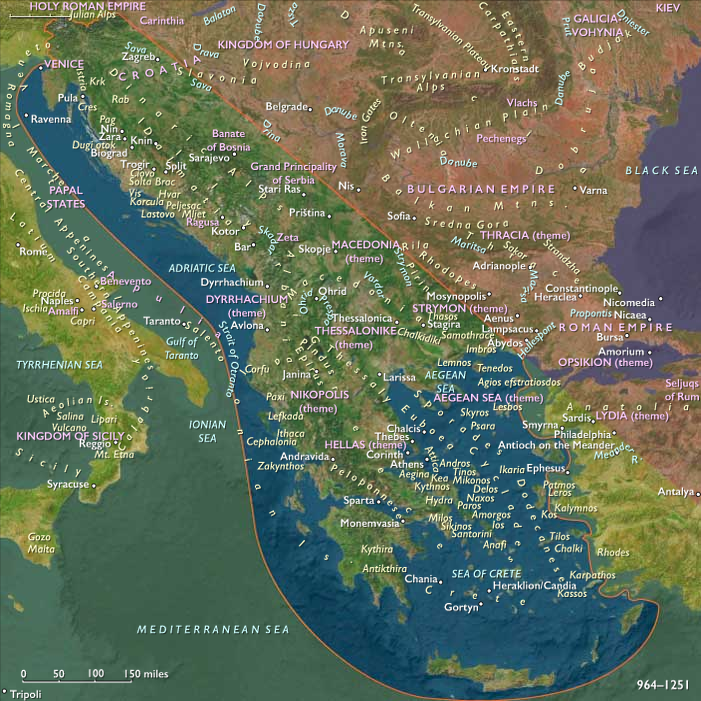
- Western Southeast Europe
- Mediterranean West Europe
- Mediterranean Southwest Europe
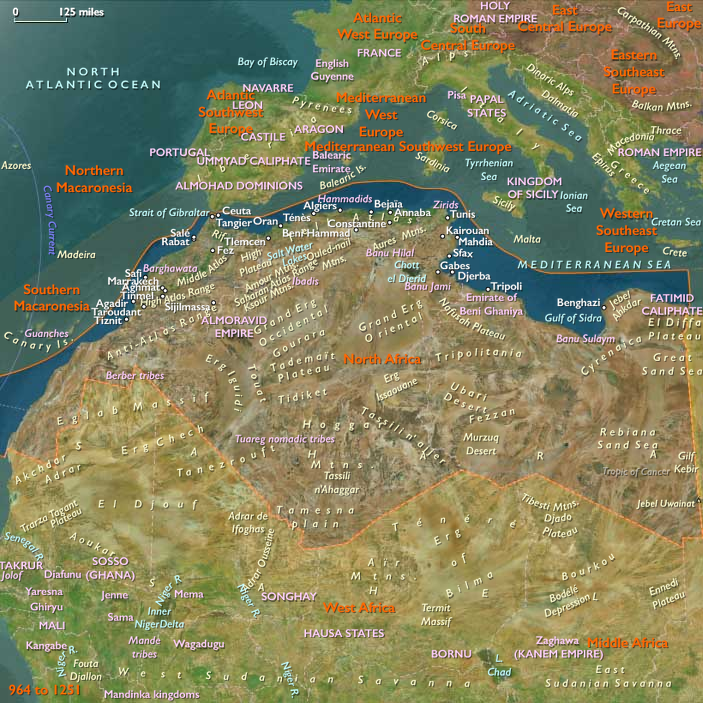
- North Africa
- Atlantic West Europe


Years: 1132 - 1143
Groups
Topics
Commodoties
Subjects
Regions
Subregions
- Middle East
- Near East
- Western Southeast Europe
- Mediterranean West Europe
- Mediterranean Southwest Europe
- North Africa
- Atlantic West Europe