Filters:
The End of the Iron Age Cold …
Years: 309BCE - 298BCE
The End of the Iron Age Cold Epoch and the Onset of the Subatlantic Period (c. 300 BCE)
Around 300 BCE, the Iron Age Cold Epoch came to an end, marking a significant climatic shift in Western Europe. This transition ushered in the Subatlantic Period, characterized by milder winters and relatively warm summers, creating more stable environmental conditions for human populations.
Climatic Changes and Their Impact
- Warmer and more temperate conditions replaced the cooler and harsher climate of the preceding Iron Age Cold Epoch.
- Increased precipitation likely supported the expansion of woodlands and agricultural productivity.
- The return to a stable, favorable climate contributed to population growth, economic expansion, and urbanization across many Iron Age societies.
Effects on Western European Cultures
- Celtic La Tène Expansion – The improved climate coincided with the peak of La Tène culture (c. 450 BCE–1st century BCE), which saw the expansion of Celtic societies across Gaul, Britain, Iberia, and Central Europe.
- Advancements in Agriculture – The milder climate supported intensified farming and the expansion of settlements and trade networks.
- Increased Contact with the Mediterranean – Improved conditions facilitated long-distance trade, as Celtic tribes and Mediterranean civilizations (Greeks, Carthaginians, and Romans) exchanged goods, technologies, and cultural influences.
Significance of the Subatlantic Period
- This climate stability persisted for centuries, influencing Roman-era agriculture, trade, and settlement patterns.
- The end of the Iron Age Cold Epoch played a role in shaping the social and economic landscape of Europe, paving the way for larger, more complex societies.
- The milder climate of the Subatlantic Period would remain dominant until later medieval climate fluctuations, such as the Roman Warm Period and the Little Ice Age.
Thus, by 300 BCE, the transition from the Iron Age Cold Epoch to the Subatlantic Period contributed to the expansion and development of Iron Age European societies, reinforcing the conditions that would shape early state formations and the rise of powerful civilizations.
Years: 309BCE - 298BCE
Topics
Subjects
Regions
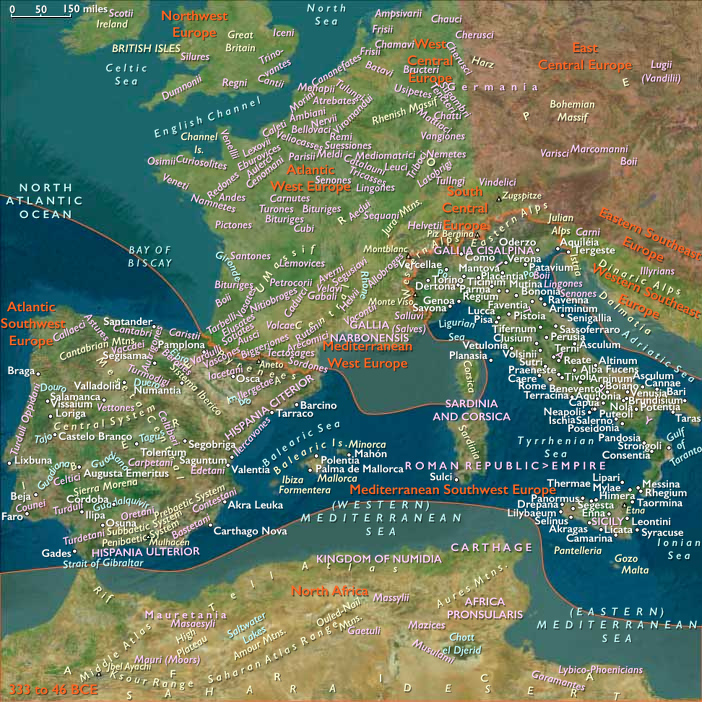
Subregions
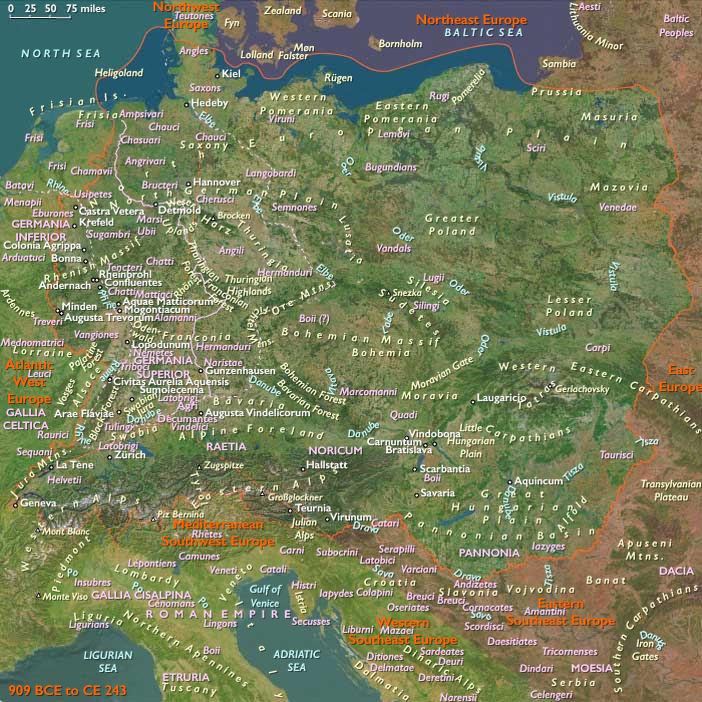
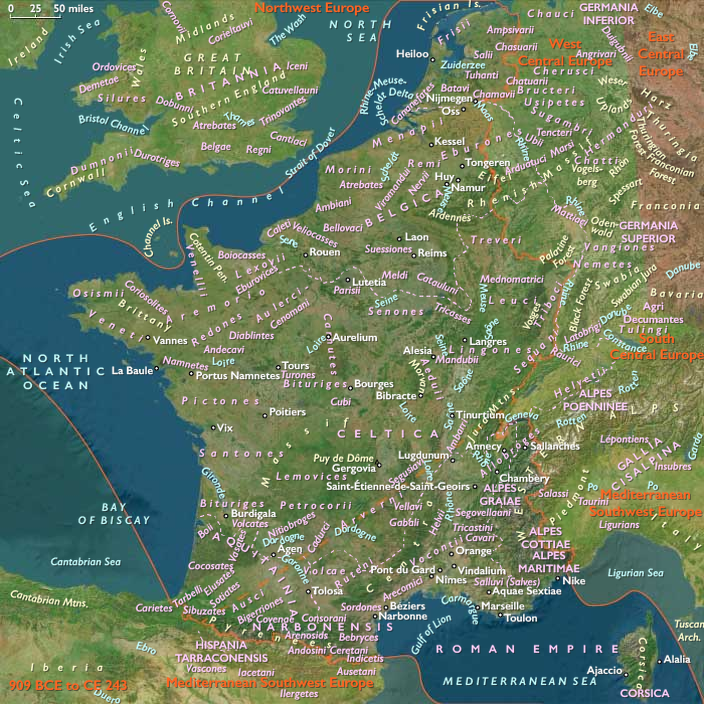
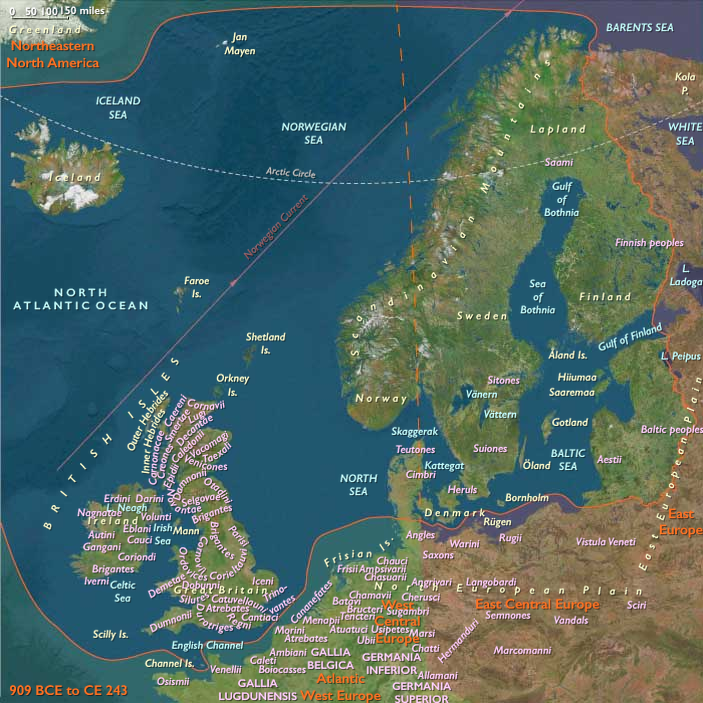
- Mediterranean Southwest Europe
- Atlantic Southwest Europe
- Atlantic West Europe
- West Central Europe
- Northwest Europe