
Commodus restores his praenomen to Lucius in …
Years: 191 - 191
Commodus restores his praenomen to Lucius in 191 and adds the family name Aelius, apparently linking himself to Hadrian and Hadrian's adopted son Lucius Aelius Caesar, whose original name was also Commodus.
Later this year, he drops Antoninus and adopts as his full style Lucius Aelius Aurelius Commodus Augustus Herculeus Romanus Exsuperatorius Amazonius Invictus Felix Pius (the order of some of these titles varies in the sources).
Exsuperatorius (the supreme) was a title given to Jupiter, and Amazonius identifies him again with Hercules.
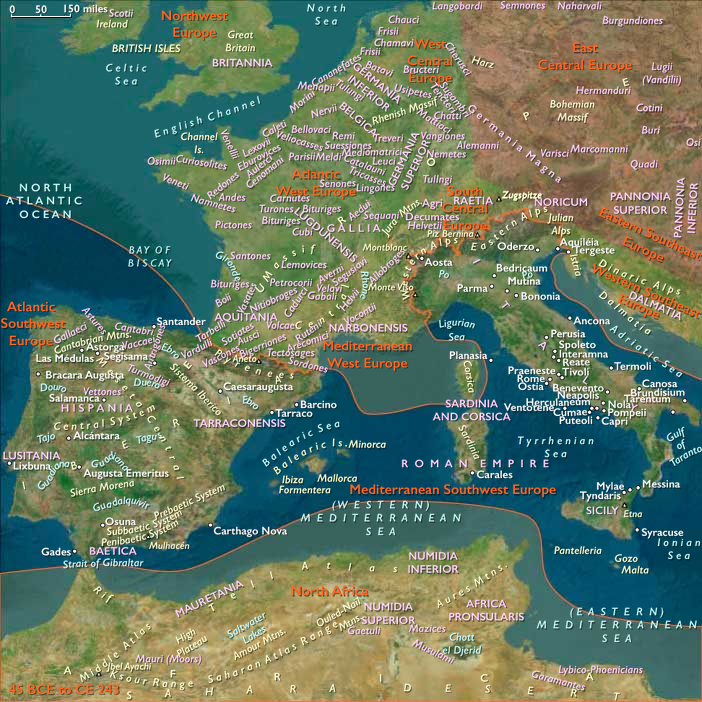
During 191, the city of Rome is extensively damaged by a fire that rages for several days, during which many public buildings including the Temple of Pax, the Temple of Vesta and parts of the imperial palace are destroyed.
Dio Cassius, a firsthand witness who has no known reason to defend Commodus, describes him as "not naturally wicked but, on the contrary, as guileless as any man that ever lived.
His great simplicity, however, together with his cowardice, made him the slave of his companions, and it was through them that he at first, out of ignorance, missed the better life and then was led on into lustful and cruel habits, which soon became second nature." (Dio Cassius 73.1.2, Loeb edition translated E. Cary.)
His recorded actions do tend to show a rejection of his father’s policies, his father’s advisers, and especially his father’s austere lifestyle, and an alienation from the surviving members of his family.
It seems likely that he was brought up in an atmosphere of Stoic asceticism, which he rejected entirely upon his accession to sole rule.
After repeated attempts on Commodus' life, Roman citizens are often killed for raising his ire.
One such notable event is the attempted extermination of the house of the Quinctilii: the brothers Condianus and Maximus, who had both served as consuls, in 151 are executed on the pretext that, while they aren't implicated in any plots, their wealth and talent presumably makes them unhappy with the current state of affairs.
Locations
People
Groups
Subjects
Regions
Subregions
Years: 191 - 191
Locations
People
Groups
Subjects
Regions
Subregions