
Filters:
The military conflict had essentially ended with …
Years: 1765 - 1765
August
The military conflict had essentially ended with the 1764 expeditions, but natives still call for resistance in the Illinois Country, where British troops have yet to take possession of Fort de Chartres from the French.
A Shawnee war chief named Charlot Kaské emerges as the most strident anti-British leader in the region, temporarily surpassing Pontiac in influence.
Kaské travels as far south as New Orleans in an effort to enlist French aid against the British.
In 1765, the British decide that the occupation of the Illinois Country can only be accomplished by diplomatic means.
As Gage comments to one of his officers, he is determined to have "none our enemy" among the native peoples, and that includes Pontiac, to whom he now sends a wampum belt suggesting peace talks.
Pontiac has by now become less militant after hearing of Bouquet's truce with the Ohio Country natives.
Johnson's deputy, George Croghan, accordingly travels to the Illinois Country in the summer of 1765, and although he is injured along the way in an attack by Kickapoos and Mascoutens, he manages to meet and negotiate with Pontiac.
While Charlot Kaské wants to burn Croghan at the stake, Pontiac urges moderation and agrees to travel to New York, where he will make a formal treaty with William Johnson at Fort Ontario on July 25, 1766.
It is hardly a surrender: no lands will be ceded, no prisoners will be returned, and no hostages will be taken.
Rather than accept British sovereignty, Kaské will leave British territory by crossing the Mississippi River with other French and native refugees.
A Shawnee war chief named Charlot Kaské emerges as the most strident anti-British leader in the region, temporarily surpassing Pontiac in influence.
Kaské travels as far south as New Orleans in an effort to enlist French aid against the British.
In 1765, the British decide that the occupation of the Illinois Country can only be accomplished by diplomatic means.
As Gage comments to one of his officers, he is determined to have "none our enemy" among the native peoples, and that includes Pontiac, to whom he now sends a wampum belt suggesting peace talks.
Pontiac has by now become less militant after hearing of Bouquet's truce with the Ohio Country natives.
Johnson's deputy, George Croghan, accordingly travels to the Illinois Country in the summer of 1765, and although he is injured along the way in an attack by Kickapoos and Mascoutens, he manages to meet and negotiate with Pontiac.
While Charlot Kaské wants to burn Croghan at the stake, Pontiac urges moderation and agrees to travel to New York, where he will make a formal treaty with William Johnson at Fort Ontario on July 25, 1766.
It is hardly a surrender: no lands will be ceded, no prisoners will be returned, and no hostages will be taken.
Rather than accept British sovereignty, Kaské will leave British territory by crossing the Mississippi River with other French and native refugees.
Locations
People
- Benjamin Lincoln
- George Croghan
- George III of Great Britain
- Guyasuta
- Henry Louis Bouquet
- John Bradstreet
- Neolin
- Pontiac (Ottawa leader)
- Thomas Gage
- William Johnson, 1st Baronet
Groups
- Iroquois (Haudenosaunee, also known as the League of Peace and Power, Five Nations, or Six Nations)
- Wyandot, or Wendat, or Huron people (Amerind tribe)
- Miami (Amerind tribe)
- Lenape or Lenni-Lenape (later named Delaware Indians by Europeans)
- Ojibwa, or Ojibwe, aka or Chippewa (Amerind tribe)
- Odawa, or Ottawa, people (Amerind tribe)
- Seneca (Amerind tribe)
- Mascouten (Amerind tribe)
- Kickapoo people (Amerind tribe)
- Potawatomi (Amerind tribe)
- Wea (Amerind tribe)
- Piankeshaw (Amerind tribe)
- Susquehannock (Amerind tribe)
- Shawnees, or Shawanos (Amerind tribe)
- Ohio Country
- Illinois Country
- Britain, Kingdom of Great
- Mingo (Seneca-Cayuga Tribe of Oklahoma)
Topics
- Colonization of the Americas, British
- Seven Years' War
- Pontiac's War (Pontiac's Rebellion of Conspiracy)
Subjects
Regions
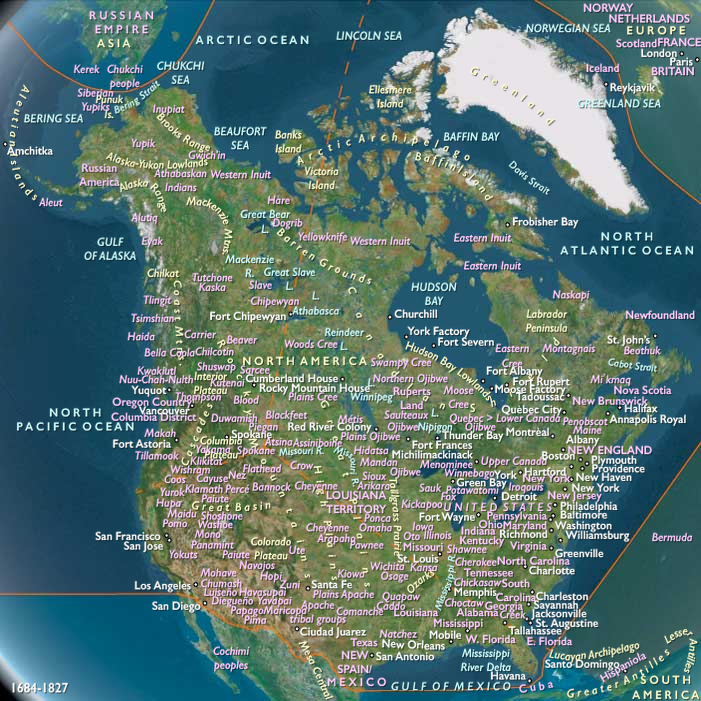
Subregions
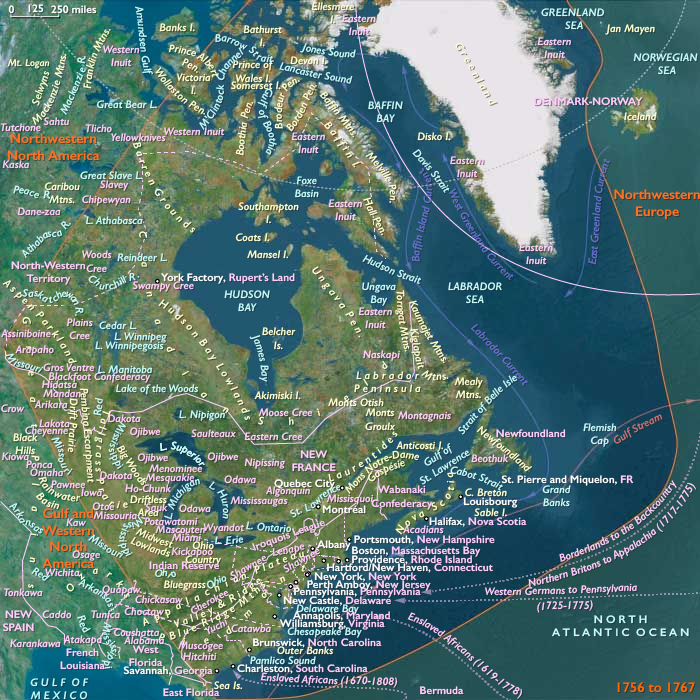
Years: 1765 - 1765
August
Locations
People
- Benjamin Lincoln
- George Croghan
- George III of Great Britain
- Guyasuta
- Henry Louis Bouquet
- John Bradstreet
- Neolin
- Pontiac (Ottawa leader)
- Thomas Gage
- William Johnson, 1st Baronet
Groups
- Iroquois (Haudenosaunee, also known as the League of Peace and Power, Five Nations, or Six Nations)
- Wyandot, or Wendat, or Huron people (Amerind tribe)
- Miami (Amerind tribe)
- Lenape or Lenni-Lenape (later named Delaware Indians by Europeans)
- Ojibwa, or Ojibwe, aka or Chippewa (Amerind tribe)
- Odawa, or Ottawa, people (Amerind tribe)
- Seneca (Amerind tribe)
- Mascouten (Amerind tribe)
- Kickapoo people (Amerind tribe)
- Potawatomi (Amerind tribe)
- Wea (Amerind tribe)
- Piankeshaw (Amerind tribe)
- Susquehannock (Amerind tribe)
- Shawnees, or Shawanos (Amerind tribe)
- Ohio Country
- Illinois Country
- Britain, Kingdom of Great
- Mingo (Seneca-Cayuga Tribe of Oklahoma)
Topics
- Colonization of the Americas, British
- Seven Years' War
- Pontiac's War (Pontiac's Rebellion of Conspiracy)
Subjects
Regions
Subregions