
Coenred's father Wulfhere had come to the …
Years: 704 - 704
Coenred's father Wulfhere had come to the throne of Mercia in 658 as the result of a coup, ending a three-year period of Northumbrian control.
Wulfhere had been succeeded on his death (in 675) by his brother Æthelred, Coenred's uncle, possibly because Coenred was too young to rule.
Coenred's mother, Ermenilda, had become a nun sometime after Wulfhere's death.
Æthelred's decisive victory over the Northumbrians at the Battle of the Trent in 679, followed by the Picts' destruction of the Northumbrian army at the Battle of Dun Nechtain in 685, had reduced Northumbrian power and influence.
There is evidence of Mercian activity in the southeast as well.
Æthelred had invaded Kent in 676, and charters survive in which he confirmed land grants made by Swæfheard and Oswine, kings of west and east Kent.
Another charter of Æthelred's, dated between 693 and 704, grants land to Waldhere, the bishop of London.
However, Æthelred does not appear to have sought expansion further south.
The growing strength of the West Saxons under Cædwalla and Ine would have limited Mercian opportunities in that direction.
The Anglo-Saxon Chronicle records that in 702 Coenred succeeded to the kingdom of the Southumbrians and that in 704 he became king of Mercia.
As the "Southumbrians" were those who lived south of the Humber, Mercia's northern boundary, the two annals have proved difficult to interpret: Coenred and Æthelred may have ruled jointly for two years before Æthelred abdicated, or the chroniclers may have recorded the same event twice, once from a source that was two years in error.
According to the eighth-century life of St Guthlac, Æthelred appointed Coenred as his heir despite having at least one son of his own, Ceolred.
Æthelred appears to have retained influence during his nephew's reign: the Life of St Wilfrid relates how he summoned Coenred and made him swear to support Wilfrid in his conflict with the church hierarchy.
Locations
People
Groups
- Saxons
- Anglo-Saxons
- Christianity, Chalcedonian
- Kent, Kingdom of
- Mercia, Kingdom of
- Britain, Medieval
- Northumbria, Kingdom of
Topics
Subjects
Regions
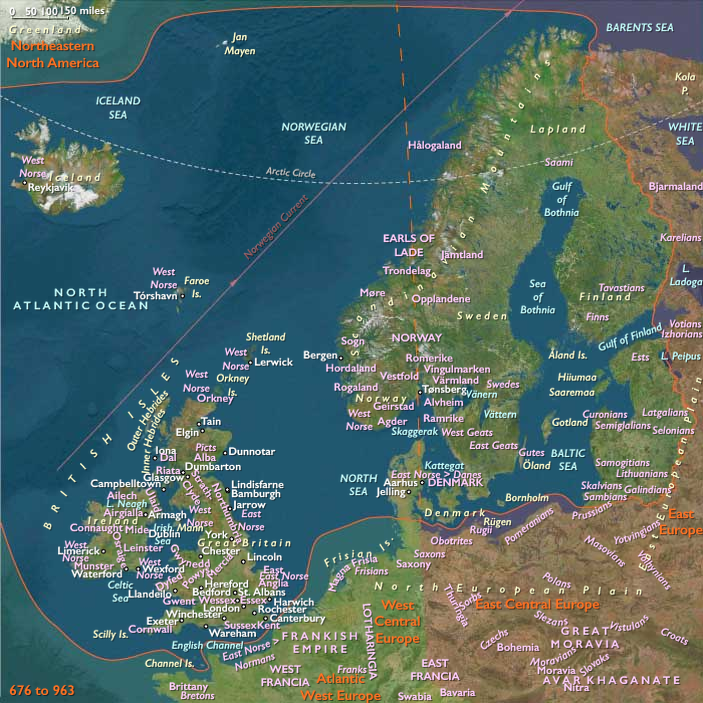
Subregions
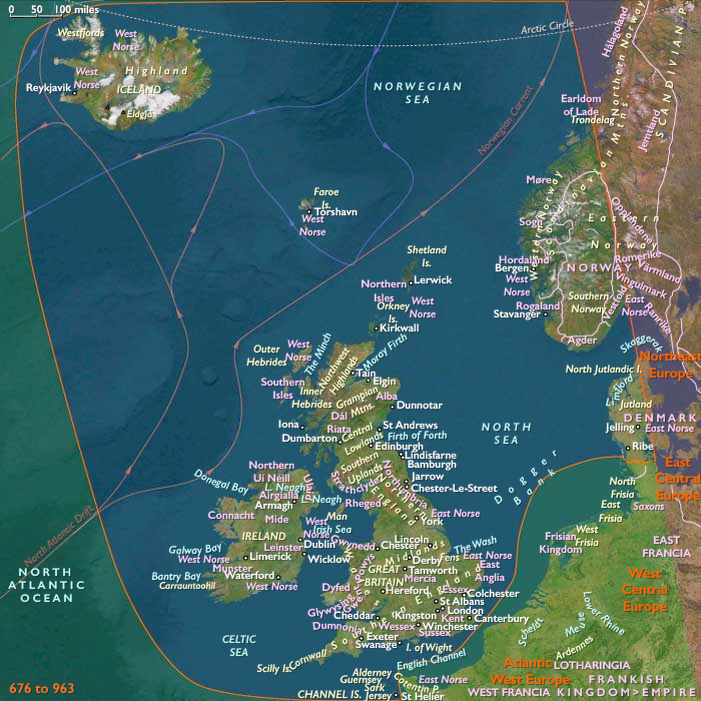
Years: 704 - 704
Locations
People
Groups
- Saxons
- Anglo-Saxons
- Christianity, Chalcedonian
- Kent, Kingdom of
- Mercia, Kingdom of
- Britain, Medieval
- Northumbria, Kingdom of
Topics
Subjects
Regions
Subregions