
Filters:
The Death of Clovis II and the …
Years: 657 - 657
The Death of Clovis II and the Regency of Queen Balthild (657 CE)
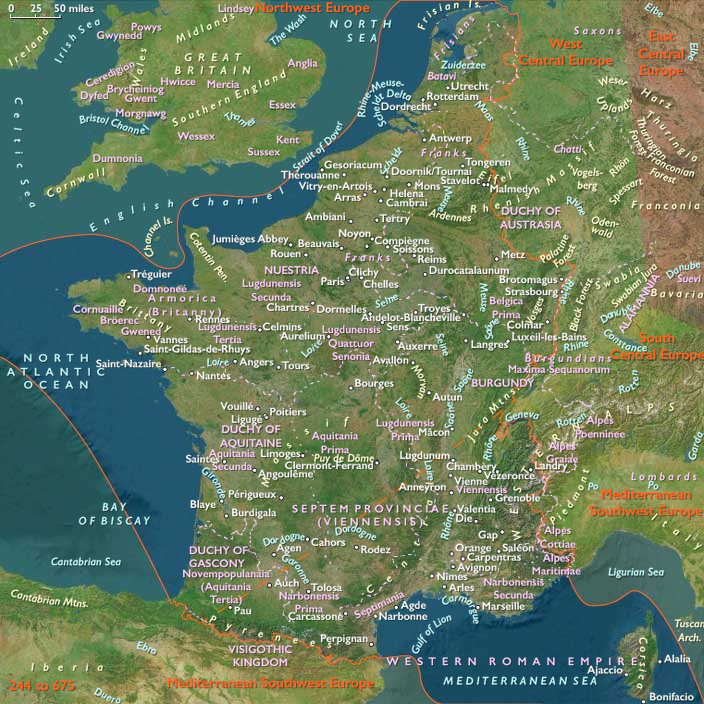
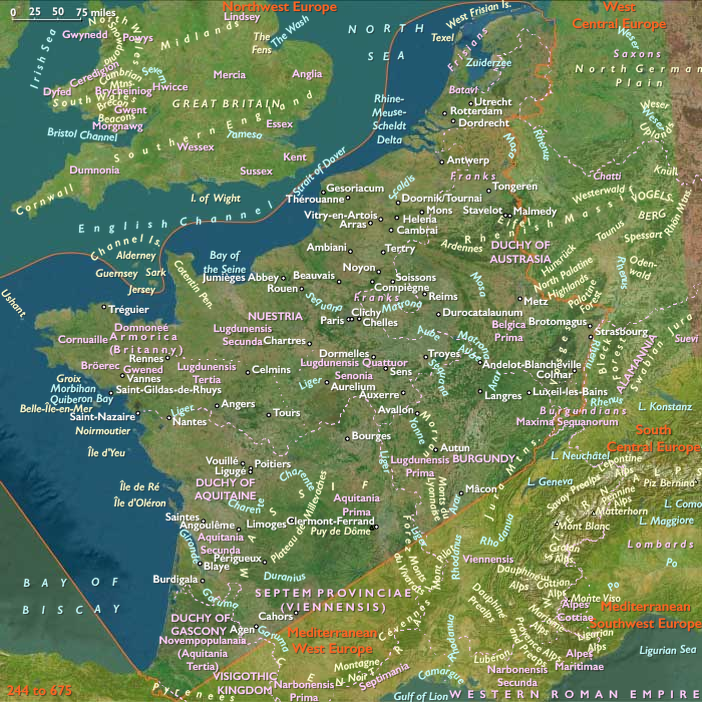
In 657 CE, Clovis II, King of Neustria and Burgundy, dies, leaving his five-year-old son, Chlothar III, as his successor. Due to the young king’s minority, real power falls to his mother, Queen Balthild, who serves as regent, making her one of the most influential figures in the Frankish realm during this period.
1. The Regency of Queen Balthild
- As queen regent, Balthild governs Neustria and Burgundy in her son’s name, consolidating royal authority while balancing noble factions.
- Her policies strengthen the Church, continuing Merovingian royal patronage of monasteries.
- She maintains Neustrian dominance over Austrasia, ensuring that Chlothar III remains the primary Frankish ruler.
2. Challenges and Aristocratic Influence
- While Balthild rules, real power continues to shift toward the Mayors of the Palace, particularly Ebroin, who emerges as a dominant figure in Neustrian politics.
- The Frankish aristocracy seeks greater autonomy, increasingly dictating royal decisions as the Merovingian kings become more ceremonial.
- The division between Austrasia and Neustria-Burgundy remains, though Balthild ensures her son’s position remains strong.
3. The Legacy of Balthild’s Regency
- Balthild’s rule is marked by stability, Church patronage, and administrative reform, but also by the continued decline of Merovingian royal authority.
- After Chlothar III reaches maturity, Balthild is forced into monastic retirement, ending her direct influence on governance.
- Her regency ensures that the Merovingian dynasty remains in power, even as real control shifts to the nobility and the Mayors of the Palace.
Conclusion: The Merovingian Throne in Decline
The death of Clovis II in 657 CE and the regency of Queen Balthild highlight the growing power of the nobility over the Merovingian monarchy. While Chlothar III is nominally King of Neustria and Burgundy, the true rulers of Francia are increasingly the Mayors of the Palace, signaling the dynasty’s continued decline and foreshadowing the rise of the Carolingians.
Locations
People
Groups
Topics
Subjects
Regions
Subregions
Years: 657 - 657
Locations
People
Groups
Topics
Subjects
Regions
Subregions