
The Battle of Baugé (March 21, 1421): …
Years: 1421 - 1421
The Battle of Baugé (March 21, 1421): The English Defeat and the Death of the Duke of Clarence
The Battle of Baugé, fought on March 21, 1421 (Easter Saturday), was a decisive Franco-Scottish victory during the Hundred Years’ War, marking England’s first major defeat since Agincourt (1415). The battle was largely determined by the rash leadership of Thomas, Duke of Clarence, brother of King Henry V of England, who led a reckless charge with insufficient forces and was killed in battle.
I. The English Chevauchée and the Approach to Battle
- Clarence, following King Henry V’s orders, led 4,000 men in a devastating chevauchée through Anjou and Maine, encountering little resistance.
- By March 21, 1421 (Good Friday), his forces camped near the town of Vieil-Baugé.
- Meanwhile, a Franco-Scottish force of around 5,000 men, commanded by:
- John Stewart, Earl of Buchan (leading the Scots).
- Gilbert Motier de La Fayette, the new Constable of France.
- The Franco-Scottish force moved into the area to block further English advances.
II. The Dispersed English Forces and Clarence’s Rash Decision
- The English army was scattered, as many of the archers had ridden off in search of plunder and forage.
- On Easter Saturday, Clarence’s scouts captured a Scottish man-at-arms, revealing the presence of the Franco-Scottish army.
- Clarence faced a dilemma:
- A battle on Easter Sunday was unthinkable due to its religious significance.
- A two-day delay was also unacceptable, as it would allow the Franco-Scots time to strengthen their position.
- Walter Bower’s chronicles suggest that a brief truce was agreed upon, but battle nevertheless commenced that same day.
III. The Reckless Charge and the Battle at the Bridge
- Ignoring the advice of his lieutenants, Huntingdon and Gilbert Umfraville, Clarence ordered the Earl of Salisbury to round up the archers and follow as soon as possible.
- With only 1,500 men-at-arms and virtually no archers, Clarence charged the Franco-Scottish lines, underestimating their strength.
- A hundred Scottish archers, led by Sir Robert Stewart of Ralston, along with the retinue of Hugh Kennedy, held the bridge long enough for the Earl of Buchan to rally the main force.
- When Clarence finally forced his way across, he was confronted by the bulk of the Franco-Scottish army, whose men-at-arms had dismounted and were protected by archers.
IV. The Death of the Duke of Clarence
- In the melee, John Carmichael of Douglasdale broke his lance unhorsing Clarence.
- Several versions exist of how Clarence met his death:
- Bower’s account: Scottish knight John Swinton wounded Clarence in the face, but Alexander Buchanan struck the fatal blow with a mace, then raised Clarence’s coronet on his lance in triumph.
- Another tradition states Alexander Macausland of Lennox killed Clarence.
- French chronicler Georges Chastellain attributes Clarence’s death to a Frenchman.
V. Salisbury’s Counterattack and the English Retreat
- Later that evening, the Earl of Salisbury regrouped the remaining English forces, using his archers to cover the retreat.
- He managed to rescue the surviving English troops and retrieve Clarence’s body.
- Despite this, the battle ended in a decisive Scottish-French victory.
VI. Consequences of the Battle
- First major English defeat since Agincourt (1415), shattering the illusion of English invincibility.
- Boosted Franco-Scottish morale, securing Charles VII’s resistance against English occupation.
- Clarence’s death weakened English leadership in France, as he had been one of Henry V’s most experienced commanders.
- Strengthened the reputation of the Scottish forces, who were crucial in defending the French Dauphin’s cause.
The Battle of Baugé (March 21, 1421) was a turning point, demonstrating that the English war machine was not invincible and that the Franco-Scottish alliance could effectively challenge English advances.
Locations
People
- Alexander Buchanan
- Gilbert Motier de La Fayette
- Henry V of England
- John Beaufort
- John Stewart
- Thomas Beaufort
- Thomas of Lancaster
Groups
- Normandy, Duchy of
- Burgundy, Duchy of
- Scotland, Kingdom of
- France, (Valois) Kingdom of
- England, (Plantagenet, Lancastrian) Kingdom of
Topics
- Hundred Years' War
- Anglo-Scottish Wars
- Armagnac-Burgundian Civil War
- Hundred Years' War: Resumption of the war under Henry V
- Baugé, Battle of
Commodoties
Subjects
Regions
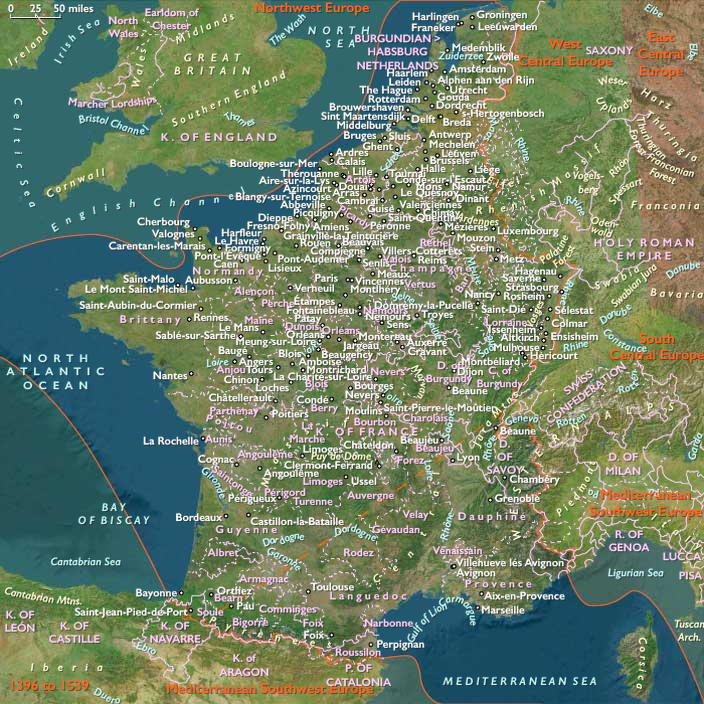
Subregions
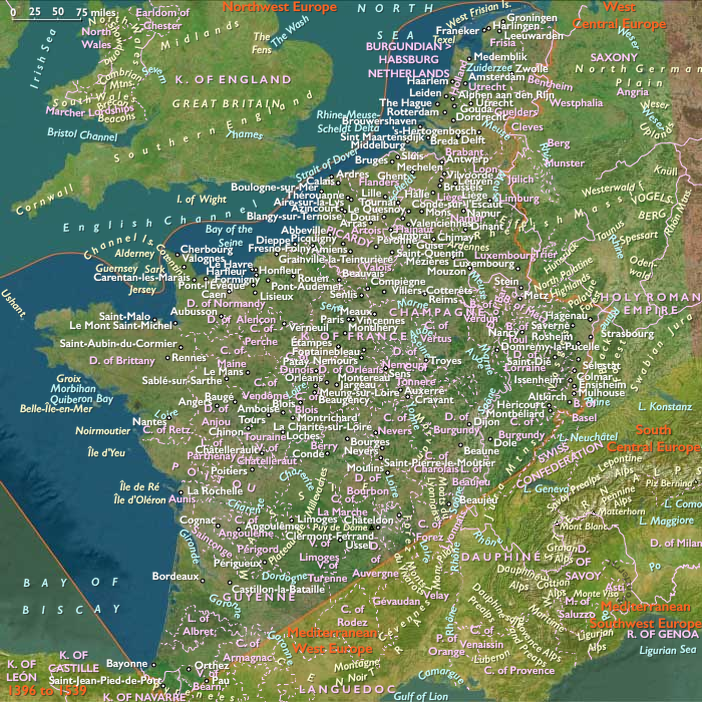
Related Events
Showing 10 events out of 42174 total
Years: 1421 - 1421
Locations
People
- Alexander Buchanan
- Gilbert Motier de La Fayette
- Henry V of England
- John Beaufort
- John Stewart
- Thomas Beaufort
- Thomas of Lancaster
Groups
- Normandy, Duchy of
- Burgundy, Duchy of
- Scotland, Kingdom of
- France, (Valois) Kingdom of
- England, (Plantagenet, Lancastrian) Kingdom of
Topics
- Hundred Years' War
- Anglo-Scottish Wars
- Armagnac-Burgundian Civil War
- Hundred Years' War: Resumption of the war under Henry V
- Baugé, Battle of
Commodoties
Subjects
Regions
Subregions