
Filters:
The Armagnac-Burgundian Civil War: France's Internal Struggle …
Years: 1396 - 1407
The Armagnac-Burgundian Civil War: France's Internal Struggle Amidst the Hundred Years' War (1407–1435)
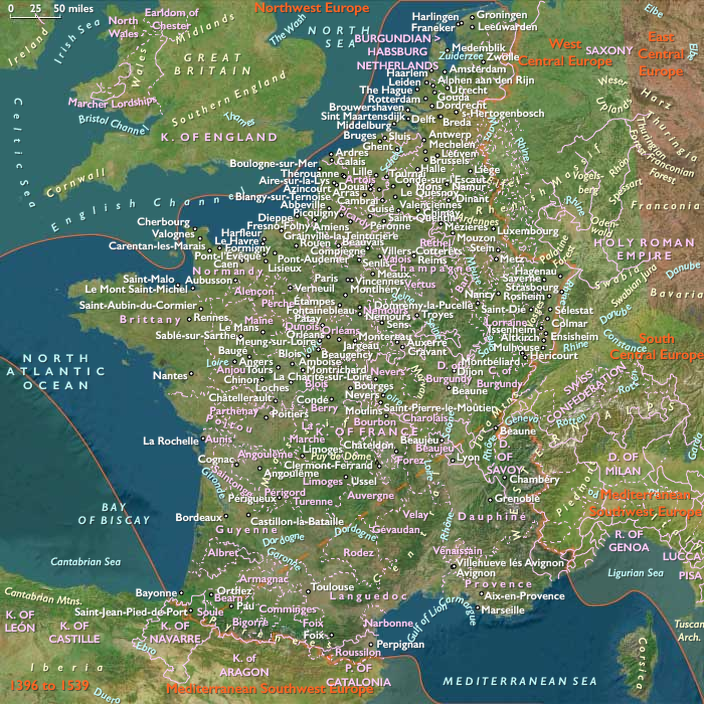
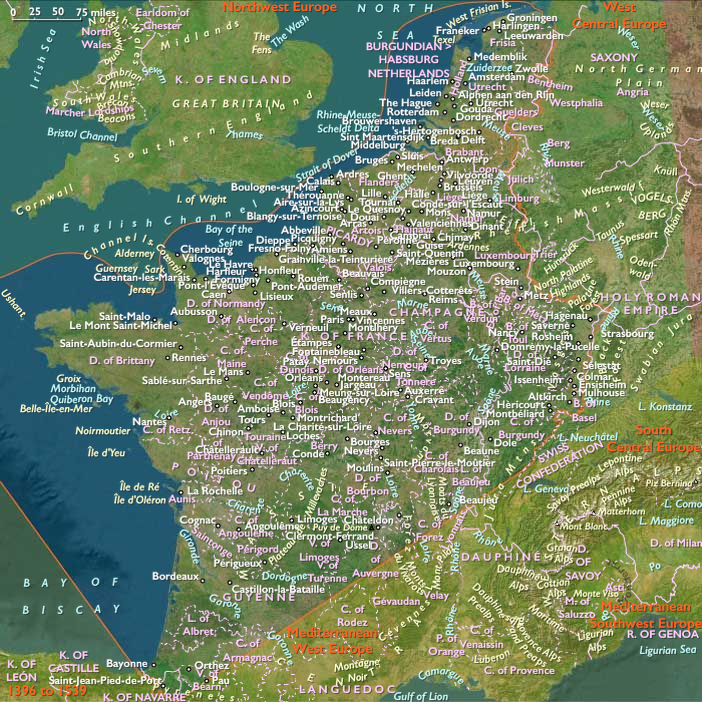
As France was already devastated by the Hundred Years' War (1337–1453) and the conflicts surrounding the Western Schism (1378–1417), a civil war erupted between two rival factions of the French royal family, further weakening the kingdom and inviting English intervention. This conflict, known as the Armagnac-Burgundian Civil War (1407–1435), pitted the House of Orléans (the Armagnacs) against the House of Burgundy, creating internal chaos at a critical moment in France’s history.
I. Origins of the Conflict: The Murder of Louis of Orléans (1407)
- King Charles VI of France suffered from recurring bouts of insanity, rendering him unable to govern effectively.
- This left power in the hands of rival noble factions:
- The Burgundians, led by John the Fearless, Duke of Burgundy, who sought to dominate the French court.
- The Orléanists (later the Armagnacs), led by Louis I, Duke of Orléans, the king’s ambitious younger brother.
- On November 23, 1407, John the Fearless orchestrated the assassination of Louis of Orléans in Paris, triggering open war between the two factions.
II. The Armagnacs vs. The Burgundians
- The Armagnacs, named after Bernard VII, Count of Armagnac, who led the Orléanist faction, were supported by:
- The Dauphin (the future Charles VII).
- Southern and central France.
- Pro-Valois nobles who opposed Burgundian influence.
- The Burgundians, led by John the Fearless, drew support from:
- Northern France, including Paris.
- The powerful Burgundian Netherlands.
- Merchants and factions favoring English alliances.
III. English Involvement and the Treaty of Troyes (1420)
- The conflict further destabilized France, allowing England to expand its conquests.
- In 1419, John the Fearless was assassinated by the Dauphin’s supporters, escalating the war.
- In 1420, the Treaty of Troyes, signed between the Burgundians and the English, disinherited the Dauphin and recognized England’s Henry V as heir to the French throne.
IV. Resolution: The Treaty of Arras (1435)
- The civil war dragged on for years, preventing France from effectively resisting English occupation.
- In 1435, the Burgundians, under Philip the Good, switched sides, signing the Treaty of Arras with Charles VII.
- This allowed France to unite against England, leading to the eventual expulsion of the English from France by 1453.
V. Impact and Legacy
- The Armagnac-Burgundian Civil War (1407–1435) was one of the most destructive internal conflicts in French history, delaying France’s recovery from English invasions.
- It permanently shaped French politics, reinforcing the importance of Burgundian power in European affairs.
- The Burgundian betrayal of the English in 1435 ultimately helped France regain the upper hand in the Hundred Years' War.
This civil war within a war deepened France’s crisis, allowing English expansion, but its resolution in 1435 marked the beginning of France’s resurgence and ultimate victory in the Hundred Years' War.
People
Groups
- Papal States (Republic of St. Peter)
- Christians, Roman Catholic
- England, (Plantagenet, Angevin) Kingdom of
- France, (Valois) Kingdom of
- England, (Plantagenet, Lancastrian) Kingdom of
Topics
- Hundred Years' War
- Western Schism or Papal Schism (also known as the Great Schism of Western Christianity)
- Hundred Years' War: Second Peace
- Armagnac-Burgundian Civil War
Commodoties
Subjects
Regions
Subregions
Years: 1396 - 1407
People
Groups
- Papal States (Republic of St. Peter)
- Christians, Roman Catholic
- England, (Plantagenet, Angevin) Kingdom of
- France, (Valois) Kingdom of
- England, (Plantagenet, Lancastrian) Kingdom of
Topics
- Hundred Years' War
- Western Schism or Papal Schism (also known as the Great Schism of Western Christianity)
- Hundred Years' War: Second Peace
- Armagnac-Burgundian Civil War
Commodoties
Subjects
Regions
Subregions