
Filters:
The Western Schism (1378–1417): A Divided Papacy …
Years: 1372 - 1383
The Western Schism (1378–1417): A Divided Papacy
The Western Schism was a major crisis in the Roman Catholic Church that lasted from 1378 to 1417, during which there were two, and later three, rival popes, each claiming legitimate authority. This deep division shattered Catholic unity, weakened papal authority, and destabilized European politics.
Origins of the Schism (1378)
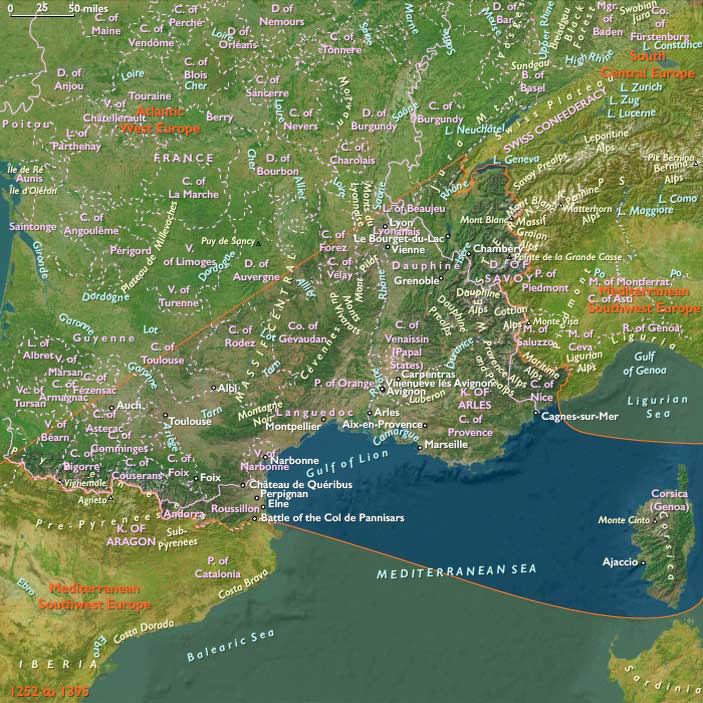
- The crisis began in 1378 following the death of Pope Gregory XI, who had recently returned the papacy from Avignon to Rome after nearly 70 years of papal residency in France (1309–1377).
- Amid intense pressure from the Roman populace, the College of Cardinals elected Urban VI, an Italian, as pope.
- Many French cardinals, unhappy with Urban VI's temperament and reforms, declared his election invalid and elected Clement VII, who returned the papal court to Avignon.
- This resulted in two rival popes, each claiming to be the true successor of St. Peter.
The Rival Papacies and Their Alliances
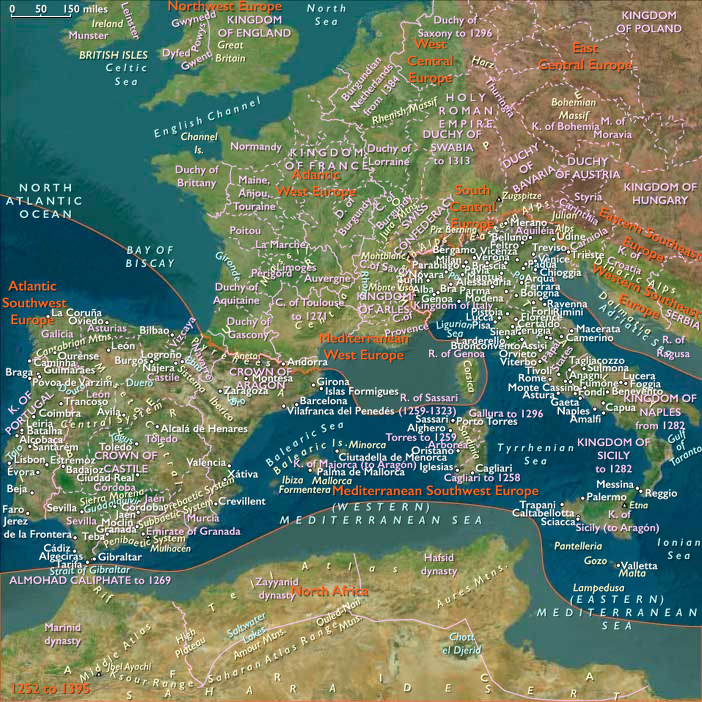
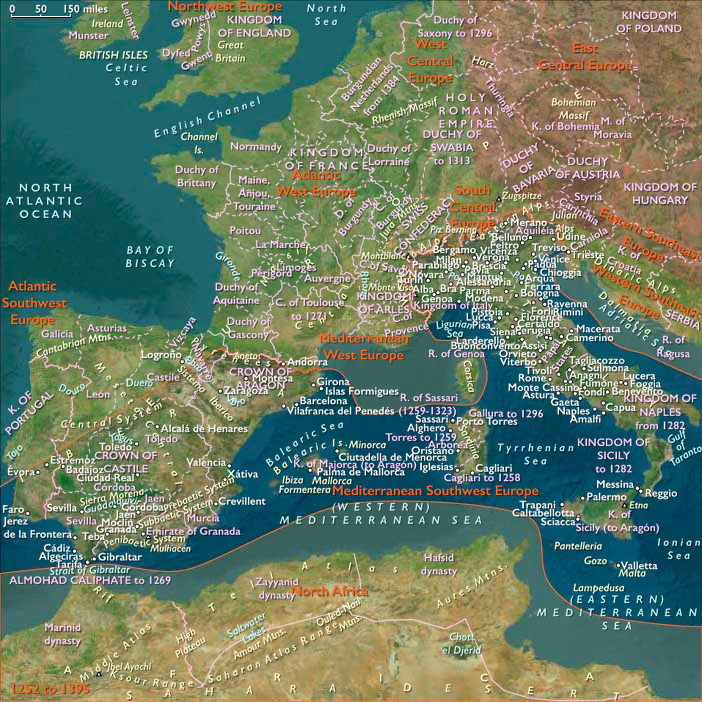
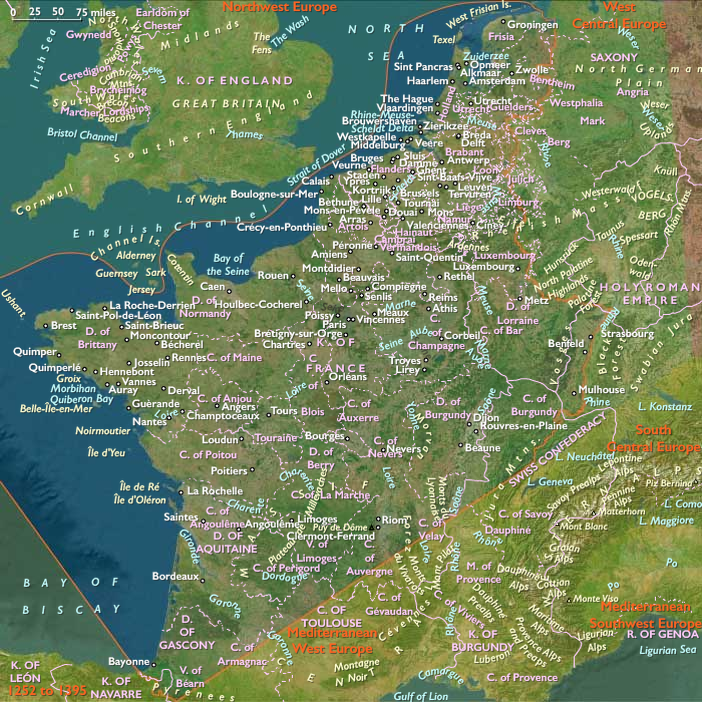
- Rome (Pope Urban VI and successors) – Supported by England, the Holy Roman Empire, Portugal, and most of Italy.
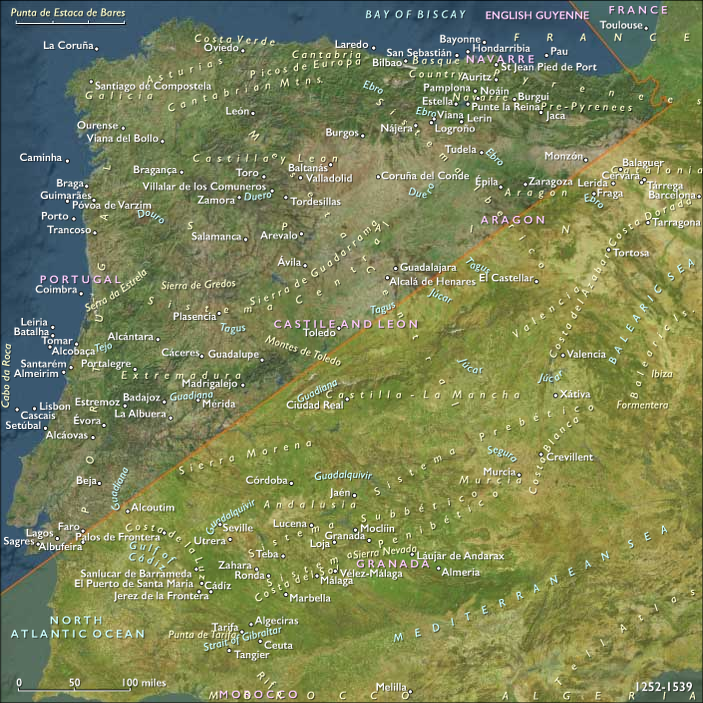
- Avignon (Pope Clement VII and successors) – Supported by France, Scotland, Castile, and Aragon.
For nearly 40 years, Catholic Europe was divided, with each pope excommunicating the followers of the other and maintaining his own Sacred College of Cardinals and Curia.
The Three-Pope Crisis (1409–1417)
- In 1409, the Council of Pisa attempted to resolve the schism by deposing both rival popes and electing a new pope, Alexander V.
- However, instead of resolving the issue, this resulted in three competing popes, as the two deposed popes refused to step down.
- The crisis deepened, discrediting the moral and political authority of the papacy.
The Council of Constance and the End of the Schism (1417)
- The crisis was finally resolved at the Council of Constance (1414–1418).
- In 1417, all three competing popes were either deposed or resigned, and the council elected Martin V, restoring a single papacy in Rome.
- This ended the Western Schism, but the Church’s credibility suffered lasting damage, fueling anti-clerical sentiment and calls for reform that later contributed to the Protestant Reformation (1517).
Impact of the Western Schism
- Weakened Papal Authority – The schism shattered the idea of an unquestionable pope, reducing the Church’s influence over European monarchs.
- Rise of Conciliarism – The crisis strengthened the belief that Church councils, not just the pope, should have ultimate authority, a notion that clashed with papal supremacy.
- Political Consequences – The division deepened national rivalries, as popes became aligned with secular rulers, entangling the papacy in dynastic struggles.
The Western Schism was one of the most damaging crises in Church history, exposing the political nature of the papacy and laying the groundwork for future religious upheavals in Europe.
Groups
Topics
- Avignon Papacy
- Western Schism or Papal Schism (also known as the Great Schism of Western Christianity)
Subjects
Regions
Subregions
- East Central Europe
- Western Southeast Europe
- South Central Europe
- Mediterranean West Europe
- Mediterranean Southwest Europe
- Atlantic Southwest Europe
- Atlantic West Europe
- West Central Europe
- Northwest Europe
Years: 1372 - 1383
Groups
Topics
- Avignon Papacy
- Western Schism or Papal Schism (also known as the Great Schism of Western Christianity)
Subjects
Regions
Subregions
- East Central Europe
- Western Southeast Europe
- South Central Europe
- Mediterranean West Europe
- Mediterranean Southwest Europe
- Atlantic Southwest Europe
- Atlantic West Europe
- West Central Europe
- Northwest Europe