
Atlantic Southwest Europe: Imperial Rivalry, Cultural Flourishing, …
Years: 1504 - 1515
Atlantic Southwest Europe: Imperial Rivalry, Cultural Flourishing, and the Consolidation of Power (1504–1515)
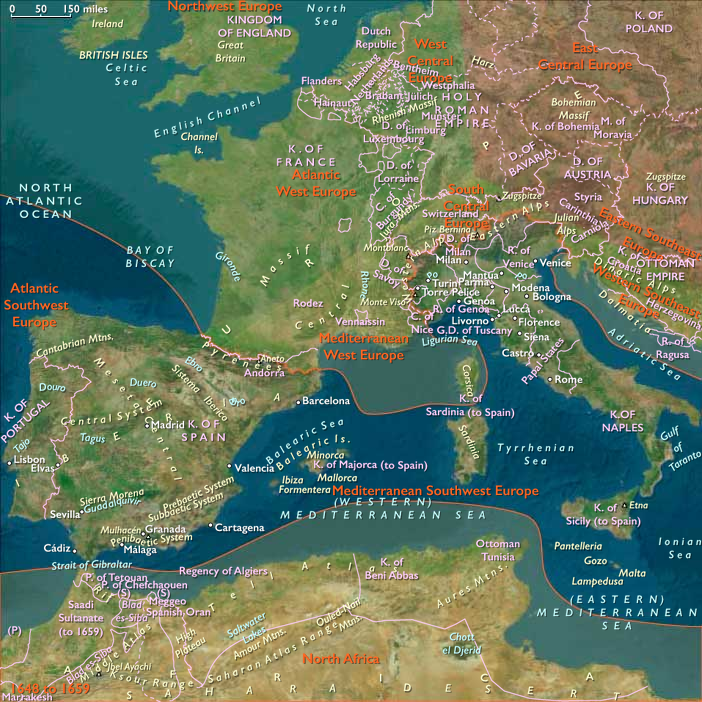
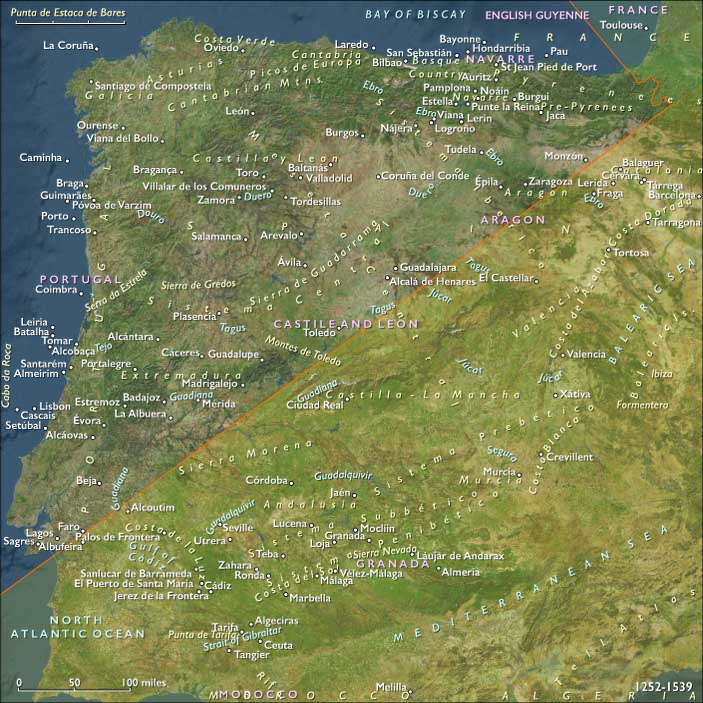
Between 1504 and 1515, Atlantic Southwest Europe entered a pivotal period marked by imperial rivalry, political consolidation, maritime expansion, and rich cultural developments. Spain transitioned from the reign of the Catholic Monarchs to that of the Habsburg heir, Charles I (later Emperor Charles V). Portugal, under the prosperous rule of King Manuel I, solidified its global maritime and commercial dominance. Navarre, increasingly vulnerable, found itself the target of aggressive Spanish ambitions.
Political and Military Developments
-
Spain (Castile, León, and Northern Provinces):
- Following Queen Isabella I's death (1504), Castile entered a period of instability as her daughter Juana "the Mad" and husband Philip I ("the Handsome") briefly ruled, until Philip’s early death (1506) plunged Castile into further uncertainty under Ferdinand’s regency.
- Ferdinand II of Aragon, until his death (1516), skillfully managed political tensions and consolidated royal power, laying foundations for Spain’s imperial expansion.
- Ferdinand annexed Navarre (1512), taking advantage of political instability and fears of French alliance. This significantly expanded Spanish influence northwards, incorporating Basque territories and northern Rioja more firmly into Castile.
-
Portugal:
- Under King Manuel I ("the Fortunate"), Portugal reached the zenith of its economic and political power, further consolidating royal authority and pursuing aggressive maritime exploration and expansion.
- Manuel’s diplomatic marriages strategically connected Portugal to major European royal houses, including Spain and the Habsburgs, securing Portugal’s position in European politics.
-
Navarre:
- King John III of Navarre and Queen Catherine of Foix attempted to preserve independence through diplomatic channels. However, Navarre’s political fragility culminated in its invasion and annexation by Ferdinand II in 1512, effectively ending its independent kingdom status south of the Pyrenees, although the northern part retained independence, allied with France.
Economic and Maritime Expansion
-
Spanish Economic and Maritime Growth:
- Spain expanded its colonial enterprise in the Americas significantly, particularly with early expeditions that explored the Caribbean and initiated colonization efforts, bringing substantial wealth from gold and emerging transatlantic trade networks.
- Northern Spanish ports such as Bilbao, Santander, and La Coruña experienced notable growth, thriving on new Atlantic trade routes and fisheries.
-
Portuguese Dominance in Global Trade:
- Portugal solidified dominance over the spice trade routes to India and the East Indies. Manuel I’s policies secured commercial monopolies, establishing Lisbon as the premier European hub for spices, precious metals, and luxury goods.
- Economic prosperity allowed extensive architectural and urban development throughout northern and central Portugal.
-
Navarre’s Economic Realignment:
- With the annexation of southern Navarre, its economy became increasingly tied to Castile’s, while northern Navarre sought alignment with France, marking a significant shift in regional economic dynamics.
Cultural and Social Developments
-
Spanish Cultural Expansion:
- Spain experienced significant artistic and literary developments, notably with the early rise of Spanish humanism and the production of key scholarly works influenced by Italian Renaissance thought.
- The period saw increased centralization of religious institutions, laying foundations for intensified religious orthodoxy and future inquisitorial practices.
-
Portuguese Manueline Renaissance:
- Portugal experienced the cultural zenith of the Manueline style, exemplified by architectural masterpieces such as the Tower of Belém and the continued construction of the Jerónimos Monastery, celebrating maritime achievements and imperial prestige.
- Lisbon became an intellectual center, attracting scholars, navigators, and merchants from across Europe.
-
Navarre’s Cultural Preservation:
- Even amid political turmoil, Navarre continued to preserve its unique cultural identity, particularly in the Basque-speaking territories. However, cultural expressions increasingly reflected the pressures of Spanish and French political influence.
Significance and Legacy
The era 1504–1515 profoundly reshaped Atlantic Southwest Europe, solidifying the region's status as a hub of imperial ambition and global maritime dominance. Spain and Portugal’s imperial expansions laid crucial foundations for their future global empires, significantly impacting world history. The annexation of Navarre dramatically altered regional geopolitics, reshaping cultural identities and political allegiances. These developments marked a clear transition from medieval structures toward the emergence of early modern Europe.
People
- Catherine of Navarre
- Charles V, Holy Roman Emperor
- Ferdinand II of Aragon
- Isabella I of Castile
- Joanna of Castile
- John III of Navarre
- Manuel I of Portugal
- Philip I of Castile
Groups
- Navarre, Kingdom of
- Basque people
- Aragon, Crown of
- Castile, Crown of
- Portugal, Avizan (Joannine) Kingdom of
- Portuguese Empire
- Inquisition, Spanish
Topics
- Humanism, Renaissance
- Renaissance Architecture
- Renaissance, Portuguese
- Colonization of the Americas, Spanish
- Colonization of Asia, Portuguese
- Portuguese Conquests in India and the East Indies
- Portuguese Conquest of Goa
Commodoties
Subjects
Regions
Subregions
Years: 1504 - 1515
People
- Catherine of Navarre
- Charles V, Holy Roman Emperor
- Ferdinand II of Aragon
- Isabella I of Castile
- Joanna of Castile
- John III of Navarre
- Manuel I of Portugal
- Philip I of Castile
Groups
- Navarre, Kingdom of
- Basque people
- Aragon, Crown of
- Castile, Crown of
- Portugal, Avizan (Joannine) Kingdom of
- Portuguese Empire
- Inquisition, Spanish
Topics
- Humanism, Renaissance
- Renaissance Architecture
- Renaissance, Portuguese
- Colonization of the Americas, Spanish
- Colonization of Asia, Portuguese
- Portuguese Conquests in India and the East Indies
- Portuguese Conquest of Goa
Commodoties
Subjects
Regions
Subregions