
Filters:
Civil war and the Protestant Reformation in …
Years: 1396 - 1539
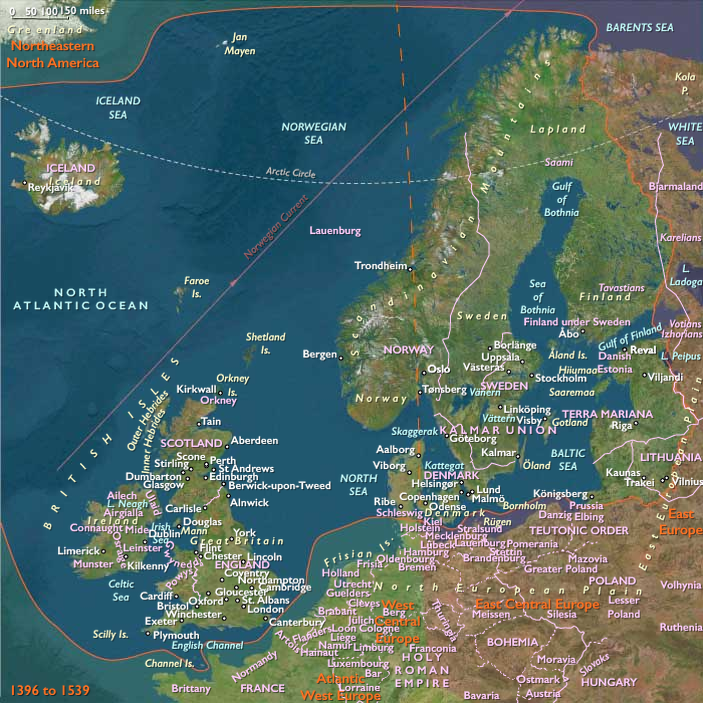
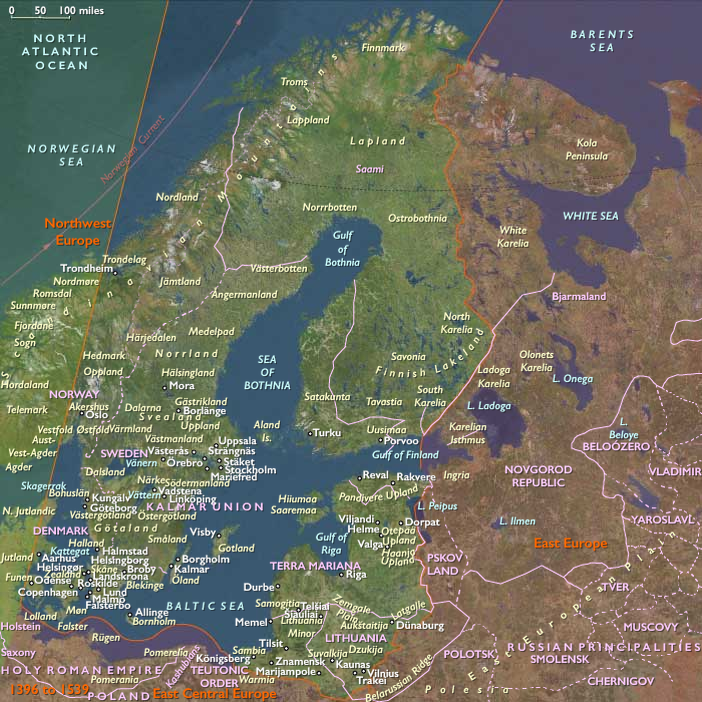
Civil war and the Protestant Reformation in Denmark and Norway follow in the wake of Sweden's definitive secession from the Kalmar Union in 1521.
When things settle down, the Privy Council of Denmark has lost some of its influence, and that of Norway no longer exists.
The two kingdoms, known as Denmark–Norway, operate in a personal union under a single monarch.
Norway keeps its separate laws and some institutions, such as a royal chancellor, separate coinage and a separate army.
As an hereditary kingdom, Norway's status as separate from Denmark remains important to the royal dynasty in its struggles to win elections as kings of Denmark.
The two kingdoms will remain tied until 1814.
When things settle down, the Privy Council of Denmark has lost some of its influence, and that of Norway no longer exists.
The two kingdoms, known as Denmark–Norway, operate in a personal union under a single monarch.
Norway keeps its separate laws and some institutions, such as a royal chancellor, separate coinage and a separate army.
As an hereditary kingdom, Norway's status as separate from Denmark remains important to the royal dynasty in its struggles to win elections as kings of Denmark.
The two kingdoms will remain tied until 1814.
People
Groups
- Finns
- Danes (North Germanic tribe)
- Denmark, Kingdom of
- Icelanders (Scandinavians)
- Sweden, Kingdom of
- Greenland, Norwegian Crown Colony of
- Christians, Roman Catholic
- Swedes (Scandinavians)
- Norwegians (Scandinavians)
- Kalmar Union (of Denmark, Norway and Sweden)
- Iceland (Danish dependency)
- Protestantism
- Denmark-Norway, Kingdom of
Topics
Subjects
Regions
Subregions

Years: 1396 - 1539
People
Groups
- Finns
- Danes (North Germanic tribe)
- Denmark, Kingdom of
- Icelanders (Scandinavians)
- Sweden, Kingdom of
- Greenland, Norwegian Crown Colony of
- Christians, Roman Catholic
- Swedes (Scandinavians)
- Norwegians (Scandinavians)
- Kalmar Union (of Denmark, Norway and Sweden)
- Iceland (Danish dependency)
- Protestantism
- Denmark-Norway, Kingdom of
Topics
Subjects
Regions
Subregions