
Christian, fresh from his victory at Fleurus, …
Years: 1623 - 1623
August
Christian, fresh from his victory at Fleurus, has spent the winter of 1622-23 in the Spanish Netherlands resting and replenishing his army to what is in spring 1623 set at roughly fifteen thousand.
Christian, Mansfeld, the Hungarian general Bethlen Gabor, and his ally Count Thurn plan to retake Bohemia for the Protestants and to breathe new life into the ailing Protestant cause.
The campaign falters from the start as Tilly receives news of the troop movements and positions himself in Lower Saxony, with reports from Mansfeld coming to Christian that he does not have the money to pay his armies or to campaign, leaving Christian to himself in the north.
Outnumbered again, and leading an army that is not as disciplined as Tilly's, Christian makes a break for the relative safety of the United Provinces.
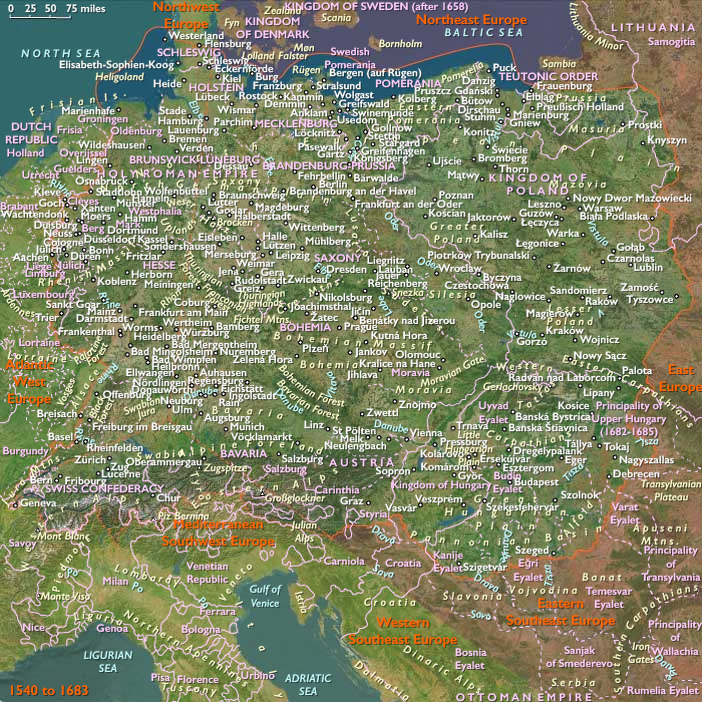
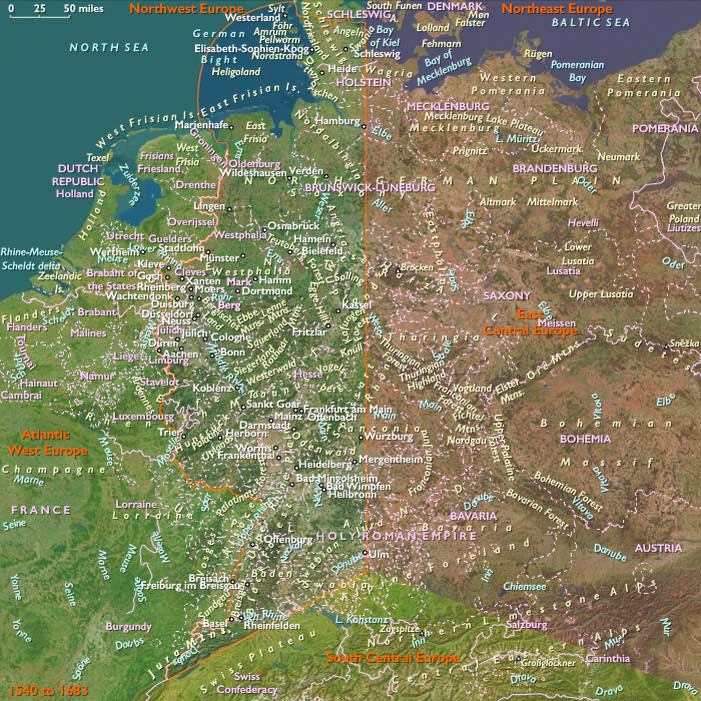
He is outrun and outmaneuvered ten miles short of the Dutch border, and in a stand typical of Christian's bravery, he is nonetheless decisively defeated at the Battle of Stadtlohn on August 6, 1623, when he loses all but two thousand of this fifteen thousand man army.
Broken, he flees for The Hague with the remnants of his cavalry.
Tilly’s victory virtually ends all Protestant resistance in Germany.
Three days after Stadtlohn, Frederick V signs an armistice with Ferdinand II, ending the former's resistance to what seems impending Catholic domination of the Holy Roman Empire.
Bethlen, though successful in Bohemia, is unable to continue the war after the defeat of the Protestant forces in Germany.
Thus ends the "Palatine Phase" of the Thirty Years' War, and the Protestant rebellion as a whole.
However, the transfer of the Upper Palatine (northern Bavaria) along with Frederick’s electoral vote to Bavaria’s Duke Maximilian, Frederick’s distant relative, coupled with Maximilian’s claims to the Rhenish Palatinate, makes peace virtually impossible.
Locations
People
- Christian of Brunswick
- Ernst von Mansfeld
- Ferdinand II
- Frederick V, Elector Palatine
- Gabriel Bethlen
- Jindrich Matyas Thurn
- Johann Tserclaes, Count of Tilly
- Maximillian I Wittelsbach
Groups
- Passau, Bishopric of
- Eichstätt, Prince-Bishopric of
- Mainz, Electoral Archbishopric of
- Augsburg, Prince-Bishopric of
- Speyer, Prince-Bishopric of
- Christians, Roman Catholic
- Constance, Bishopric of
- Austria, Archduchy of
- Trier, Electoral Archbishop of
- Würzburg, Bishopric of
- Ulm, Free Imperial City of
- Bohemia, Kingdom of
- Kempten in the Allgäu, Imperial Ducal Abbey (Free City) of
- Nuremberg, Free Imperial City of
- Brunswick-Lüneburg, Duchy of
- Strasbourg, Imperial Free City of
- Brunswick-Wolfenbüttel, Duchy of
- Salzburg, Archbishopric of
- Cologne, Electorate of
- Palatinate, Electoral (Wittelsbach)
- Saxony, Electorate of
- Worms, Bishopric of
- Brandenburg, (Hohenzollern) Margravate of
- Württemberg, Duchy of
- Regensburg (Ratisbon), Imperial Free City of
- Palatinate-Neuburg
- Bavaria, Wittelsbach Duchy of
- Baden-Durlach, Margravate of
- Protestantism
- Hungary, Royal
- Spain, Habsburg Kingdom of
- Hungary, Kingdom of
- Transylvania (Ottoman vassal), Principality of
- Baden-Rodenheim, Margravate of
- Netherlands, Southern (Spanish)
- Netherlands, United Provinces of the (Dutch Republic)
- Anhalt-Zerbst, Principality of
- Anhalt-Bernburg, Principality of
- Anhalt-Dessau, Principality of
- Anhalt-Plotzkau, Principality of
- Anhalt-Köthen, Principality of
- England, (Stuart) Kingdom of
- Protestant League (League of Evangelical Union)
- Catholic League, the (German)
- Habsburg Monarchy, or Empire
Topics
- Protestant Reformation
- Counter-Reformation (also Catholic Reformation or Catholic Revival)
- Eighty Years War (Netherlands, or Dutch, War of Independence)
- Bohemian-Palatine War
- Thirty Years' War
Commodoties
Subjects
Regions
Subregions
Years: 1623 - 1623
August
Locations
People
- Christian of Brunswick
- Ernst von Mansfeld
- Ferdinand II
- Frederick V, Elector Palatine
- Gabriel Bethlen
- Jindrich Matyas Thurn
- Johann Tserclaes, Count of Tilly
- Maximillian I Wittelsbach
Groups
- Passau, Bishopric of
- Eichstätt, Prince-Bishopric of
- Mainz, Electoral Archbishopric of
- Augsburg, Prince-Bishopric of
- Speyer, Prince-Bishopric of
- Christians, Roman Catholic
- Constance, Bishopric of
- Austria, Archduchy of
- Trier, Electoral Archbishop of
- Würzburg, Bishopric of
- Ulm, Free Imperial City of
- Bohemia, Kingdom of
- Kempten in the Allgäu, Imperial Ducal Abbey (Free City) of
- Nuremberg, Free Imperial City of
- Brunswick-Lüneburg, Duchy of
- Strasbourg, Imperial Free City of
- Brunswick-Wolfenbüttel, Duchy of
- Salzburg, Archbishopric of
- Cologne, Electorate of
- Palatinate, Electoral (Wittelsbach)
- Saxony, Electorate of
- Worms, Bishopric of
- Brandenburg, (Hohenzollern) Margravate of
- Württemberg, Duchy of
- Regensburg (Ratisbon), Imperial Free City of
- Palatinate-Neuburg
- Bavaria, Wittelsbach Duchy of
- Baden-Durlach, Margravate of
- Protestantism
- Hungary, Royal
- Spain, Habsburg Kingdom of
- Hungary, Kingdom of
- Transylvania (Ottoman vassal), Principality of
- Baden-Rodenheim, Margravate of
- Netherlands, Southern (Spanish)
- Netherlands, United Provinces of the (Dutch Republic)
- Anhalt-Zerbst, Principality of
- Anhalt-Bernburg, Principality of
- Anhalt-Dessau, Principality of
- Anhalt-Plotzkau, Principality of
- Anhalt-Köthen, Principality of
- England, (Stuart) Kingdom of
- Protestant League (League of Evangelical Union)
- Catholic League, the (German)
- Habsburg Monarchy, or Empire
Topics
- Protestant Reformation
- Counter-Reformation (also Catholic Reformation or Catholic Revival)
- Eighty Years War (Netherlands, or Dutch, War of Independence)
- Bohemian-Palatine War
- Thirty Years' War
Commodoties
Subjects
Regions
Subregions