The East Roman Empire, crippled by ineffective …
Years: 688 - 699
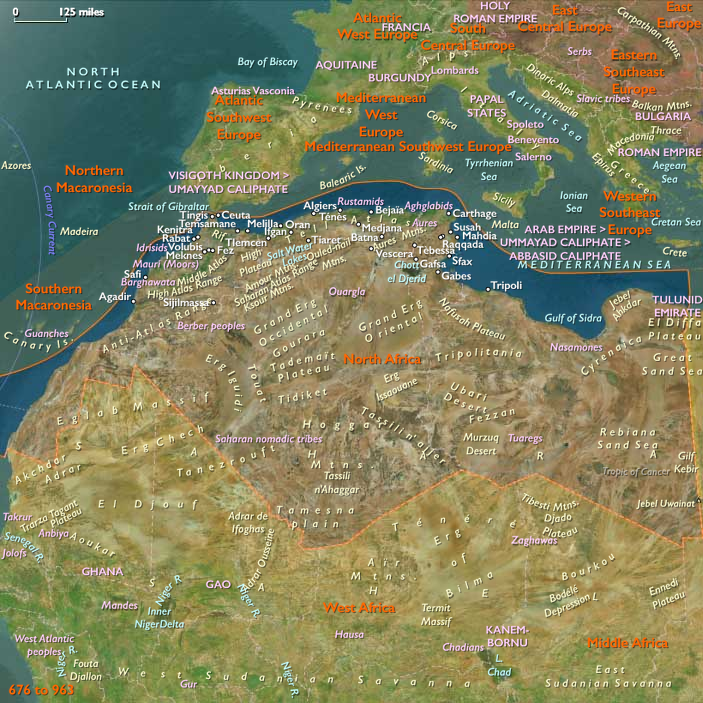
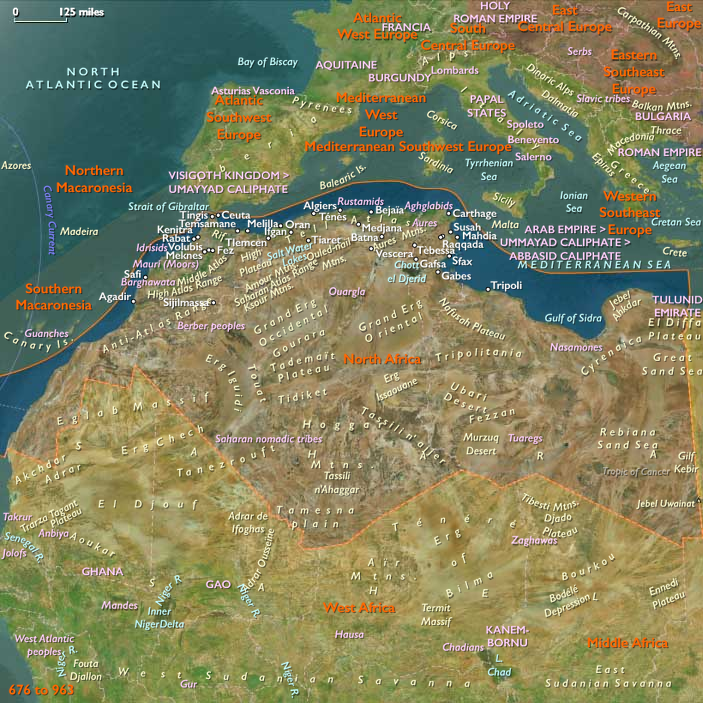
The East Roman Empire, crippled by ineffective leadership, manages to retain Anatolia, but loses Africa to the Muslim Arabs and their newly converted Berber allies.
Groups
- Arab people
- Berber people (also called Amazigh people or Imazighen, "free men", singular Amazigh)
- Christianity, Chalcedonian
- Greeks, Medieval (Byzantines)
- Africa, or Carthage, Exarchate of
- Roman Empire, Eastern: Heraclian dynasty
- Islam
- Muslims, Sunni
- Umayyad Caliphate (Damascus)
- Roman Empire, Eastern: Non-dynastic
- Ifriqiya, Ummayad
Topics
Commodoties
Subjects
Regions
Subregions
Related Events
Filter results
Showing 10 events out of 55975 total
Li Sixun, later seen as the chief exponent of a decoratively colored landscape style of the Tang dynasty, is the founder of the so-called Northern school of professional painters.
Related to the Tang imperial family, Li Sixun leads an active political life including exile and restoration, and has been given the honorary rank of general.
His son, Li Zhaodao, is also a famous painter, and thus the father is sometimes called Big General Li and the son Little General Li.
While no genuine works survive, both Li Sixun and Li Zhaodao are known to have painted in a highly decorative and meticulous fashion, employing the precise line technique derived from earlier artists such as Gu Kaizhi and Zhan Ziqian, especially adding the decorative mineral colors blue and green (qinglu), often together with white and gold.
Chinese theoretician Dong Qichang spoke of a stylistic division between the decorative tradition among Northern painters begun by Li Sixun and the scholarly tradition among Southern school painters begun by Wang Wei.
Today, the blue-green shan shui, a Chinese painting style of landscape, or "Shan shui", tends to refer a "ancient style" rather than modern ones.
The main color of the paintings are blues and greens, and in the early period it is painted by mineral dyes.
It is said this style was first formulated by Li Sixun.
Many historic records show that Li Sixun and his son, Li Zhaodao, largely developed the painting techniques and formulated the style.
East Central Europe (688–699 CE): Strengthening Slavic Principalities, Avar Stability, and Continuing Thuringian Independence
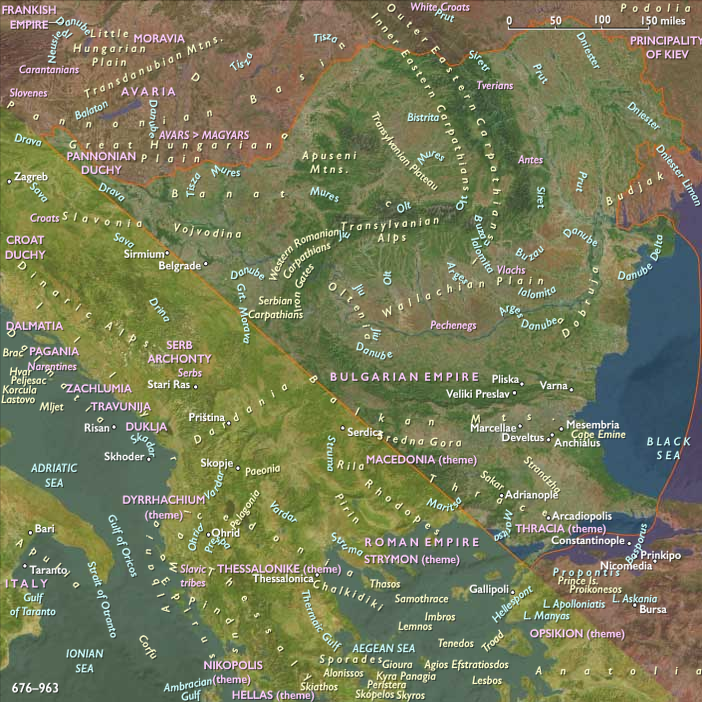
Between 688 and 699 CE, East Central Europe—encompassing Poland, Czechia, Slovakia, Hungary, and those portions of Germany and Austria lying east of 10°E and north of a line stretching from roughly 48.2°N at 10°E southeastward to the Austro-Slovenian border near 46.7°N, 15.4°E—experienced ongoing political stabilization and regional development. Slavic principalities, notably in Bohemia and Moravia, further solidified their political structures, laying foundations for medieval statehood. The Avar Khaganate maintained diplomatic stability within the Carpathian Basin, while Thuringia continued its practical independence from weakened Merovingian rule, emphasizing the fragmentation of central authority during this period.
Political and Military Developments
Firming of Slavic Principalities
-
Slavic political structures in Bohemia and Moravia continued to solidify into stable proto-states. Enhanced local governance systems facilitated stronger defenses and improved diplomatic relationships with neighboring Bavarians, Avars, and Frankish territories.
Avar Diplomatic Stabilization
-
The Avar Khaganate maintained diplomatic stability and internal cohesion. The Avars continued carefully managed interactions with surrounding polities, including Byzantine, Slavic, and Frankish entities, avoiding major military conflicts.
Ongoing Autonomy in Thuringia
-
Thuringian independence under strong local aristocratic leadership persisted, highlighting continued Merovingian royal impotence. Frankish rulers struggled to regain effective control over regional dukes, further exemplifying the era of the rois fainéants.
Bulgar Migration into the Balkans
-
Turkic-speaking Bulgar groups continued their settlement south of the Danube, progressively blending culturally and linguistically with surrounding Slavic populations. These migrations paved the way for the eventual creation of medieval Slavicized Bulgaria.
Economic and Technological Developments
Economic Stability and Trade Networks
-
Regional trade thrived despite political fragmentation. Economic links connecting Slavic principalities, Avars, Thuringians, Bavarians, Byzantines, and Frankish territories remained active, exchanging agricultural produce, iron goods, luxury textiles, and crafted items.
Continued Development of Fortified Settlements
-
Slavic principalities, Thuringia, and the Avar Khaganate continued developing advanced fortifications and defensive infrastructure, reflecting political stability, economic prosperity, and technological innovation.
Cultural and Artistic Developments
Emerging Distinctive Slavic Identities
-
Bohemian and Moravian communities further developed unique cultural identities, visible through distinct pottery, jewelry styles, and settlement patterns, laying the foundation for clearly defined medieval Slavic identities.
Bulgar–Slavic Cultural Integration
-
The Bulgar groups settling south of the Danube deepened their assimilation into predominantly Slavic cultural contexts, beginning the process that would define medieval Bulgaria’s unique Bulgar–Slavic hybrid identity.
Avar Cultural Continuity
-
Avar artistic influence persisted significantly across the region, especially in metallurgy and decorative arts, maintaining a lasting cultural legacy among neighboring Slavic and Bavarian populations.
Settlement and Urban Development
Growth of Slavic Fortified Centers
-
Fortified urban and rural centers expanded notably within Slavic principalities, especially in Bohemia and Moravia, reflecting increased political cohesion, population growth, and economic activity.
Thuringian and Bavarian Stability
-
Thuringian and Bavarian settlements maintained prosperity and stability, benefiting from peaceful trade and minimal military conflict, with urban centers like Regensburg continuing to thrive economically.
Social and Religious Developments
Increasingly Centralized Slavic Leadership
-
Slavic principalities further strengthened their hierarchical leadership structures under powerful warrior elites, improving military defense, political unity, and diplomatic capabilities.
Aristocratic Dominance in Thuringia
-
Thuringian society remained under powerful aristocratic governance, clearly independent of weakened Merovingian rulers, reflecting the persistent decentralization of Frankish royal power.
Long-Term Consequences and Historical Significance
The era 688–699 CE witnessed further political and cultural stabilization across East Central Europe. Continued Slavic state formation, Avar diplomatic stability, Bulgar migrations into the Balkans, and the persistence of Thuringian autonomy all significantly shaped the region’s subsequent medieval trajectory. These developments set clear historical patterns for the formation of lasting political entities, cultural identities, and demographic structures that would influence the region profoundly in the following centuries.
Christendom's Quinisext Council (in which the Western Church and the Pope are not represented) establishes major institutional differences between the Eastern and Western churches (e.g., clerical celibacy is rejected in the East).
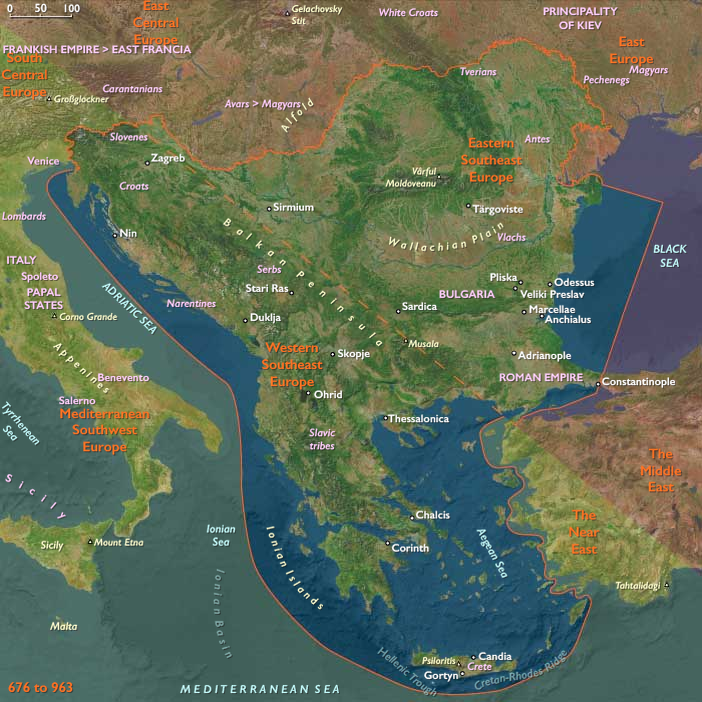
Eastern Southeast Europe (688–699 CE): Ecclesiastical Divergence and Imperial Challenges
Settlement and Migration Patterns
Stability Amidst External Pressures
Between 688 and 699 CE, settlements in Eastern Southeast Europe maintained relative stability, despite ongoing external pressures. Populations continued consolidating, especially within the newly established Bulgarian state, further solidifying Slavic-Bulgar integration and cultural cohesion.
Political and Military Developments
Loss of African Territories
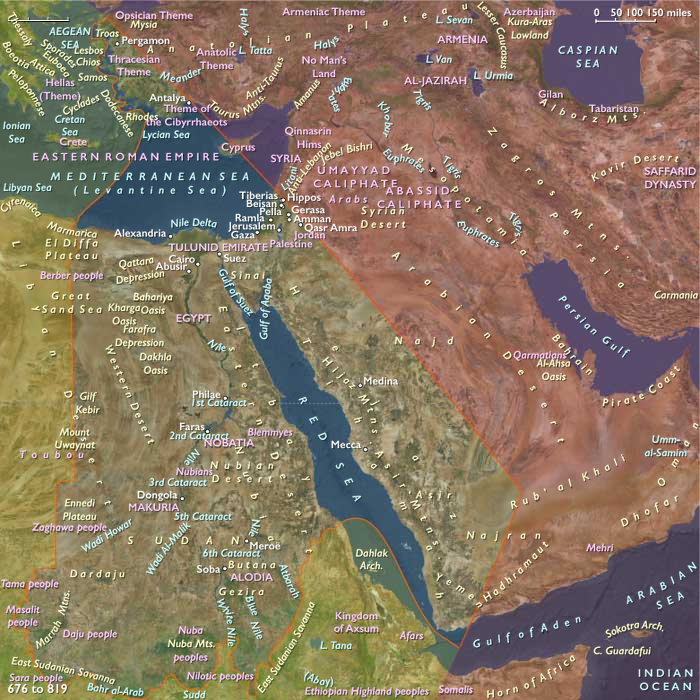
The East Roman Empire faced significant territorial setbacks, losing control of North Africa to the Muslim Arabs and their newly converted Berber allies. This loss critically weakened Byzantine strategic positions in the Mediterranean and underscored the vulnerabilities stemming from ineffective leadership.
Retention of Anatolia
Despite significant challenges and territorial losses, the empire successfully retained control over Anatolia. Maintaining this critical territory was vital for Byzantine strategic and economic interests, securing a geographical core of imperial power.
Economic and Technological Developments
Economic Strain and Adaptation
The loss of African territories placed considerable economic strain on the Byzantine Empire, impacting trade networks and resource distribution. Nevertheless, the empire adapted by refocusing economic activities and defenses around retained territories, notably Anatolia and the Balkans.
Continued Military Innovation
Continued advancements in military infrastructure and defensive capabilities remained crucial. Improvements in fortifications, logistics, and naval strategies helped preserve critical regions against further incursions.
Cultural and Artistic Developments
Cultural Resilience and Exchange
Cultural production continued to thrive, reflecting resilience amidst political and military challenges. Byzantine, Slavic, and Bulgar cultural interactions fostered artistic and architectural advancements, enriching regional cultural identity.
Intellectual Preservation
Educational and scholarly institutions persisted in safeguarding classical, theological, and philosophical knowledge. These efforts maintained intellectual continuity despite political and military turmoil.
Social and Religious Developments
Ecclesiastical Divergence
A critical religious event occurred with Christendom’s Quinisext Council, held without representation from the Western Church and the Pope. The council established significant institutional differences between the Eastern and Western churches, notably rejecting clerical celibacy in the East. This event further deepened the theological and institutional divergence that would eventually lead to the Great Schism.
Strengthening of Eastern Orthodoxy
Eastern Orthodox Christianity solidified its central role in Eastern Southeast European society, influencing community cohesion, social norms, and regional identity. The ecclesiastical distinctions from the Western church reinforced Eastern Orthodoxy's unique spiritual and cultural characteristics.
Long-Term Consequences and Historical Significance
The period from 688 to 699 CE was marked by significant territorial and ecclesiastical developments, notably the loss of African territories to Muslim forces and critical religious divergences established by the Quinisext Council. These events profoundly impacted Byzantine imperial power, economic stability, and religious structures, laying critical foundations for the subsequent historical trajectories of Eastern and Western Christian traditions.

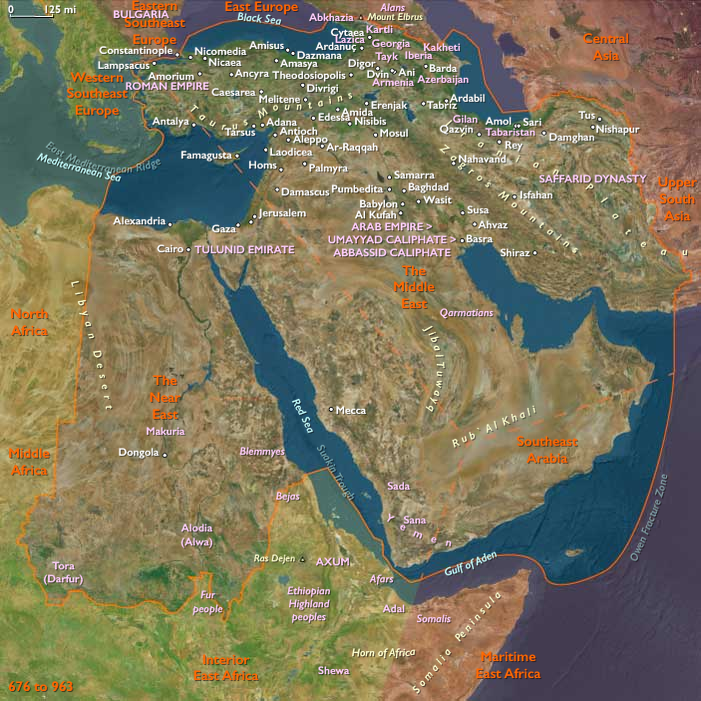
The Middle East: 688–689 CE
Kharijite Rebellions and the Rise of Islamic Qatar
Kharijite Ideology and Rebellion
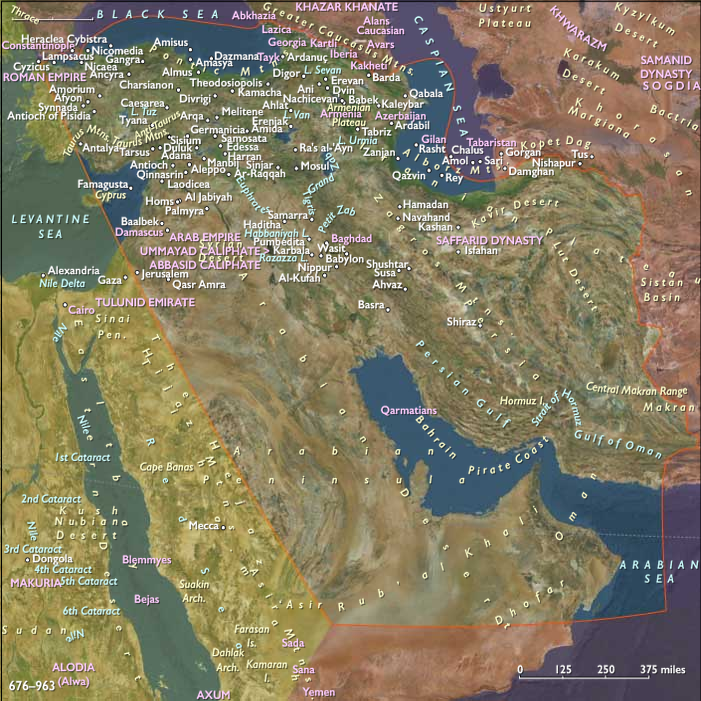
In the late seventh century, Kharijite ideology becomes increasingly influential as a radical opposition movement against the Sunni establishment of the Umayyad Caliphate. Originating from ideological schisms dating back to earlier caliphal disputes, the Kharijites advocate extreme religious purity, rejecting both Sunni and Shia claims to authority.
In 685, the most radical faction, known as the Azraqi Kharijites, had separated from the more moderate Ibadi sect near Basra. By 688–689, their movement continues to gain momentum, particularly around Basra, where their ideology fuels repeated rebellions. Their zealotry will remain a potent force in various rebellions and breakaway states across the Maghreb and other regions for decades.
Qatar’s Emergence in Early Islamic History
The Arabian Peninsula, including the region known today as Qatar, experiences a notable transformation following the widespread embrace of Islam by the close of the seventh century. Although historically characterized by short-term settlements of nomadic tribes, the introduction of Islam fosters significant social and economic stability in the peninsula.
The conversion process in the region dates back to around 628, when the Prophet Muhammad’s envoy, Al-Ala Al-Hadrami, successfully invited Al-Mundhir Ibn Sawa Al-Tamimi, the ruler of Bahrain (which then included present-day Qatar), to adopt Islam. While initial conversion likely varied among different groups, by the late seventh century, Qatar appears more regularly in contemporary Arab accounts as a prosperous village, famed for camel and horse breeding.
The Qatari settlements gain particular renown during this era for crafting distinctive striped woven cloaks—known as Qatari cloaks—and for producing high-quality spears. This burgeoning trade and craftsmanship indicate Qatar’s growing integration into broader Islamic economic and cultural networks.
Thus, the era 688–689 CE highlights the continuing religious and political tensions within the Islamic world, marked by Kharijite revolts, alongside the ongoing economic and cultural integration of the Arabian Peninsula into the expanding Islamic empire.
Kharijite ideology is a popular creed for rebels against the officially Sunni Caliphate, inspiring breakaway states and rebellions (like that of Maysara al-Matghari in the late 730s) throughout the Maghreb and sometimes elsewhere.
The high point of the Kharijites' influence is in the years 690-730 around Basra in south Iraq, a center of Sunni theology.
The Azraqi Kharijites revolt against the Caliphate in 685 after separating from the Ibadi near Basra and departing for Fars.
The Ibadites (Ibadiyah) conquer southern Arabia in the last decades of the seventh century, establish a Kindite imam in Hadhramaut, occupy San'a', and take Mecca and Medina, before the Umayyads drive them back to Hadhramaut.
The peninsular land mass that makes up Qatar has sustained humans for thousands of years, but for the bulk of its history, the arid climate had fostered only short-term settlements by nomadic tribes.
Islam has spread in the entire Arabian region by the end of the seventh century, resulting in the Islamization of the native Arabian pagans.
With the spread of Islam in Qatar, the Islamic prophet Muhammad had sent his first envoy, Al Ala Al-Hadrami, to Al-Mundhir Ibn Sawa Al-Tamimi, the ruler of Bahrain (which extended from the coast of Kuwait to the south of Qatar, including Al-Hasa and Bahrain Islands), in the year 628, inviting him to accept Islam as he had invited other kingdoms and empires of his time such as Byzantium and Persia.
Mundhir, in response to Muhammad, had announced his acceptance of Islam, and the inhabitants of Qatar became Muslim, heralding the beginning of the Islamic era in Qatar.
However, it is likely that some settled populations in Qatar did not instantaneously convert.
Qatar begins to appear regularly in the accounts of contemporary Arab historians and writers following the peninsula’s embrace of Islam in the mid-seventh century CE; there has been further growth of trade and commerce in Qatar.
Yaqut Al Hamawi, an Arab historian and biographer, who died in 1229, considered Qatar as a village famed as a camel and horse breeding center during the Umayyad period.
The country gains fame for its fine striped woven cloaks, known as Qatari cloaks, and for the excellence of the spears manufactured here.
The Pandyas of extreme southern India, ruling from their capital at Madura, have formed a loose confederacy of southern powers with the Pallavas of the east coast, the Cholas to the immediate northeast, and the Cheras to the immediate northwest.
Arabs dominate the coastal areas of modern Kenya by the late seventh century.
Years: 688 - 699
Groups
- Arab people
- Berber people (also called Amazigh people or Imazighen, "free men", singular Amazigh)
- Christianity, Chalcedonian
- Greeks, Medieval (Byzantines)
- Africa, or Carthage, Exarchate of
- Roman Empire, Eastern: Heraclian dynasty
- Islam
- Muslims, Sunni
- Umayyad Caliphate (Damascus)
- Roman Empire, Eastern: Non-dynastic
- Ifriqiya, Ummayad