
Chinese history as a continuously recorded literary …
Years: 2349BCE - 2206BCE
Chinese history as a continuously recorded literary tradition begins with the ancient documents transmitted to posterity through the Records of the Grand Historian, of Sima Qian, which begin this narrative with the reign of the Yellow Emperor, and incorporate two discourses by Confucius.
The great-grandson (or fourth successor) of the Yellow Emperor, according to these, was Yao.
With the reign of Yao, additional literary sources become available, including the Book of History (collected and edited by Confucius); it begins with the "Canon of Yao” that describes the events of Yao's reign.
Yao, the first of the legendary sage-emperors regarded as the founders of China, rules, according to Confucian tradition, from 2356 BCE.
The benevolence and diligence of Yao, who is often extolled as the morally perfect sage-king, serves as a model to future Chinese monarchs and emperors.
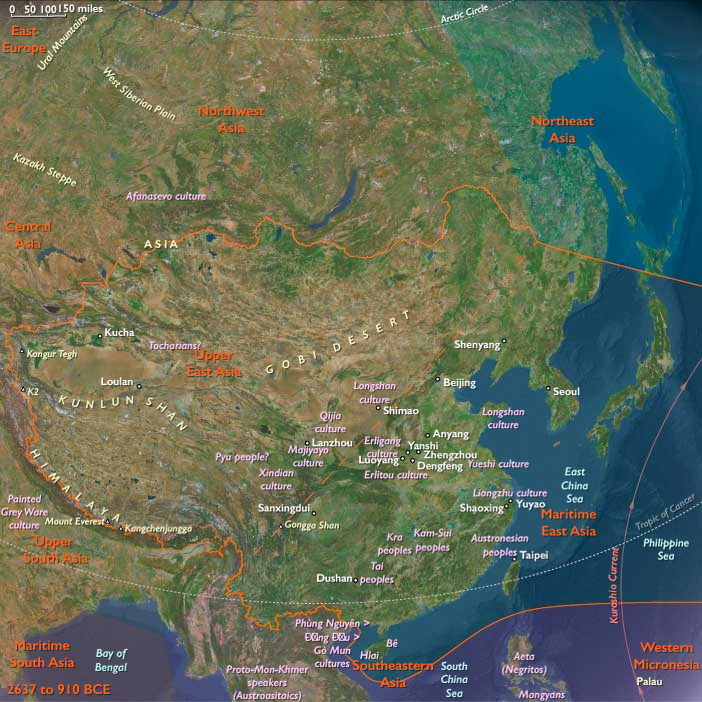
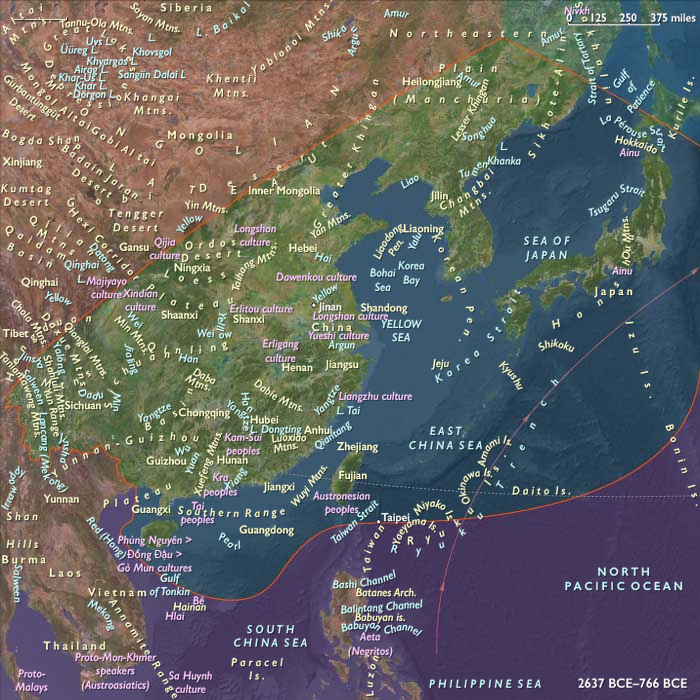
It is during Yao's reign that the Great Flood begins, a flood so vast that no part of Yao's territory is spared, and both the Yellow River and the Yangtze valleys flood.
According to the Confucian works The Classic of History (Shu jing) and the Book of Mencius, the great flood continues for years, devastating China.
A man named Kun (K’un) attempts to control the flood by constructing dams, but fails and is executed by Emperor Yao.
Kun’s son Yu resorts to natural methods, using hidden channels in the earth to successfully drain the waters away.
According to legend, Yao became the ruler at twenty and died at one hundred and nineteen when he passed his throne to Great Shun, to whom he gave his two daughters in marriage.
Of his many contributions, Yao is said to have invented the game of Weiqi, or Go, reportedly to favorably influence his vicious playboy son Danzhu.
After the customary three year mourning period after Yao's death, Shun named Danzhu as the ruler but the people only recognized Shun as the rightful heir.
The Bamboo Annals offers a different story.
Shun rebelled and imprisoned Yao where he is left to die.
Danzhu is exiled and later defeated by Shun.
Shun, the legendary sage-emperor who supposedly succeeds Emperor Yao in 2255 BCE, had remained loyal to his family despite their mistreatment of him, and thus won the approval of the emperor.
Impressed by Shun's virtue, the emperor had given him his two daughters in marriage and passed over his own unworthy son to make Shun his successor.
As ruler, Shun emulates Yao in emphasizing merit over hereditary right (becoming, to the later Confucians, a Chinese exemplar of filial piety).
Shun considered his son, Shangjun, as unworthy and picked Yu, the tamer of floods, as his heir.
Yu takes over this leadership in 2070 BCE and creates what will later become the Xia Dynasty.
With his son Qi to follow in the leadership, this will eventually become China's first dynasty.
Yu met at Mount Miao in the eighth year of his reign and declared that he wanted his tribe to be more than a tribe, that he wanted to become a king of a nation.
According to the the Book of History, Yu divided the world into nine zhou or provinces.
Early Chinese often speak of Yao, Shun and Yu as historical figures, and contemporary historians believe they may represent leader-chiefs of allied tribes who established a unified and hierarchical system of government in a transition period to the patriarchal feudal society.
In the Book of History, (aka the Classic of History) one of the Five Classics, the initial chapters deal with Yao, Shun, and Yu.
People
Groups
Topics
- Subboreal Period
- Three Sovereigns and Five Emperors Period in China
- Early Bronze Age III (Near and Middle East)
- Abrolhos Transgression
- Great Flood (of China)
Commodoties
Subjects
- Commerce
- Writing
- Environment
- Labor and Service
- Conflict
- Games and Sports
- Faith
- Government
- Technology
- Mythology
- Anthropology
- Archaeology
Regions
Subregions
Years: 2349BCE - 2206BCE
People
Groups
Topics
- Subboreal Period
- Three Sovereigns and Five Emperors Period in China
- Early Bronze Age III (Near and Middle East)
- Abrolhos Transgression
- Great Flood (of China)
Commodoties
Subjects
- Commerce
- Writing
- Environment
- Labor and Service
- Conflict
- Games and Sports
- Faith
- Government
- Technology
- Mythology
- Anthropology
- Archaeology
Regions
Subregions