
China under the Qing Dynasty has opened …
Years: 1696 - 1707
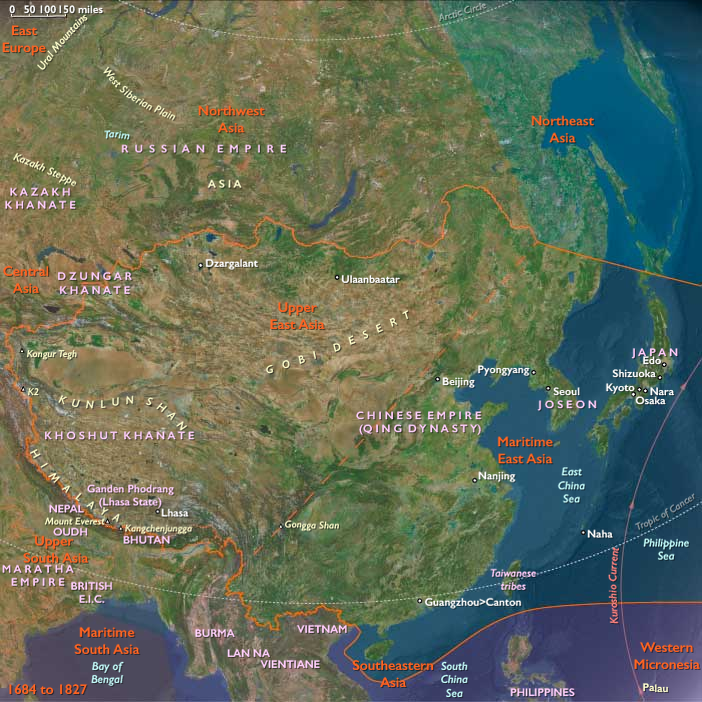
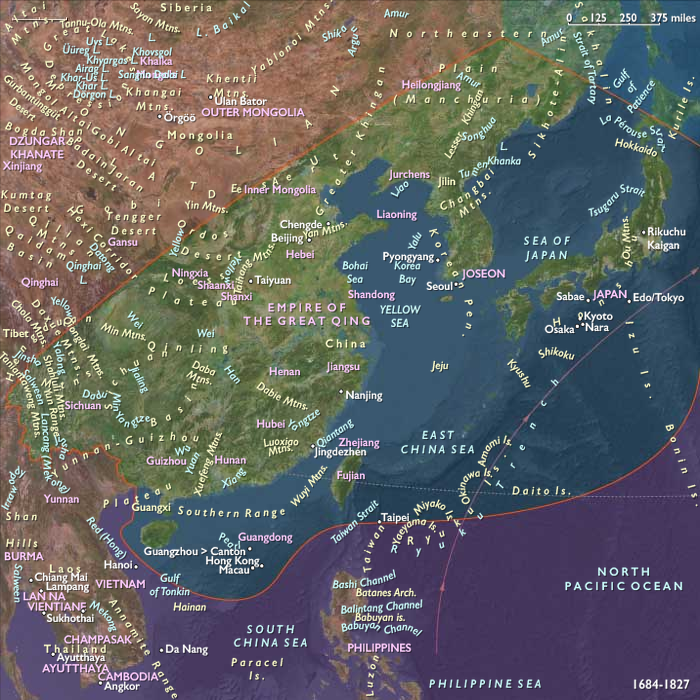
China under the Qing Dynasty has opened herself to foreign trade under the Canton System through the port of Guangzhou (Canton), and traders from the British East India Company begin visiting the port by the 1690s.
Due to the growing English demand for Indian tea and the Chinese Emperor's prohibition of English commodities other than silver, English traders resort to trade in opium as a high-value commodity for which China is not self-sufficient.
The British traders have been purchasing small amounts of opium from India for trade since Ralph Fitch first visited in the mid-sixteenth century.
Trade in opium is standardized, with production of balls of raw opium, 1.1 to 1.6 kilograms, thirty percent water content, wrapped in poppy leaves and petals, and shipped in chests of sixty to sixty-five kilograms (one picul).
Chests of opium are sold in auctions in Calcutta with the understanding that the independent purchasers will then smuggle it into China.
Locations
Groups
- Chinese Empire, Qing (Manchu) Dynasty
- India, English
- England, (Orange and Stewart) Kingdom of
- East India Company, British (United Company of Merchants of England Trading to the East Indies)
Commodoties
Subjects
Regions
Subregions
Years: 1696 - 1707
Locations
Groups
- Chinese Empire, Qing (Manchu) Dynasty
- India, English
- England, (Orange and Stewart) Kingdom of
- East India Company, British (United Company of Merchants of England Trading to the East Indies)
Commodoties
Subjects
Regions
Subregions