
East Central Europe (1564–1575 CE): Maximilian II's …
Years: 1564 - 1575
East Central Europe (1564–1575 CE): Maximilian II's Rule, Religious Moderation, Transylvanian Autonomy, and Polish-Lithuanian Stability
Between 1564 and 1575 CE, East Central Europe—including modern-day Poland, Czechia, Slovakia, Hungary, and eastern Germany and Austria—experienced a phase of political moderation, religious coexistence, and increased stability under the comparatively tolerant rule of Emperor Maximilian II. This era also saw the consolidation of Transylvania's political autonomy within the Ottoman sphere, continuing prosperity in the Polish-Lithuanian Commonwealth under Sigismund II Augustus, and intensified Protestant-Catholic interactions within the Holy Roman Empire.
Political and Military Developments
Moderate Rule of Emperor Maximilian II (1564–1576)
-
Emperor Maximilian II promoted moderate religious policies, advocating limited toleration between Protestants and Catholics, which temporarily eased confessional tensions, especially in Bohemia, Moravia, and the Austrian lands.
-
His pragmatic governance brought relative stability, balancing religious interests across his diverse territories while reinforcing Habsburg authority.
Strengthened Autonomy in Transylvania under John Sigismund Zápolya
-
John Sigismund Zápolya (r. 1540–1571) firmly established Transylvania as a semi-independent principality under Ottoman suzerainty, maintaining diplomatic and military neutrality between the Ottomans and Habsburgs.
-
He notably issued the Edict of Torda (1568), promoting unprecedented religious freedom in Transylvania, officially recognizing Catholic, Lutheran, Calvinist, and Unitarian denominations.
Stability and Dynastic Continuity in Poland-Lithuania
-
The rule of Sigismund II Augustus (r. 1548–1572) remained stable, emphasizing dynastic continuity and maintaining the Commonwealth’s internal cohesion and external diplomatic strength.
-
Upon Sigismund’s death in 1572, the lack of a direct heir initiated an elective monarchy, leading to political uncertainty and intensified aristocratic influence.
Saxon Electoral Strength under Augustus I
-
Electoral Saxony, under Elector Augustus I (r. 1553–1586), further solidified its political and economic influence, reinforcing Lutheran orthodoxy, enhancing administration, and expanding its cultural patronage and diplomatic stature within the empire.
Economic and Technological Developments
Ongoing Economic Prosperity and Trade Networks
-
Imperial Free Cities like Augsburg, Nuremberg, and Regensburg continued flourishing economically, benefiting from stable trade networks linking Baltic, central European, and Mediterranean markets.
-
Increased agricultural productivity and artisanal specialization promoted regional prosperity, especially within Silesia, Saxony, and Bohemia.
Advances in Military and Urban Fortifications
-
Persistent Ottoman threats led to continued advancements in military engineering and fortifications along the Habsburg-Ottoman frontier, notably in Vienna, Graz, and Győr, strengthening defensive capabilities.
Cultural and Artistic Developments
Moderate Religious Climate and Cultural Exchange
-
Maximilian II’s moderate religious stance fostered relative cultural openness, encouraging intellectual exchange and tolerance between Catholic and Protestant scholars and theologians, particularly in Prague, Vienna, and Augsburg.
Renaissance Flourishing in Poland-Lithuania
-
Under Sigismund II Augustus, Poland-Lithuania enjoyed significant cultural patronage, exemplified by Renaissance architecture, humanist scholarship, artistic innovation, and expansion of printing and literary culture.
Protestant Intellectualism in Transylvania
-
Transylvania emerged as a vibrant center of Protestant theology, scholarship, and education, largely due to the principality’s exceptional religious tolerance and the establishment of influential schools in cities like Cluj (Kolozsvár).
Settlement and Urban Development
Expansion of Urban Centers and Infrastructure
-
Stable governance promoted urban growth and infrastructural expansion, particularly in Vienna, Prague, Kraków, and Wrocław, reinforcing their importance as political, economic, and cultural centers.
Continued Defensive Urbanization
-
Continued Ottoman pressures reinforced defensive urbanization, especially in frontier cities along the Hungarian, Austrian, and Transylvanian borders, significantly shaping their urban landscapes and architecture.
Social and Religious Developments
Religious Pluralism under Maximilian II and John Sigismund
-
Religious pluralism expanded, especially due to Maximilian II’s tolerant policies in Bohemia, Austria, and Moravia, and John Sigismund Zápolya’s groundbreaking Edict of Torda in Transylvania, significantly influencing regional religious dynamics.
Aristocratic Power in Poland-Lithuania
-
The Polish-Lithuanian nobility (szlachta) increased their political power upon Sigismund II Augustus’s death in 1572, laying the foundation for future elective monarchies and strengthened aristocratic governance.
Long-Term Consequences and Historical Significance
The era 1564–1575 CE proved a significant moment of moderation, cultural openness, and relative stability within East Central Europe, largely shaped by Emperor Maximilian II’s moderate policies and Transylvania’s progressive religious tolerance. Sigismund II Augustus’s stable rule concluded the Jagiellonian dynasty, initiating an era of elective monarchy and intensified aristocratic governance in Poland-Lithuania. Electoral Saxony maintained Protestant strength, reinforcing confessional divisions codified by the Peace of Augsburg. These developments collectively laid important foundations for East Central Europe's political and religious dynamics into the late 16th and early 17th centuries.
People
Groups
- Polytheism (“paganism”)
- Saxons
- Germans
- Hungarian people
- Wends, or Sorbs (West Slavs)
- Christianity, Chalcedonian
- Bavarians (West Germanic tribe)
- Thuringia, Duchy of
- Passau, Bishopric of
- Saxony, Duchy of
- Holy Roman Empire
- Germany, Kingdom of (within the Holy Roman Empire)
- Slovaks (West Slavs)
- Carinthia, Duchy of
- Czechs [formerly Bohemians] (West Slavs)
- Austria, Margravate of
- Hanseatic league (informally organized)
- Hungary, Kingdom of
- Bamberg, Prince-Bishopric of
- Mazovia, Duchy of
- Poland, Greater
- Austria, Archduchy of
- Brandenburg (Ascanian) Margravate of
- Bohemia, Kingdom of
- Styria, Duchy of
- Lübeck, Free City of
- Brunswick-Lüneburg, Duchy of
- Regensburg (Ratisbon), Imperial Free City of
- Cammin, Prince-Bishopric of
- Anhalt-Zerbst, Principality of
- Regensburg, Prince-Bishopric of
- Anhalt-Bernburg, Principality of
- Holy Roman Empire
- Galicia–Volhynia, Kingdom of
- Brunswick-Wolfenbüttel, Duchy of
- Salzburg, Archbishopric of
- Saxe-Mölln-Bergedorf, Duchy of
- Saxe-Ratzeburg-Lauenburg, Duchy of
- Poland of the later Piasts, Kingdom of
- Lithuania, Grand Duchy of
- Mecklenburg, Duchy of
- Bavaria-Straubing, Wittelsbach Duchy of
- Ottoman Empire
- Bavaria-Landshut, Wittelsbach Duchy of
- Saxony, Electorate of
- Crown of the Kingdom of Poland
- Poland of the Jagiellonians, Kingdom of
- Lithuania, Grand Duchy of
- Bavaria-Munich, Wittelsbach Duchy of
- Bavaria-Ingolstadt, Wittelsbach Duchy of
- Saxe-Lauenburg, Duchy of
- Prussian Confederation
- Transylvania (Hungarian governate)
- Ottoman Empire
- Teutonic Knights of Prussia, or Monastic state of the Teutonic Knights (House of the Hospitalers of Saint Mary of the Teutons in Jerusalem)
- Prussia, Royal (autonomous subject of the Polish Crown)
- Hesse, Landgraviate of
- Lutheranism
- Hungary, Royal
- Jesuits, or Order of the Society of Jesus
- Hungary, Ottoman
- Hungary (Transylvania), Ottoman vassal Kingdom of
Topics
- Humanism, Renaissance
- Renaissance Architecture
- Protestant Reformation
- Counter-Reformation (also Catholic Reformation or Catholic Revival)
Commodoties
Subjects
Regions
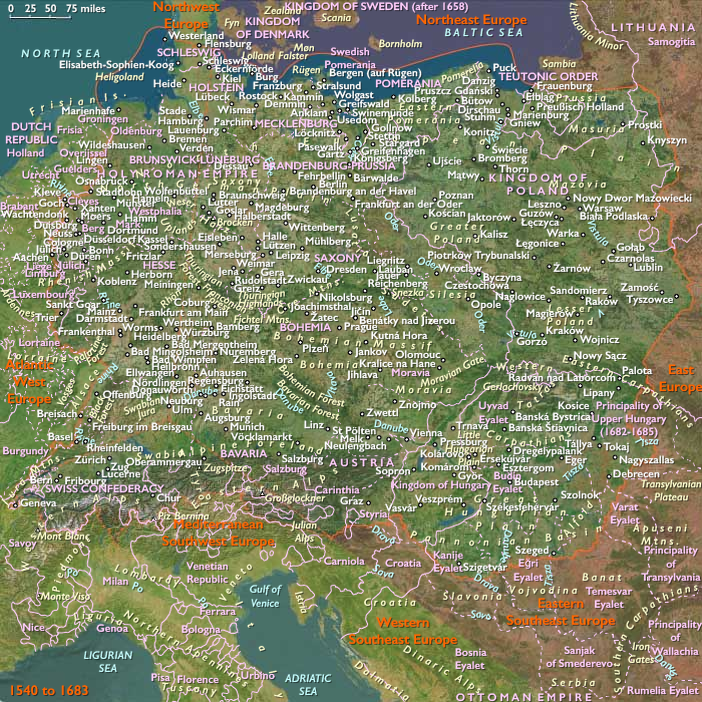
Subregions
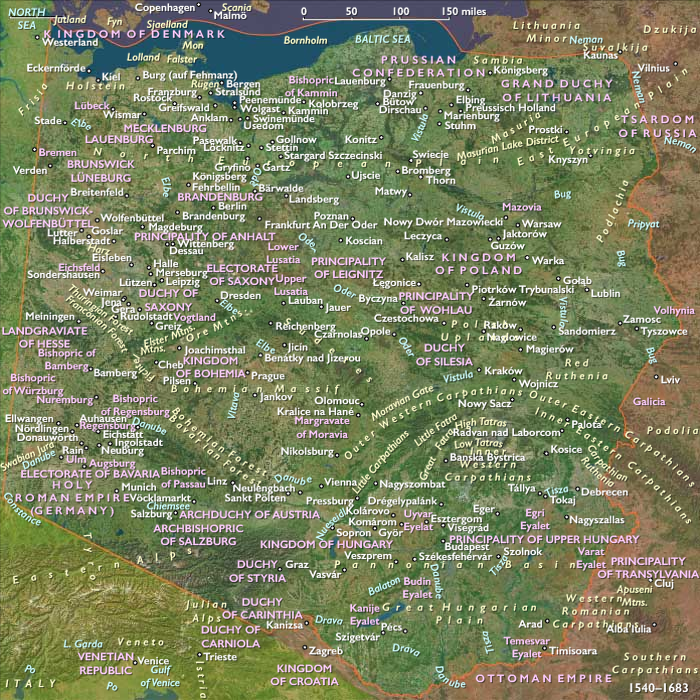
Years: 1564 - 1575
People
Groups
- Polytheism (“paganism”)
- Saxons
- Germans
- Hungarian people
- Wends, or Sorbs (West Slavs)
- Christianity, Chalcedonian
- Bavarians (West Germanic tribe)
- Thuringia, Duchy of
- Passau, Bishopric of
- Saxony, Duchy of
- Holy Roman Empire
- Germany, Kingdom of (within the Holy Roman Empire)
- Slovaks (West Slavs)
- Carinthia, Duchy of
- Czechs [formerly Bohemians] (West Slavs)
- Austria, Margravate of
- Hanseatic league (informally organized)
- Hungary, Kingdom of
- Bamberg, Prince-Bishopric of
- Mazovia, Duchy of
- Poland, Greater
- Austria, Archduchy of
- Brandenburg (Ascanian) Margravate of
- Bohemia, Kingdom of
- Styria, Duchy of
- Lübeck, Free City of
- Brunswick-Lüneburg, Duchy of
- Regensburg (Ratisbon), Imperial Free City of
- Cammin, Prince-Bishopric of
- Anhalt-Zerbst, Principality of
- Regensburg, Prince-Bishopric of
- Anhalt-Bernburg, Principality of
- Holy Roman Empire
- Galicia–Volhynia, Kingdom of
- Brunswick-Wolfenbüttel, Duchy of
- Salzburg, Archbishopric of
- Saxe-Mölln-Bergedorf, Duchy of
- Saxe-Ratzeburg-Lauenburg, Duchy of
- Poland of the later Piasts, Kingdom of
- Lithuania, Grand Duchy of
- Mecklenburg, Duchy of
- Bavaria-Straubing, Wittelsbach Duchy of
- Ottoman Empire
- Bavaria-Landshut, Wittelsbach Duchy of
- Saxony, Electorate of
- Crown of the Kingdom of Poland
- Poland of the Jagiellonians, Kingdom of
- Lithuania, Grand Duchy of
- Bavaria-Munich, Wittelsbach Duchy of
- Bavaria-Ingolstadt, Wittelsbach Duchy of
- Saxe-Lauenburg, Duchy of
- Prussian Confederation
- Transylvania (Hungarian governate)
- Ottoman Empire
- Teutonic Knights of Prussia, or Monastic state of the Teutonic Knights (House of the Hospitalers of Saint Mary of the Teutons in Jerusalem)
- Prussia, Royal (autonomous subject of the Polish Crown)
- Hesse, Landgraviate of
- Lutheranism
- Hungary, Royal
- Jesuits, or Order of the Society of Jesus
- Hungary, Ottoman
- Hungary (Transylvania), Ottoman vassal Kingdom of
Topics
- Humanism, Renaissance
- Renaissance Architecture
- Protestant Reformation
- Counter-Reformation (also Catholic Reformation or Catholic Revival)
Commodoties
Subjects
Regions
Subregions