
Northwestern North America (1540–1683 CE): Enduring Indigenous …
Years: 1540 - 1683
Northwestern North America (1540–1683 CE): Enduring Indigenous Worlds, First Distant Glimpses
Geographic & Environmental Context
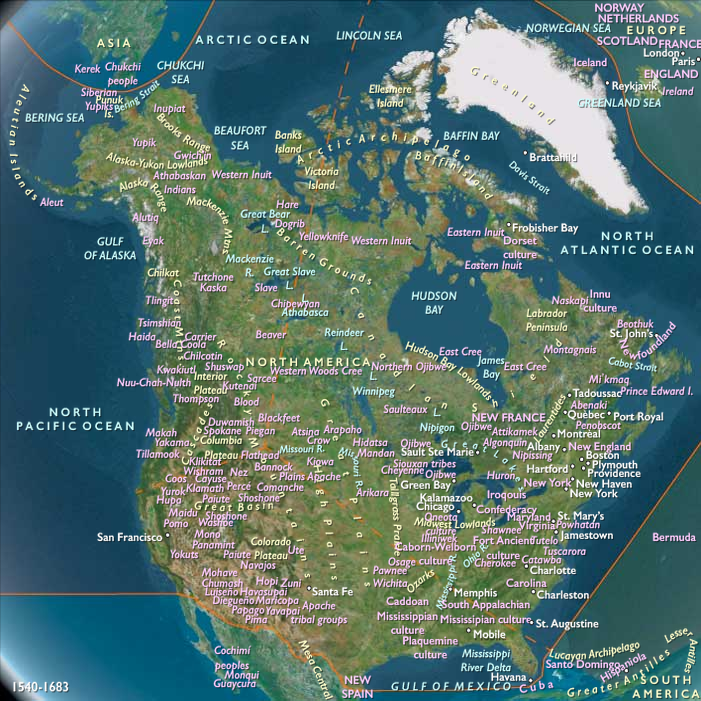
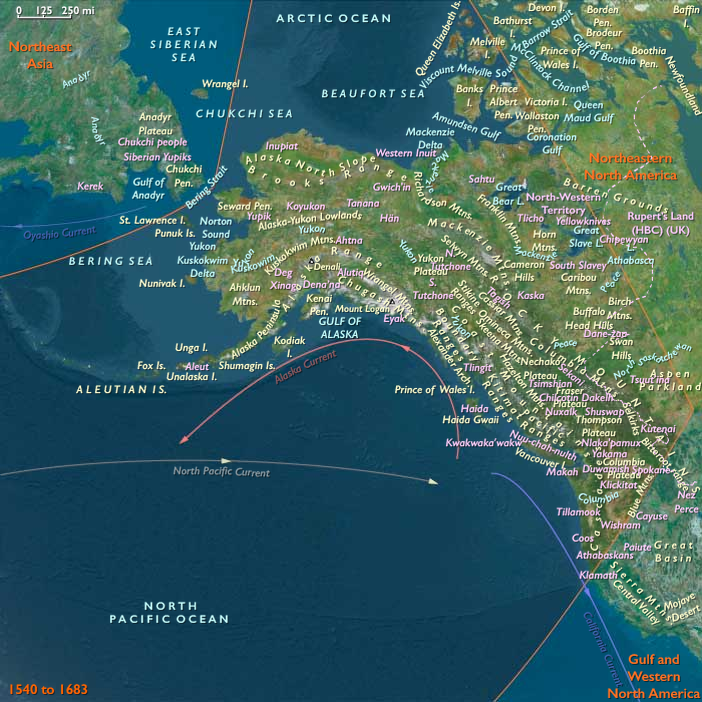
The subregion of Northwestern North America includes western Canada from British Columbia to the Yukon, Alaska and Washington in the United States, northern Idaho, and the northwestern portions of Montana, Oregon, and California. Anchors include the Alaska Range, the Coast and Cascade Mountains, the Columbia River, Puget Sound, the Gulf of Alaska, and the Inside Passage. This was a rugged landscape of glaciated peaks, dense cedar and fir forests, salmon-bearing rivers, and fjorded coasts balanced by interior plateaus and grassland valleys.
Climate & Environmental Shifts
The subregion lay within the Little Ice Age. Glaciers advanced in the Gulf of Alaska and along the St. Elias and Coast ranges. Harsh winters and cooler summers shortened growing seasons inland. Salmon runs fluctuated with river ice and ocean currents, sometimes failing, stressing coastal communities. Storms battered coasts and reshaped sand spits, estuaries, and barrier islands. Inland drought decades punctuated otherwise cool, wet cycles.
Subsistence & Settlement
-
Coastal nations (Tlingit, Haida, Tsimshian, Nuu-chah-nulth, Coast Salish): harvested salmon, halibut, seals, whales, shellfish, berries, and roots. Large plankhouse villages lined sheltered bays and estuaries. Potlatch feasts reinforced wealth and hierarchy.
-
Interior groups (Carrier, Sekani, Kaska, Nez Perce, Shoshone): followed seasonal rounds, hunting moose, caribou, and bison on fringes, fishing rivers and lakes, and gathering camas, wapato, and berries.
-
Plateau and Columbia River peoples: built fishing weirs and platforms for salmon; organized large seasonal trade fairs at Celilo Falls and other river nodes.
Villages were semi-permanent on coasts; more mobile in interior plateaus.
Technology & Material Culture
-
Cedar and spruce woodcraft: dugout canoes, plankhouses, totem poles, boxes, and masks.
-
Bone, antler, and stone tools shaped hunting and fishing implements.
-
Baskets, mats, and cordage from grasses and bark fibers.
-
Snowshoes and sledges inland; hide clothing for cold winters.
-
Rich artistic traditions flourished in carved masks, regalia, and monumental poles embodying myths and lineages.
Movement & Interaction Corridors
-
Inside Passage: canoe highways tied coastal nations, moving fish oil, copper, obsidian, and shells.
-
Columbia River system: connected plateau, Great Basin, and coast through trade fairs and alliances.
-
Mountain passes: ferried obsidian, hides, and dried fish between plateau and plains.
-
Arctic linkages: Yupik and Inupiat in Alaska exchanged iron fragments and goods with Siberian Chukchi and Yupik across the Bering Strait.
These corridors carried not only goods but also stories, marriages, and ceremonies.
Cultural & Symbolic Expressions
-
Raven, Bear, and Thunderbird myths remained central on the coast, encoding laws and moral orders.
-
Potlatch ceremonies dramatized status, gift-giving, and cosmological renewal.
-
Masks, poles, and dance regalia embodied ancestor and animal powers.
-
Inland groups wove spirituality into hunting rituals, mountain and river veneration, and shamanic practices.
-
Storytelling, seasonal festivals, and song maintained identity across generations.
Environmental Adaptation & Resilience
Communities buffered Little Ice Age stresses through:
-
Food preservation (dried salmon, oil, berries) for lean years.
-
Mobility inland to follow herds and harvest sites.
-
Trade alliances that redistributed surpluses.
-
Ceremonial frameworks that reinforced solidarity in times of scarcity.
Despite climatic cooling, Indigenous systems sustained high populations along coasts and resilient mobility inland.
Transition
By 1683 CE, Northwestern North America remained an Indigenous world, untouched by permanent European colonization. Spanish voyages along Baja California and Pacific Mexico had not yet reached north of Cape Mendocino; Russian probes into the Aleutians were still decades away. The region’s peoples thrived in ecological abundance, their societies sophisticated, ceremonial, and enduring—poised to encounter newcomers in the following centuries.
Groups
- Kwakwakaʼwakw
- Haida people
- Tlingit people
- Athabaskans, or Dene, peoples
- Klamath (Amerind tribe)
- Nuu-chah-nulth people (Amerind tribe; also formerly referred to as the Nootka, Nutka, Aht, Nuuchahnulth)
- Tsimshian
- Eyak
- Aleutian Tradition
- Thule Tradition, Punuk and Birnirk Stages
- Russia, Tsardom of
Commodoties
- Fish and game
- Hides and feathers
- Glass
- Colorants
- Oils, gums, resins, and waxes
- Textiles
- Strategic metals
Subjects
- Commerce
- Watercraft
- Sculpture
- Painting and Drawing
- Environment
- Decorative arts
- Mayhem
- Government
- Custom and Law
- Technology
Regions
Subregions
Years: 1540 - 1683
Groups
- Kwakwakaʼwakw
- Haida people
- Tlingit people
- Athabaskans, or Dene, peoples
- Klamath (Amerind tribe)
- Nuu-chah-nulth people (Amerind tribe; also formerly referred to as the Nootka, Nutka, Aht, Nuuchahnulth)
- Tsimshian
- Eyak
- Aleutian Tradition
- Thule Tradition, Punuk and Birnirk Stages
- Russia, Tsardom of
Commodoties
- Fish and game
- Hides and feathers
- Glass
- Colorants
- Oils, gums, resins, and waxes
- Textiles
- Strategic metals
Subjects
- Commerce
- Watercraft
- Sculpture
- Painting and Drawing
- Environment
- Decorative arts
- Mayhem
- Government
- Custom and Law
- Technology
Regions
Subregions