
Charles, Dauphin of France (1417) and the …
Years: 1417 - 1417
Charles, Dauphin of France (1417) and the Reunification of Poitou
By 1417, Charles, the fifth son of Isabella of Bavaria and King Charles VI of France, became Dauphin and heir to the French throne following the deaths of his elder brothers. His position, however, was far from secure, as France was embroiled in the Armagnac-Burgundian Civil War and facing renewed English aggression under Henry V.
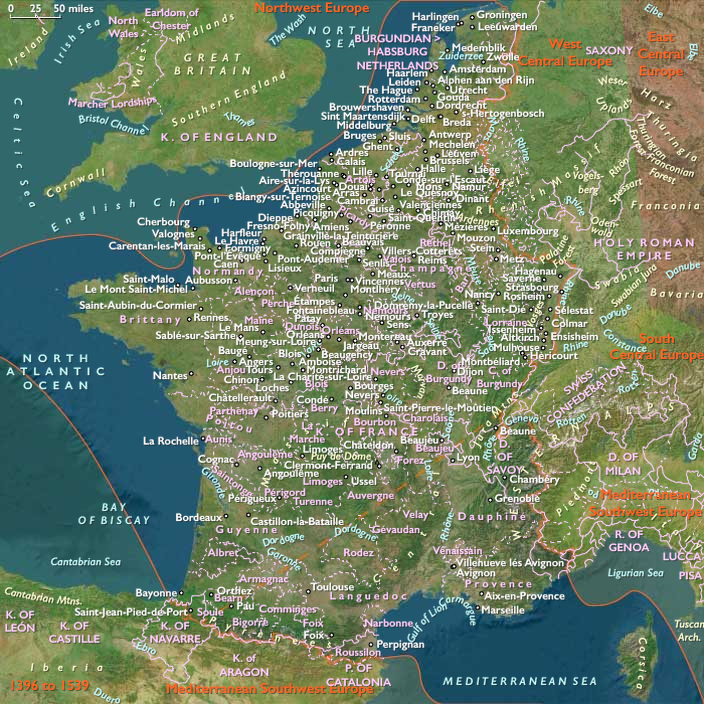
At the same time, Poitou was formally reunited with the French crown, reinforcing royal control over a strategic region in western France.
I. The Deaths of Charles’ Brothers and His Rise as Dauphin (1417)
- Charles was the fifth son of Charles VI and Queen Isabella of Bavaria, born in 1403.
- His four elder brothers all predeceased him, making him the last surviving male heir:
- Louis, Dauphin of France (d. 1415)
- Jean, Dauphin of France (d. 1417)
- Two other brothers had died in infancy.
- Upon Jean de Touraine’s death in April 1417, Charles, at just 14 years old, became Dauphin and heir to the French throne.
II. Poitou Reunited with the French Crown
- Poitou, a historically contested region, had seen fluctuating control between France and its vassals over the centuries.
- By 1417, Poitou was firmly reunited with the French Crown, reinforcing royal authority in western France.
- This strengthened Charles' position, providing a key base of support in the ongoing war against England and Burgundy.
III. Charles’ Struggle as Heir in a Divided Kingdom
- Despite being the rightful heir, Charles faced serious challenges to his authority:
- The English, under Henry V, had invaded Normandy and were advancing into France.
- John the Fearless, Duke of Burgundy, controlled Paris and was allied with the English, limiting Charles’ influence.
- The Armagnac-Burgundian Civil War weakened the monarchy, as Charles' own authority was contested by rival factions.
- In 1418, the Burgundians seized Paris, forcing Charles to flee south to Bourges, where he would remain a disputed Dauphin, controlling only part of France.
IV. Consequences and Legacy
- Charles’ position as heir to the throne remained precarious until:
- The Treaty of Troyes (1420) disinherited him in favor of Henry V of England, leading to further conflict.
- His later alliance with Joan of Arc (1429) helped restore his legitimacy and secure his eventual coronation as Charles VII.
The death of his elder brothers in 1417 made Charles the Dauphin of France, but his claim was contested, and he faced enormous political and military challenges, setting the stage for the final phase of the Hundred Years’ War.
Locations
People
- Bernard VII
- Charles VI of France
- Charles VII of France
- Charles of Orléans
- Henry V of England
- Isabeau of Bavaria
- John the Fearless
- John, Dauphin of France and Duke of Touraine
Groups
Topics
- Hundred Years' War
- Armagnac-Burgundian Civil War
- Hundred Years' War: Resumption of the war under Henry V
Commodoties
Subjects
Regions
Subregions
Related Events
Showing 10 events out of 42306 total
Years: 1417 - 1417
Locations
People
- Bernard VII
- Charles VI of France
- Charles VII of France
- Charles of Orléans
- Henry V of England
- Isabeau of Bavaria
- John the Fearless
- John, Dauphin of France and Duke of Touraine
Groups
Topics
- Hundred Years' War
- Armagnac-Burgundian Civil War
- Hundred Years' War: Resumption of the war under Henry V
Commodoties
Subjects
Regions
Subregions