The Annexation of Frisia and the Support for Christian Missionaries
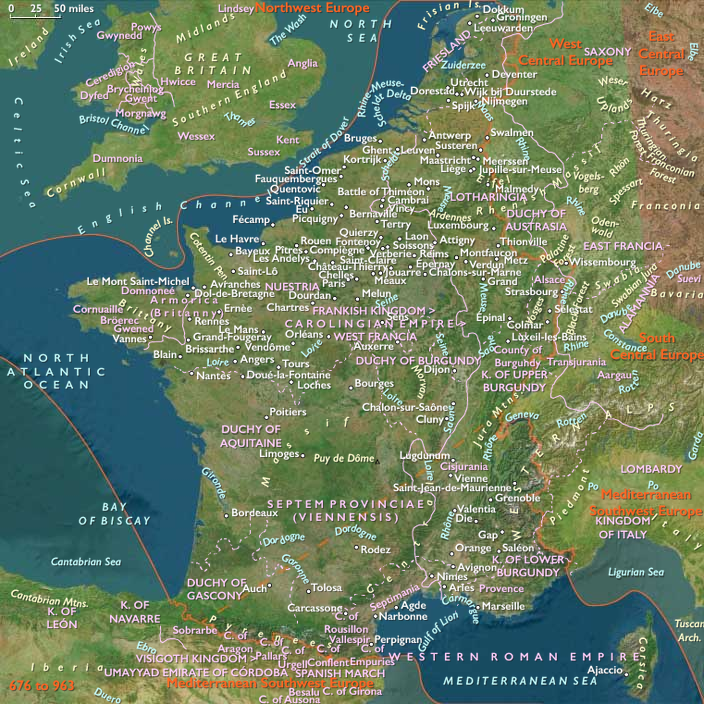
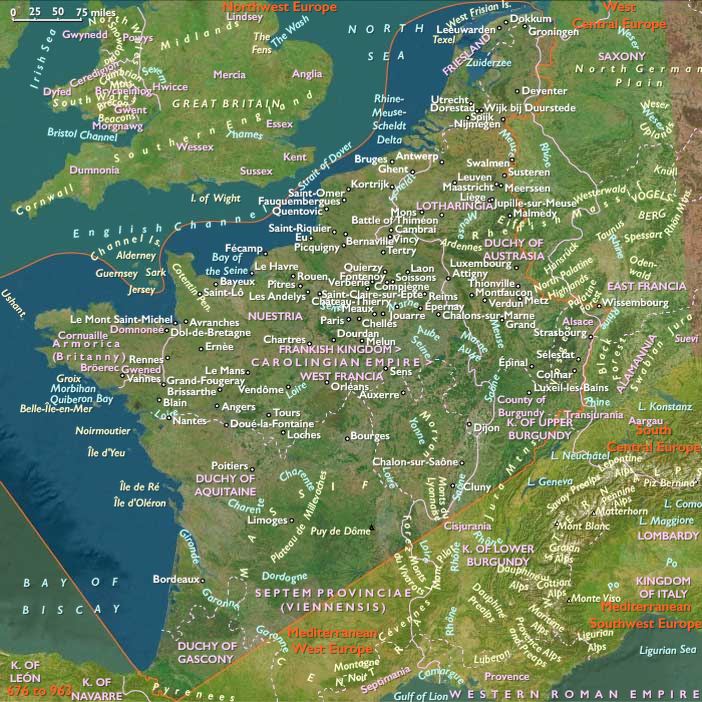
In 719, following the death of Radbod, Charles Martel swiftly seizes West Frisia without encountering significant resistance. The Frisians, long adversaries of the Franks, now find themselves under Frankish control, their new ruler, Aldegisel, proving more amenable to Frankish influence. Although Charles does not fully trust the pagan Frisians, Aldegisel’s acceptance of Christianity provides an opportunity to further integrate the region into the Frankish realm.
Willibrord and Boniface: The Christianization of Frisia and Germany
Seeking to solidify Frankish authority through religious conversion, Charles sends Willibrord, the eventual Bishop of Utrecht, to continue his missionary work. Willibrord, known as the “Apostle to the Frisians,” establishes churches, schools, and monasteries, ensuring that Christianity takes root in the newly conquered territory.
At the same time, Charles extends his support to Winfrid, the Anglo-Saxon missionary who will later be known as Saint Boniface, the “Apostle of the Germans.” After an unsuccessful earlier attempt in Frisia, Winfrid sets out again in 718, travels to Rome, and is formally commissioned in 719 by Pope Gregory II to evangelize the Germanic peoples. It is during this mission that he is given the name Boniface and tasked with reorganizing the church in Germany, ensuring that Frankish interests and Christian expansion go hand in hand.
With these developments, Frisia, up to the banks of the Vlie River, becomes firmly part of the Frankish Empire, further extending Charles Martel’s dominance and securing Christian influence in the region.