
Charles-Louis de Secondat, baron de La Brède …
Years: 1721 - 1721
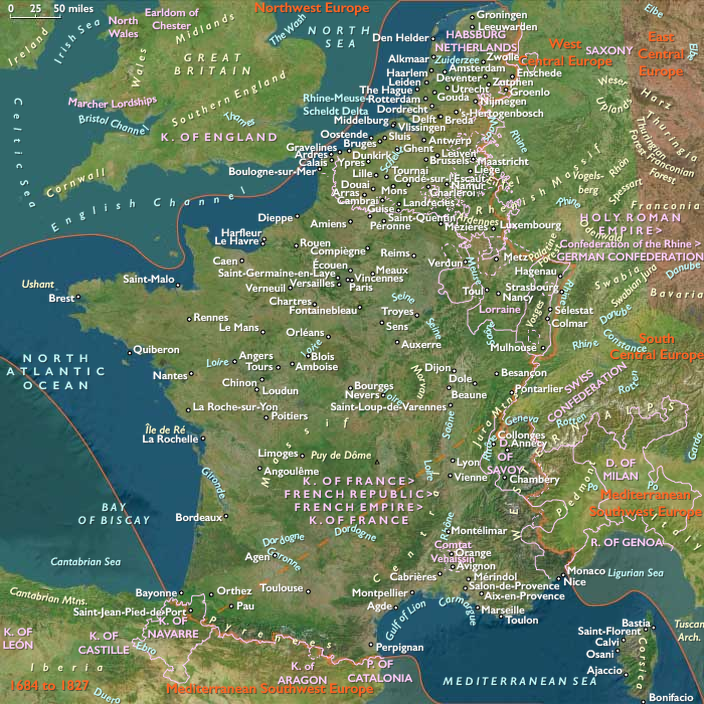
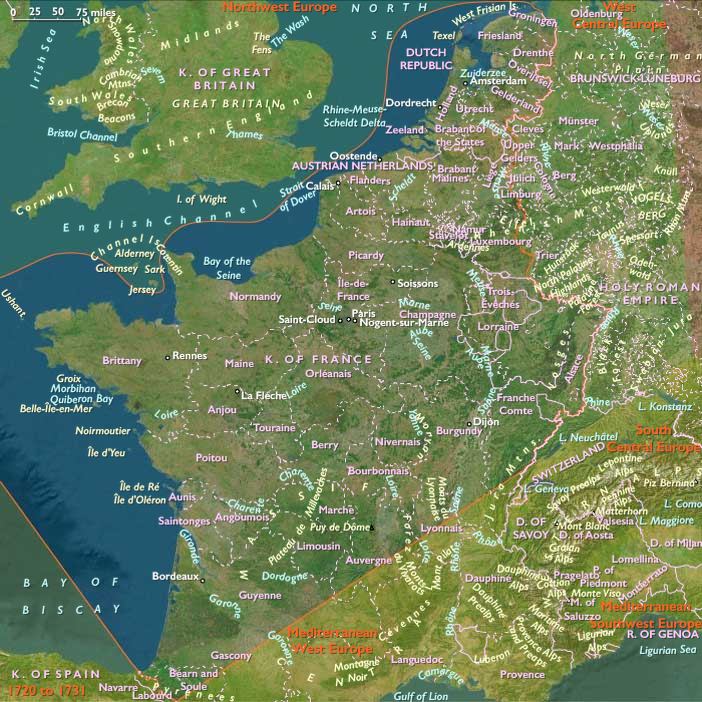
Charles-Louis de Secondat, baron de La Brède et de Montesquieu, was born at the Château de la Brède in the southwest of France.
His father, Jacques de Secondat, was a soldier with a long noble ancestry.
His mother, Marie Françoise de Pesnel, died when Charles de Secondat was seven.
After having studied at the Catholic College of Juilly, Charles-Louis de Secondat married.
His wife, Jeanne de Lartigue, a Protestant, had rought him a substantial dowry when he was 26.
The next year, he inherited a fortune upon the death of his uncle, as well as the title Baron de Montesquieu and Président à Mortier in the Parliament of Bordeaux.
Montesquieu's early life had occurred at a time of significant governmental change.
On the nearby British Isles, England had declared itself a constitutional monarchy in the wake of its Glorious Revolution (1688–89), and had joined with Scotland in the Union of 1707 to form the Kingdom of Great Britain.
France's long-reigning Louis XIV had died in 1715 and had been succeeded by the five-year-old Louis XV.
These national transformations had impacted Montesquieu greatly; he will later refer to them repeatedly in his work.
He achieves literary success in 1721 with the publication of his Lettres persanes (Persian Letters), recounting the experiences of two Persian noblemen, Usbek and Rica, who are traveling through France.
A satire based on the imaginary correspondence of these Persian visitor to Paris, it points out the absurdities of contemporary society.
Locations
People
Groups
Topics
Subjects
Regions
Subregions
Related Events
Showing 10 events out of 28016 total
Years: 1721 - 1721
Locations
People
Groups
Topics
Subjects
Regions
Subregions