
Charles III, Duke of Bourbon: Betrayal and …
Years: 1522 - 1522
June
Charles III, Duke of Bourbon: Betrayal and Shifting Allegiances (1522)
In 1522, Charles III, Duke of Bourbon, Constable of France, becomes increasingly alienated from King Francis I, setting in motion one of the most dramatic betrayals of the early modern era. The proud duke, already renowned as a military commander—especially for his role commanding the vanguard at the victorious Battle of Marignano (1515)—had initially been rewarded by Francis with both the office of Constable and the prestigious Governorship of Milan. Yet Bourbon's increasing power, wealth, and independence soon made Francis uneasy, resulting in Charles’s recall from Milan, Francis’s refusal to repay his debts, and the king's decision to place the command of the vanguard in subsequent campaigns (notably the recent war in the Netherlands) in the hands of Charles IV of Alençon, the king's brother-in-law, a clear slight against Bourbon’s honor.
The breaking point occurs in 1521 with the death of Bourbon’s wife, Suzanne, Duchess of Bourbon, whose vast estates form the backbone of his wealth and status. Suzanne, who had no surviving children, had designated Charles as her sole heir. However, Louise of Savoy, mother of Francis and sister of Suzanne, quickly lays claim to these estates, citing her closer blood relation. Louise seeks to resolve this inheritance dispute by marrying Charles herself, but the duke rejects her offer, citing their significant age difference—Louise is fourteen years his senior—and his personal disdain for the proposal.
Angered by Charles's rejection and motivated by financial necessity for his ongoing campaigns in the Italian Wars, Francis supports his mother’s legal claims and aggressively moves to seize the disputed lands. Even before a formal ruling in the lawsuit, the crown confiscates part of Bourbon’s property, further enraging the duke and driving him towards treasonous actions.
Feeling betrayed, isolated, and humiliated at the French court, Bourbon secretly begins negotiations with Emperor Charles V, plotting to shift his considerable military talents and influence to the Imperial cause against his own sovereign.
Long-term Consequences and Significance
Bourbon’s alienation and subsequent defection radically alter the balance of power in the ongoing conflicts between France and the Habsburg Empire. By turning one of France’s leading military commanders into an Imperial ally, Charles V gains an invaluable strategic advantage. Bourbon’s defection deepens the crisis facing Francis I and exposes critical vulnerabilities in the French monarchy’s management of powerful nobles, setting the stage for a series of military and political disasters, including the catastrophic French defeat at Pavia (1525) and the resulting capture of Francis himself. This rupture between Francis and Bourbon exemplifies the volatile interplay between personal rivalries, dynastic politics, and international warfare in early sixteenth-century Europe.
Locations
People
- Charles III, Duke of Bourbon
- Charles IV of Alençon
- Charles V, Holy Roman Emperor
- Francesco II Sforza
- Francis I of France
- Georg von Frundsberg
- Pope Adrian VI
Groups
- Papal States (Republic of St. Peter)
- France, (Valois) Kingdom of
- Holy Roman Empire
- Milan, Duchy of
- Spain, Habsburg Kingdom of
Topics
Commodoties
Subjects
Regions
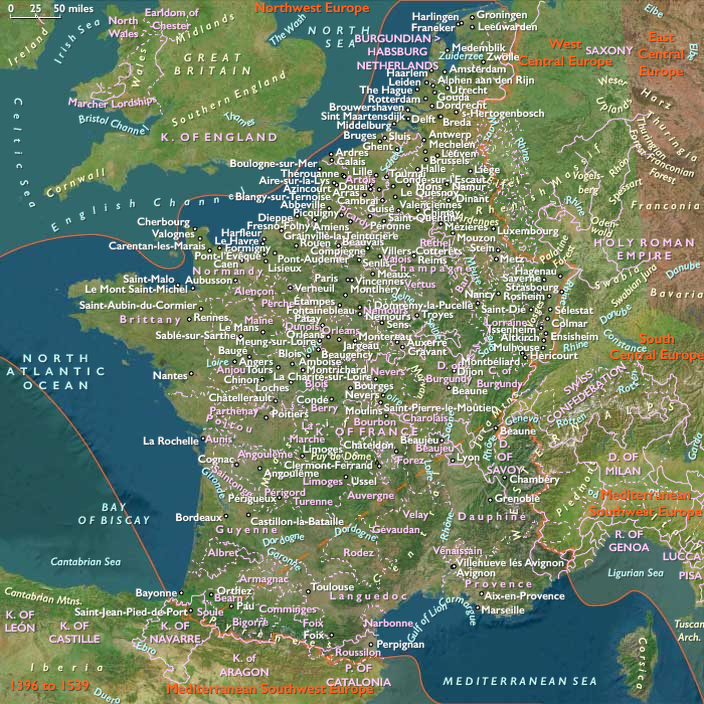
Subregions
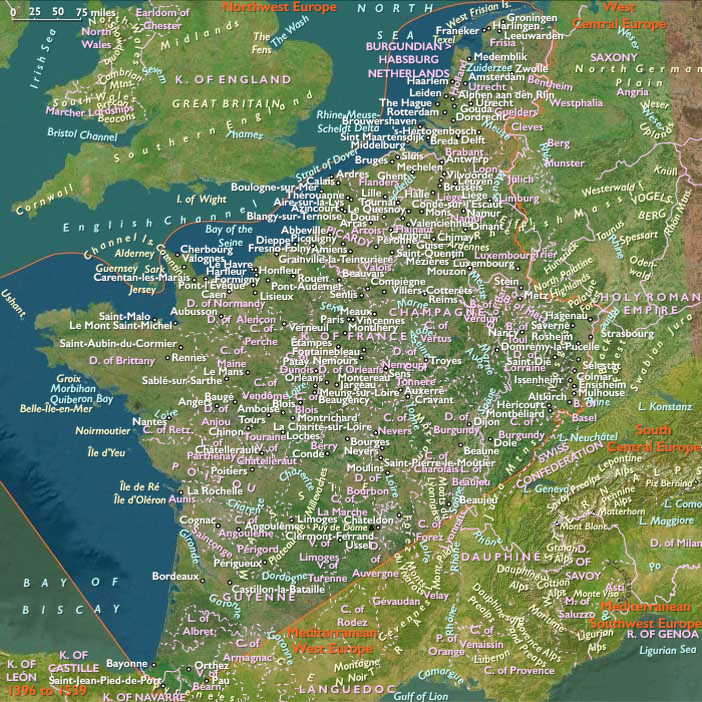
Years: 1522 - 1522
June
Locations
People
- Charles III, Duke of Bourbon
- Charles IV of Alençon
- Charles V, Holy Roman Emperor
- Francesco II Sforza
- Francis I of France
- Georg von Frundsberg
- Pope Adrian VI
Groups
- Papal States (Republic of St. Peter)
- France, (Valois) Kingdom of
- Holy Roman Empire
- Milan, Duchy of
- Spain, Habsburg Kingdom of
Topics
Commodoties
Subjects
Regions
Subregions