
The Treaty of Saint-Clair-sur-Epte (August 26, 911): …
Years: 911 - 911
August
The Treaty of Saint-Clair-sur-Epte (August 26, 911): The Foundation of Normandy
Following the Frankish victory at the Battle of Chartres in July 911, King Charles the Simple decides to negotiate with Rollo, the leader of the Norse settlers in northern France. The result is the Treaty of Saint-Clair-sur-Epte, concluded on August 26, 911, marking the official establishment of Norman rule in Francia.
Terms of the Treaty
The negotiations, led by Hervé, Archbishop of Reims, establish several key terms:
-
Territorial Grant to Rollo
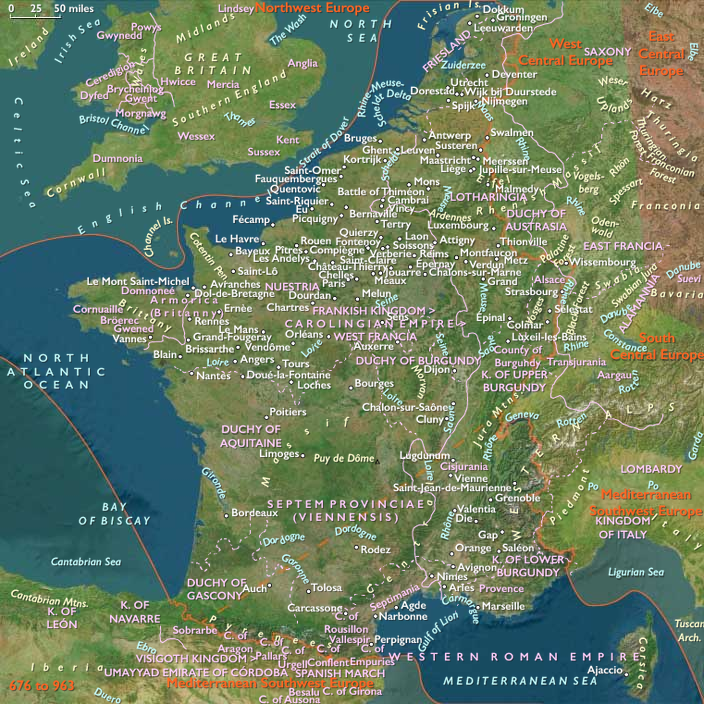
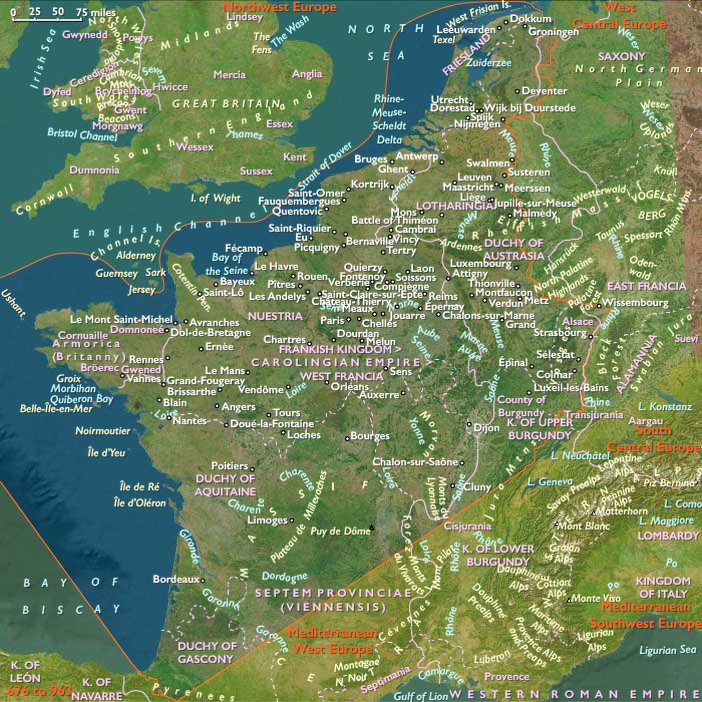
- Rollo and his warriors are granted all land between the River Epte and the sea, which corresponds to the northern part of modern Upper Normandy down to the Seine.
- This land is granted "in freehold and good money", meaning Rollo holds it with full hereditary rights.
-
Grant of Brittany for "Livelihood"
- The treaty also grants Brittany to Rollo, despite the fact that Brittany is an independent territory that Francia has failed to conquer.
- However, at this time, Brittany is leaderless, as Alan I, King of Brittany, has died, and another group of Vikings occupies Brittany.
- In practice, this grant allows Rollo to raid or subjugate Brittany without interference from Charles.
-
Rollo’s Oath of Loyalty and Military Service
- In return for these lands, Rollo swears fealty to Charles, making him a vassal of the Frankish king.
- He agrees to provide military assistance to defend Francia, particularly against other Viking incursions.
-
Rollo’s Baptism and Marriage
- As a symbol of his commitment to the treaty, Rollo agrees to be baptized as a Christian.
- He also marries Gisela, a presumed illegitimate daughter of Charles the Simple, further integrating him into the Frankish aristocracy.
The Birth of Normandy
- The new territory granted to Rollo becomes the basis of the future Duchy of Normandy, which takes its name from the Norsemen (Normans) who rule it.
- Though initially a fief, likely a county, Normandy will later be elevated to a duchy as its rulers consolidate power.
- The lack of surviving written records of its exact creation suggests that its status as a duchy evolves gradually over time.
Consequences of the Treaty
-
The End of Major Viking Raids in Northern Francia
- Rollo and his men transition from raiders to rulers, effectively securing northern Francia from further Norse invasions.
- With Viking forces now serving as defenders of the Seine, they block other Norse warbands from raiding further inland.
-
The Integration of the Norse into Frankish Society
- Rollo’s baptism and marriage mark the beginning of Norman assimilation into Frankish culture, language, and governance.
- The Norse settlers intermarry with the local Gallo-Roman and Frankish populations, creating a unique Norman identity that blends Viking warrior traditions with Frankish feudal customs.
-
Brittany’s Continued Turmoil
- Though nominally granted to Rollo, Brittany remains contested and continues to be a region of instability.
- The Bretons will eventually reclaim independence, resisting Frankish and Norman control.
-
Normandy as a Future Powerhouse
- The Duchy of Normandy will grow into one of the most powerful feudal states in medieval France.
- In 1066, Duke William II of Normandy (William the Conqueror) will invade England and establish Norman rule over England, reshaping European history.
Conclusion: A Turning Point in European History
The Treaty of Saint-Clair-sur-Epte (911) represents a strategic shift in Viking-Frankish relations, as the Norse stop raiding and start ruling. Rollo’s new Norman state ensures that northern Francia remains secure, while the Normans themselves emerge as one of the most dynamic forces in medieval Europe, influencing France, England, and beyond.
Locations
People
Groups
- Vikings
- Brittany, Kingdom of
- Francia Occidentalis (West Francia, or France), Kingdom of
- Normandy, Duchy of
Topics
Commodoties
Subjects
Regions
Subregions
Related Events
Showing 10 events out of 53428 total
Years: 911 - 911
August
Locations
People
Groups
- Vikings
- Brittany, Kingdom of
- Francia Occidentalis (West Francia, or France), Kingdom of
- Normandy, Duchy of
Topics
Commodoties
Subjects
Regions
Subregions