
Charidemus has borne the prominent part in …
Years: 357BCE - 346BCE
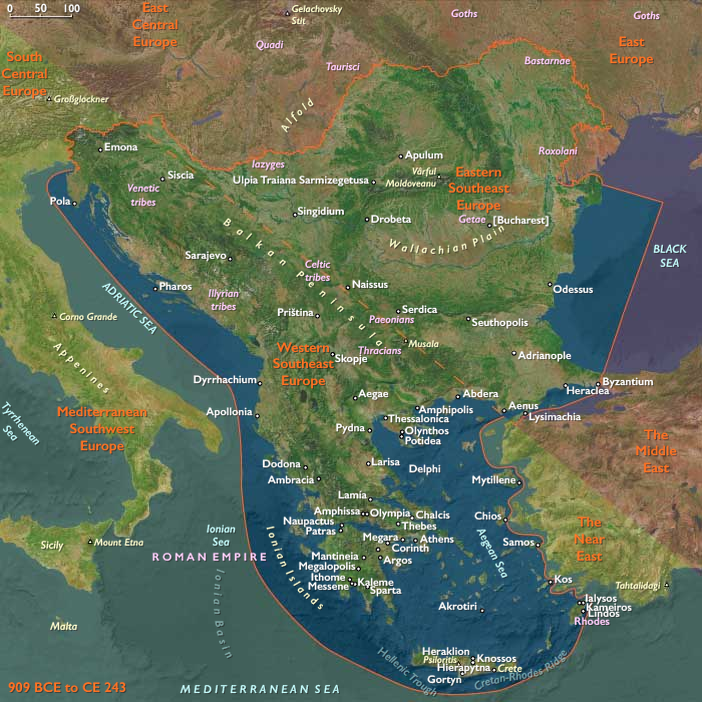
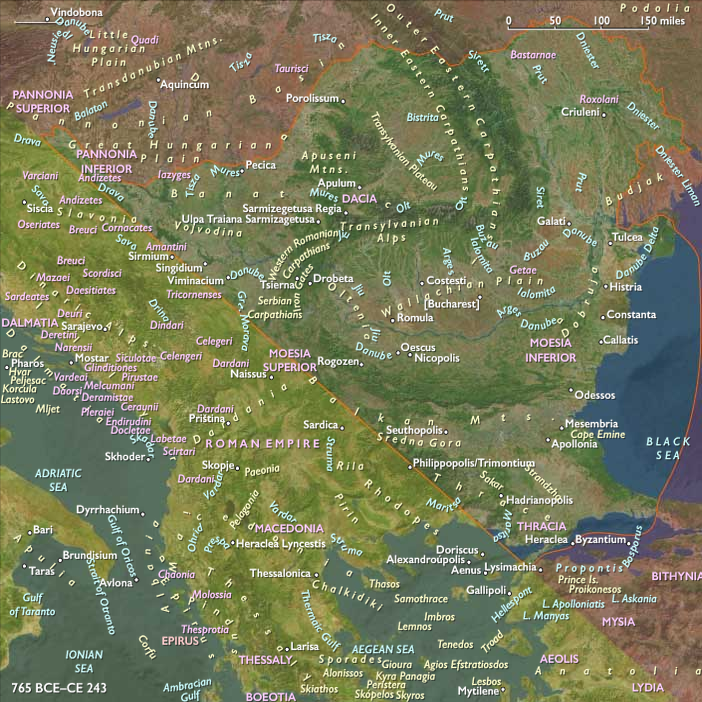
Charidemus has borne the prominent part in the ensuing contests and negotiations with Athens for the possession of the Thracian Chersonese, Cersobleptes appearing throughout as a mere cipher.
The peninsula seems to have been finally ceded to the Athenians in 357 BCE, though they will not occupy it with their settlers until 335; nor perhaps is the language of Isocrates so decisive against this early date as it may appear at first sight.
For some time after the cession of the Chersonese, Cersobleptes continues to court assiduously the favor of the Athenians, being perhaps restrained from aggression by the fear of their squadron in the Hellespont.
On the death of Berisades, before 352 BCE, Cersobleptes conceives, or rather Charidemus conceives for him, the design of excluding the children of the deceased prince from their inheritance, and obtaining possession of all the dominions of Cotys; and it is with a view to the furtherance of this object that Charidemus obtains from the Athenian people, through his party among the orators, the decree in his favor for which its mover Aristocrates is impeached, but unsuccessfully, in the speech of Demosthenes yet extant.
From a passing allusion in this oration, it appears that Cersobleptes had been negotiating with king Philip II of Macedon for a combined attack on the Chersonese, which however came to nothing in consequence of the refusal of Amadocus to allow Philip a passage through his territory.
But after the passing of the decree above-mentioned, Philip became the enemy of Cersobleptes, and in 352 BCE made a successful expedition into Thrace, gained a firm ascendancy in the country, and brought away a son of Cersobleptes as a hostage.
Both Cersobleptes and Amadocus appear to have been subjected by Philip early in 347 BCE, not long after Cetriporis, the son and successor of Berisades, suffered the same fate.
The two rulers, having appealed to the Macedonian ruler to arbitrate a dispute between them, were then been forced to acknowledge his suzereinty when the "judge" showed up with an army.
At the time of the peace between Athens and Philip in 346 BCE, we find Cersobleptes again involved in hostilities with the Macedonian king, who in fact is absent in Thrace when the second Athenian embassy arrives at his capital Pella, and does not return to give them audience until he has completely conquered Cersobleptes.
Locations
People
Groups
- Thracians
- Greece, classical
- Macedon, Argead Kingdom of
- Achaemenid, or First Persian, Empire
- Odrysian kingdom
- Athenian Empire or Confederacy, Second
Topics
Commodoties
Subjects
Regions
Subregions
Years: 357BCE - 346BCE
Locations
People
Groups
- Thracians
- Greece, classical
- Macedon, Argead Kingdom of
- Achaemenid, or First Persian, Empire
- Odrysian kingdom
- Athenian Empire or Confederacy, Second
Topics
Commodoties
Subjects
Regions
Subregions