
The War with Champagne and the Burning …
Years: 1142 - 1142
The War with Champagne and the Burning of Vitry-le-François (1142–1144 CE)
The conflict between King Louis VII of France and Theobald II of Champagne was further complicated by the ongoing dispute over the Archbishopric of Bourges. Theobald had aligned himself with Pope Innocent II, deepening the rift between the Capetian monarchy and the papacy.
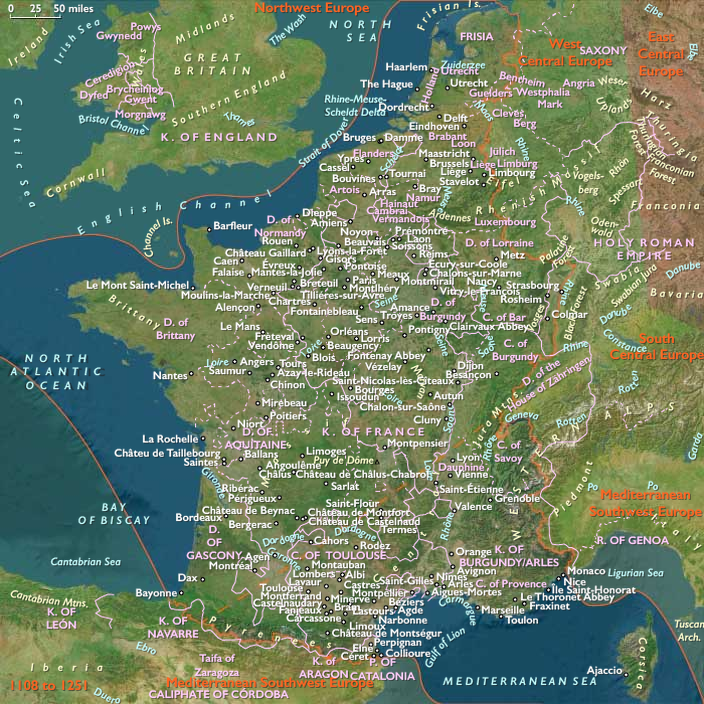
The war escalated dramatically, culminating in the royal army’s occupation of Champagne and one of the most notorious atrocities of Louis VII’s reign—the burning of Vitry-le-François, in which over a thousand civilians perished in the flames.
The Siege and Burning of Vitry-le-François (1143 CE)
- The royal army invaded Champagne, with Louis VII personally leading the assault.
- At Vitry-le-François, the town was besieged and set ablaze.
- More than 1,000 people, who had sought refuge in the church, were burned alive in one of the most shocking acts of the war.
- The horror of the massacre left Louis VII deeply shaken, leading to a spiritual and political crisis.
Louis VII’s Retreat and Reconciliation with the Papacy (1144 CE)
- Overcome with guilt for the massacre at Vitry, and humiliated by the Church’s condemnation, Louis VII admitted defeat in the war against Champagne.
- He withdrew his armies and returned Champagne’s lands to Theobald II, effectively ending the hostilities.
- To restore relations with the Papacy, Louis finally accepted Pierre de la Châtre as Archbishop of Bourges, bringing an end to their longstanding investiture dispute.
- As a further act of penance, Louis shunned Raoul of Vermandois and Petronilla of Aquitaine, whose marriage had originally sparked the war.
Consequences and Lasting Impact
- The burning of Vitry profoundly affected Louis VII, strengthening his desire for atonement, which later influenced his decision to lead the ill-fated Second Crusade (1147–1149).
- His defeat in Champagne and reconciliation with the Papacy marked a humbling moment for the young king, reinforcing the limits of Capetian power over rebellious nobles.
- The alienation of Eleanor of Aquitaine, due to his repudiation of Petronilla, further strained their already troubled marriage, ultimately setting the stage for their later divorce (1152).
Though Louis VII retained the French throne, the war with Champagne had exposed his military recklessness, his fraught relationship with the Papacy, and the growing influence of Eleanor in Capetian politics—all factors that would shape the rest of his reign.
Locations
People
- Eleanor of Aquitaine
- Louis VII of France
- Petronilla of Aquitaine
- Pope Celestine II
- Pope Innocent II
- Ralph I
- Stephen of Blois
- Suger
- Theobald the Great
- William X, Duke of Aquitaine
Groups
- Normandy, Duchy of
- Champagne, County of
- Aquitaine, (Angevin) Duchy of
- France, (Capetian) Kingdom of
- Christians, Roman Catholic
- England, (Norman) Kingdom of
Topics
Commodoties
Subjects
Regions
Subregions
Related Events
Showing 4 events out of 4 total
Years: 1142 - 1142
Locations
People
- Eleanor of Aquitaine
- Louis VII of France
- Petronilla of Aquitaine
- Pope Celestine II
- Pope Innocent II
- Ralph I
- Stephen of Blois
- Suger
- Theobald the Great
- William X, Duke of Aquitaine
Groups
- Normandy, Duchy of
- Champagne, County of
- Aquitaine, (Angevin) Duchy of
- France, (Capetian) Kingdom of
- Christians, Roman Catholic
- England, (Norman) Kingdom of
Topics
Commodoties
Subjects
Regions
Subregions