
The Spread of Agriculture and the Emergence …
Years: 4077BCE - 3934BCE
The Spread of Agriculture and the Emergence of Lakeside Settlements (c. 4000 BCE)
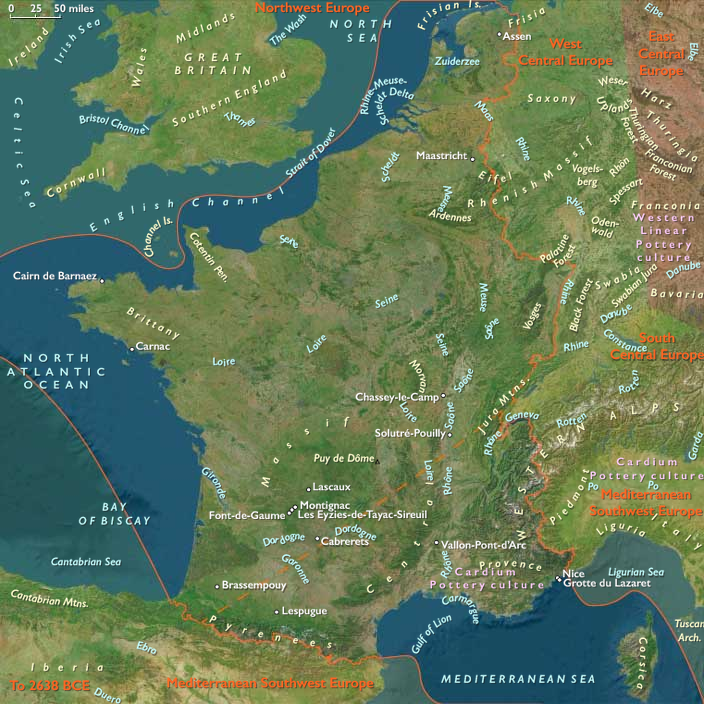
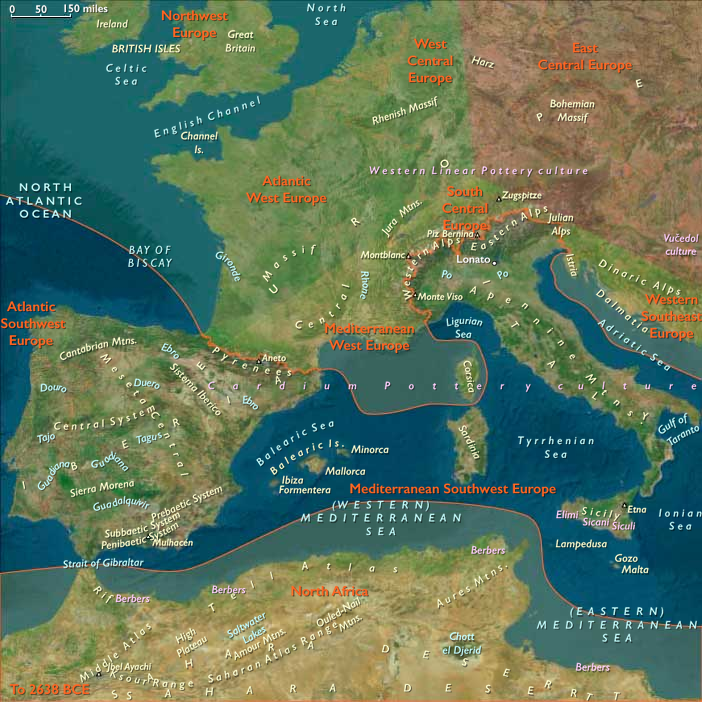
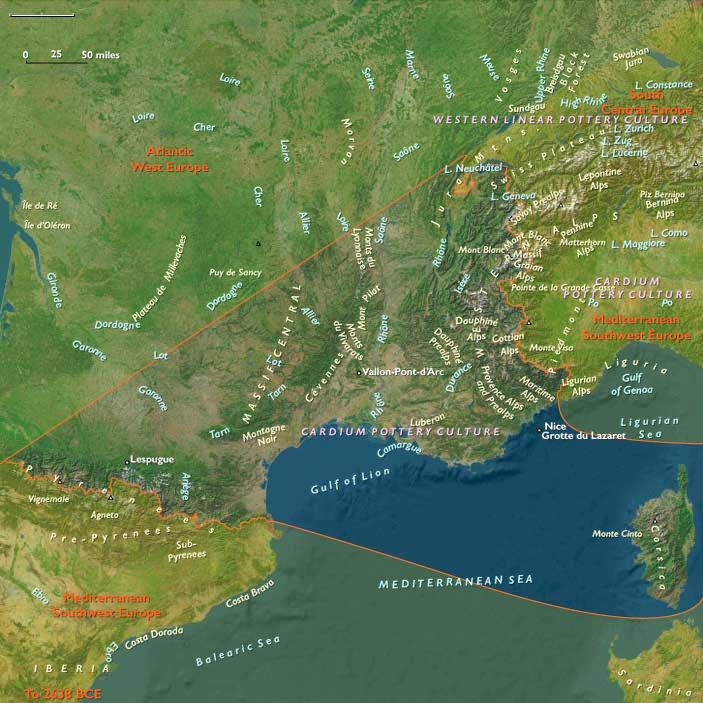
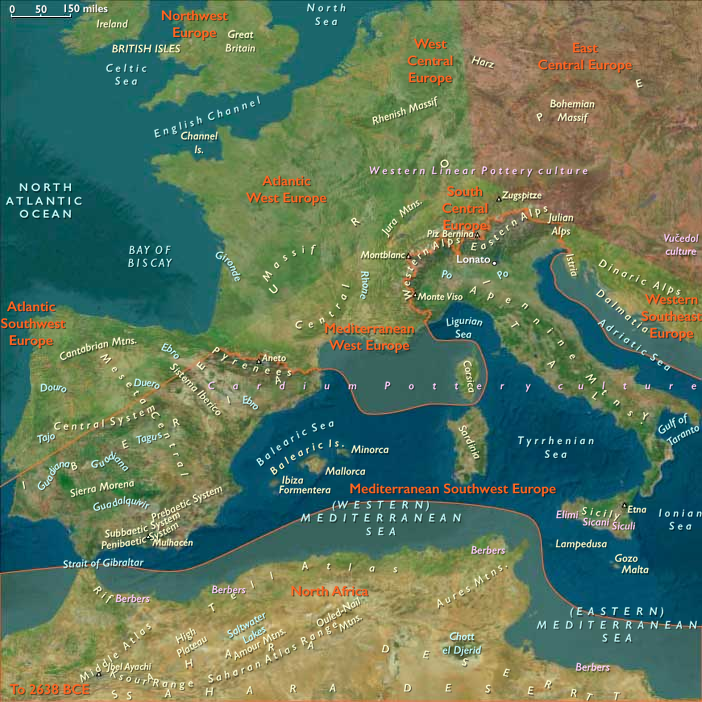
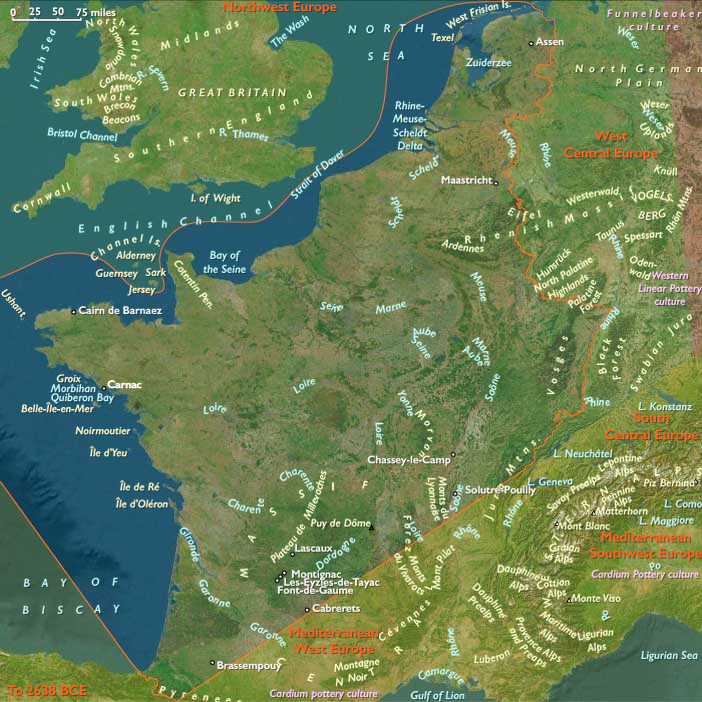
By 4000 BCE, cereal crops and cattle had been introduced to Western France and Switzerland, likely arriving via the Mediterranean as part of the westward expansion of Neolithic agriculture. This marks a significant agricultural diffusion, bringing wheat, barley, and domesticated livestock to regions previously occupied by hunter-gatherer and early farming societies.
The Rise of Lakeside Settlements
-
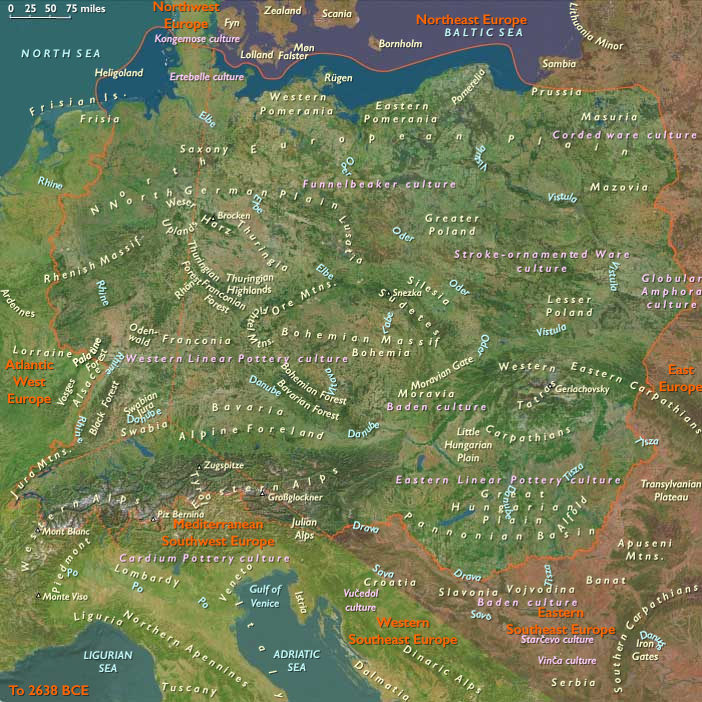
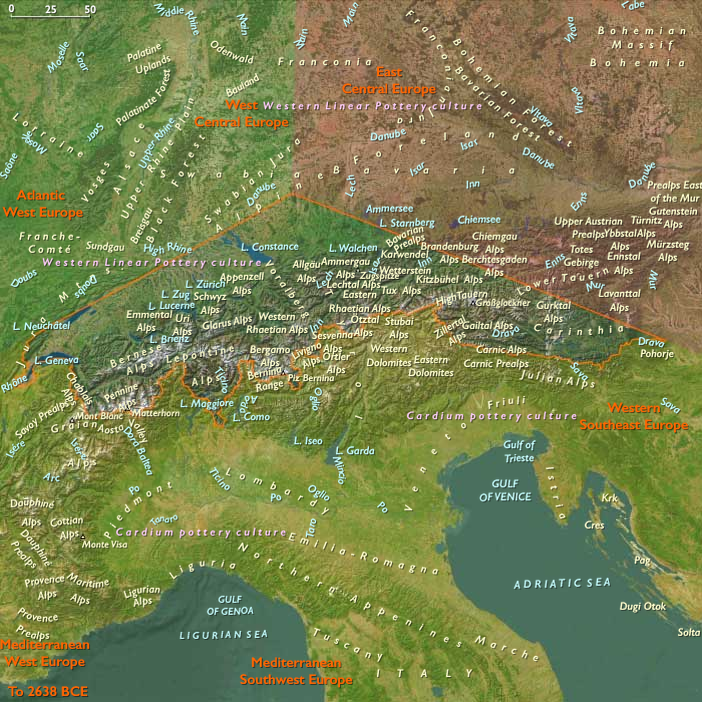
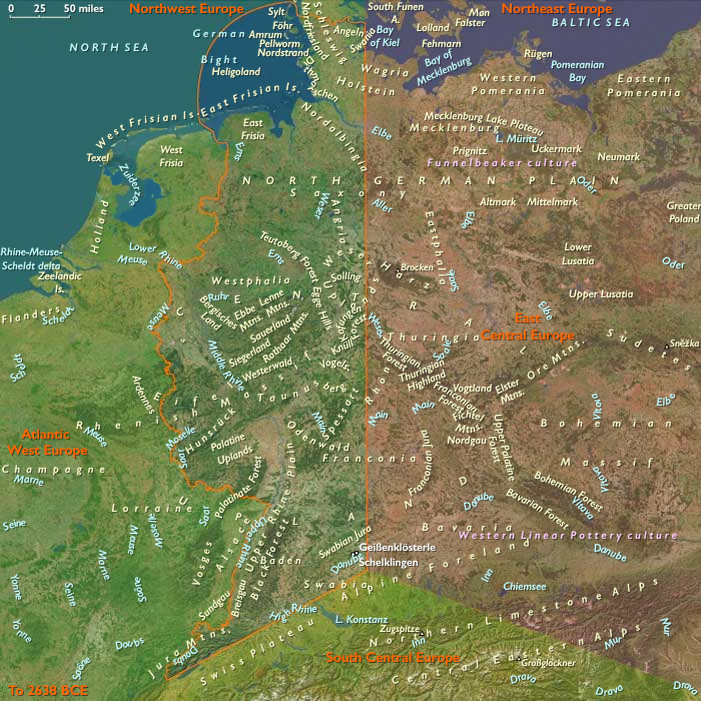
Around this time, a series of settlements—commonly referred to as lake dwellings—were established on the shores of lakes in:
- Switzerland
- Southern Germany
- Southeastern France
- Northern Italy
-
These settlements were long thought to have been built as artificial lake islands, similar to Scottish crannogs, but modern archaeology suggests they were actually shoreline villages that were later inundated due to rising water levels and climatic changes.
Early Misinterpretations and Modern Understanding
- Ferdinand Keller, a 19th-century Swiss archaeologist, originally proposed that these settlements were entirely built on stilts over the water to protect inhabitants from raids and floods.
- Today, it is clear that most of these were waterside settlements on lake margins, which were later submerged due to rising water levels, seasonal flooding, or natural changes in lake dynamics.
Cultural and Economic Significance
- These settlements indicate that Neolithic communities had advanced woodworking skills, using timber posts and planks to construct their homes.
- They relied on a combination of farming, fishing, and livestock herding, adapting their subsistence strategies to rich lakeside environments.
- The presence of woven textiles, ceramics, and tools in preserved layers suggests a complex economy with craft specialization and long-distance trade networks.
These lake-dwelling cultures reflect early human adaptation to dynamic water landscapes, demonstrating a blend of agriculture, settlement organization, and environmental resilience that would influence later European Bronze Age and Iron Age communities.
Groups
Topics
Commodoties
Subjects
- Commerce
- Environment
- Labor and Service
- Conflict
- Faith
- Government
- Technology
- Anthropology
- Archaeology
Regions
Subregions
- South Central Europe
- Mediterranean West Europe
- Mediterranean Southwest Europe
- Atlantic West Europe
- West Central Europe
Years: 4077BCE - 3934BCE
Groups
Topics
Commodoties
Subjects
- Commerce
- Environment
- Labor and Service
- Conflict
- Faith
- Government
- Technology
- Anthropology
- Archaeology
Regions
Subregions
- South Central Europe
- Mediterranean West Europe
- Mediterranean Southwest Europe
- Atlantic West Europe
- West Central Europe