
Central Asia (964 – 1107 CE): Karakhanid …
Years: 964 - 1107
Central Asia (964 – 1107 CE): Karakhanid Hegemony, Oasis–Steppe Symbiosis, and Islamic Transformation
Geographic and Environmental Context
Central Asia includes the Syr Darya and Amu Darya basins (Transoxiana), Khwarazm and the Aral–Caspian lowlands, the Ferghana Valley, the Merv oasis and Kopet Dag piedmont, the Kazakh steppe to the Aral littoral, and the Tian Shan–Pamir margins.
-
Oases: Bukhara, Samarkand, Khwarazm (Urgench), Merv, and Ferghana formed a dense archipelago of irrigated agriculture, shrines, and markets.
-
Steppes: Oghuz and Kipchak herders roamed the Syr Darya corridor, Semirechye, and the Kazakh steppe, linking Central Asia to the Pontic–Caspian and Volga.
-
Mountain passes: the Pamir–Tian Shan routes tied Ferghana to Kashgar, while the Kopet Dag piedmont linked Merv to the Iranian plateau.
Climate and Environmental Shifts
-
The Medieval Warm Period (c. 950–1250 CE) produced relatively favorable rainfall and snowmelt for agriculture and pasture.
-
Irrigation expansion in Zarafshan, Ferghana, and Khwarazm supported population growth, though salinization and dune encroachment remained challenges.
-
On the steppe, improved grazing supported larger horse herds, feeding both warfare and trade.
Societies and Political Developments
-
Karakhanid Khanate (c. 960–1130s):
-
A confederation of Turkic tribes that had converted to Islam c. 960.
-
Conquered Transoxiana by the 990s, replacing the Samanids (Bukhara fell in 999).
-
Administered jointly by tribal khans, ruling from Kashgar, Balasaghun, and Uzgen; Turkic military power fused with Persianate bureaucratic culture.
-
-
Ghaznavids (977–1186):
-
Founded by Sebüktegin in Ghazni (Afghanistan), expanded into Khurasan and parts of Transoxiana after 1000.
-
Mahmud of Ghazni (r. 998–1030) campaigned in Transoxiana, raiding India and supporting Sunni orthodoxy.
-
-
Khwarazm:
-
Initially under Samanids, then vassal to Karakhanids, later Ghaznavids.
-
By the early 11th c., Khwarazm emerged as a semi-autonomous power in the Aral delta.
-
-
Steppe confederations:
-
Oghuz Yabghu State held sway on the Syr Darya and Aral steppes until internal divisions led to Seljuk migration westward (11th c.).
-
Kipchaks (Qipchaqs) rose in Semirechye and northern steppes, pressing westward and reshaping Eurasian frontiers.
-
Economy and Trade
-
Oases: intensive irrigation produced wheat, barley, cotton, grapes, melons, and silk.
-
Caravans:
-
East–west: Bukhara, Samarkand, and Merv linked Kashgar–Khotan to Nishapur–Rayy and Baghdad.
-
North–south: Khwarazm tied Volga–Bulghar and Rus’ trade (furs, slaves) to Persian Gulf and Indian Ocean markets.
-
-
Currency: Karakhanid and Ghaznavid mints produced silver dirhams and later copper–bronze coins; monetary flows integrated Central Asia with Eurasia.
-
Exports: textiles, paper, ceramics, fruit syrups, refined silver.
-
Imports: horses, falcons, furs, and slaves from steppe; glassware, aromatics, and steel from west and south; jade and tea from east.
Subsistence and Technology
-
Irrigation: canals and qanāt/kārīz systems expanded, especially in Ferghana and Khwarazm.
-
Architecture: brick mosques, minarets, and ribbed domes appeared in Bukhara, Samarkand, Kashgar.
-
Technology: advances in papermaking (Samarkand), astronomical instruments (observatories), and textile looms.
-
Military: composite bows, lamellar armor, and stirrup cavalry dominated; Turkic nomads provided horse–archer contingents for settled states.
Movement and Interaction Corridors
-
Silk Road routes:
-
Northern (via Semirechye and Ili valley to Turfan/Kucha).
-
Southern (via Kashgar–Khotan to Dunhuang).
-
Central (via Ferghana and Samarkand to Merv and Nishapur).
-
-
Steppe routes: Syr Darya and Aral corridor tied Oghuz–Kipchak herders into caravan markets.
-
Khwarazm–Volga corridor: major link for dirhams, furs, and slaves into northern Eurasia.
Belief and Symbolism
-
Islamization deepened:
-
Karakhanids (first major Turkic Muslim dynasty) fused Islam with Turkic tribal traditions; mosques and madrasas proliferated in Kashgar, Balasaghun, Samarkand.
-
Ghaznavids patronized Sunni orthodoxy and Persianate high culture.
-
-
Persianate culture: New Persian literature flourished (Rudaki, Firdawsi’s Shāhnāmeh composed 977–1010).
-
Steppe religiosity: Oghuz and Kipchaks maintained shamanic and Tengrist rituals alongside gradual Islamization.
-
Sufism: early mystical networks spread along trade corridors, tying merchants and artisans into devotional brotherhoods.
Adaptation and Resilience
-
Symbiosis of oases and steppes: caravan tolls, horse trading, and military service integrated nomads into Islamic states.
-
Flexible sovereignty: Karakhanids accommodated tribal khans and urban elites, preventing collapse through shared governance.
-
Diversified trade: Silk Road plus Volga route insulated markets from regional shocks.
-
Cultural synthesis: Turkic language, Islamic faith, and Persian bureaucracy created durable institutions.
Long-Term Significance
By 1107 CE, Central Asia had been transformed:
-
Karakhanids replaced the Samanids, establishing the first Islamic Turkic empire in Transoxiana.
-
Ghaznavids projected power into Khurasan, India, and Central Asia, while Khwarazm grew into a future contender.
-
Oghuz and Seljuks migrated westward, reshaping Iran and Anatolia; Kipchaks advanced on the steppe.
-
The region’s Islamization and Turkicization deepened, while its oases remained hubs of the Silk Road economy.
This was the foundation age for the Turko-Islamic synthesis that defined Central Asia through the high medieval and early modern centuries.
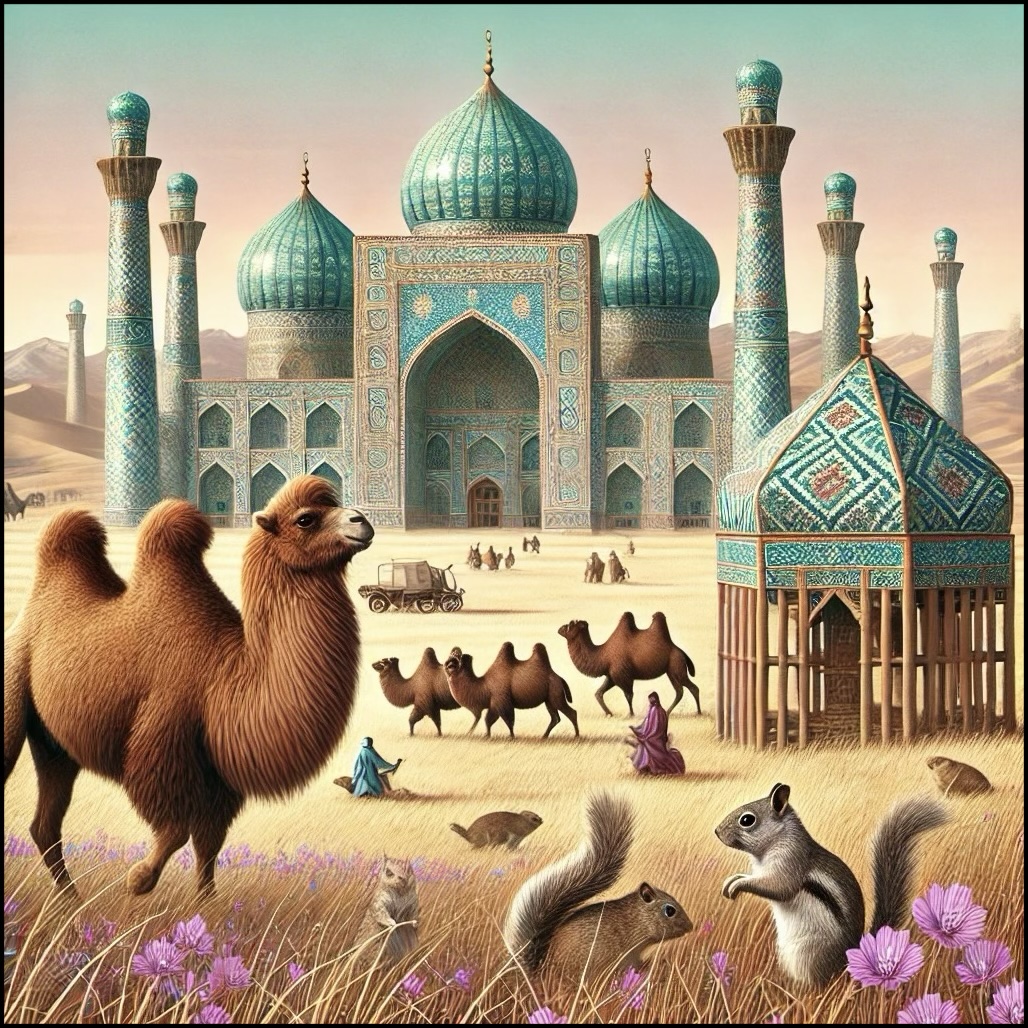
Central Asia (with civilization) ©2024-25 Electric Prism, Inc. All rights reserved.
People
Groups
- Polytheism (“paganism”)
- Zoroastrians
- Margiana
- Buddhism
- Khwarezm
- Buddhism, Mahayana
- Tokharistan (Kushan Bactria)
- Christians, Eastern (Diophysite, or “Nestorian”) (Church of the East)
- Oghuz Turks
- Karluks
- Islam
- Sufism
- Chinese Empire, Tang Dynasty
- Umayyad Caliphate (Harran)
- Oghuz Yabgu State
- Abbasid Caliphate (Baghdad)
- Samanid dynasty
- Abbasid Caliphate (Samarra)
- Kara-Khanid Khanate
- Abbasid Caliphate (Baghdad)
- Cumania (Cuman-Kipchak confederation)
- Kipchaks
- Chinese Empire, Pei (Northern) Song Dynasty
- Ghaznavids
- Cuman people, or Western Kipchaks, also called Polovtsy, Polovtsians)
- Seljuq Empire (Neyshabur)
- Seljuq Empire (Rayy)
- Seljuq Empire (Isfahan)
- Khwarezm dynasty
Topics
Commodoties
- Weapons
- Hides and feathers
- Gem materials
- Colorants
- Domestic animals
- Grains and produce
- Textiles
- Ceramics
- Strategic metals
- Lumber
- Money
- Manufactured goods
- Spices
Subjects
Regions
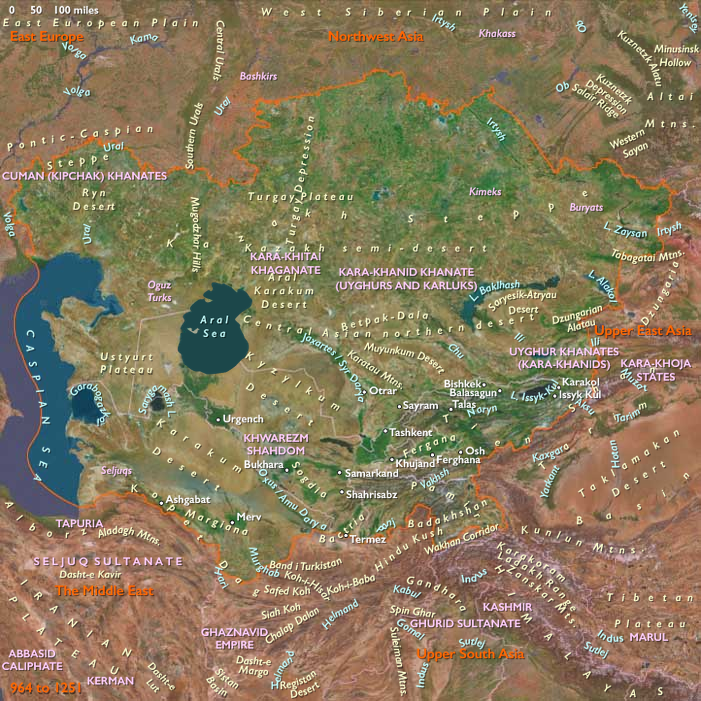
Subregions
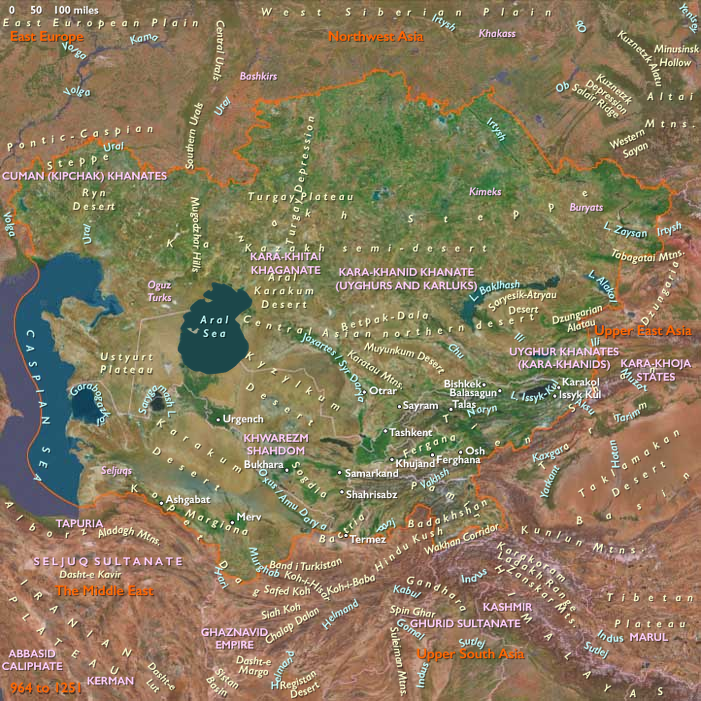
Years: 964 - 1107
Central Asia (with civilization) ©2024-25 Electric Prism, Inc. All rights reserved.
People
Groups
- Polytheism (“paganism”)
- Zoroastrians
- Margiana
- Buddhism
- Khwarezm
- Buddhism, Mahayana
- Tokharistan (Kushan Bactria)
- Christians, Eastern (Diophysite, or “Nestorian”) (Church of the East)
- Oghuz Turks
- Karluks
- Islam
- Sufism
- Chinese Empire, Tang Dynasty
- Umayyad Caliphate (Harran)
- Oghuz Yabgu State
- Abbasid Caliphate (Baghdad)
- Samanid dynasty
- Abbasid Caliphate (Samarra)
- Kara-Khanid Khanate
- Abbasid Caliphate (Baghdad)
- Cumania (Cuman-Kipchak confederation)
- Kipchaks
- Chinese Empire, Pei (Northern) Song Dynasty
- Ghaznavids
- Cuman people, or Western Kipchaks, also called Polovtsy, Polovtsians)
- Seljuq Empire (Neyshabur)
- Seljuq Empire (Rayy)
- Seljuq Empire (Isfahan)
- Khwarezm dynasty
Topics
Commodoties
- Weapons
- Hides and feathers
- Gem materials
- Colorants
- Domestic animals
- Grains and produce
- Textiles
- Ceramics
- Strategic metals
- Lumber
- Money
- Manufactured goods
- Spices
Subjects
Regions
Subregions