
Central Asia (621–478 BCE): Achaemenid Influence, Scythian …
Years: 621BCE - 478BCE
Central Asia (621–478 BCE): Achaemenid Influence, Scythian Integration, and Cultural Exchange
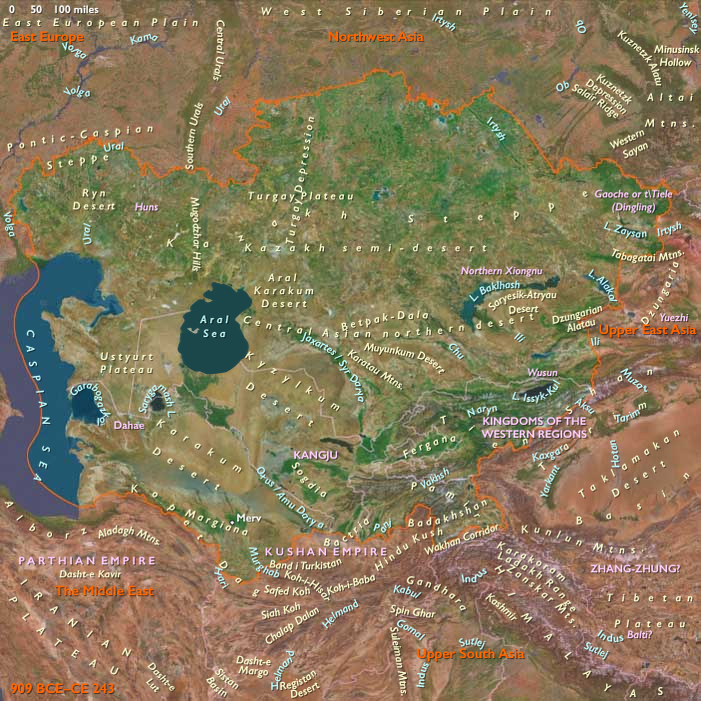
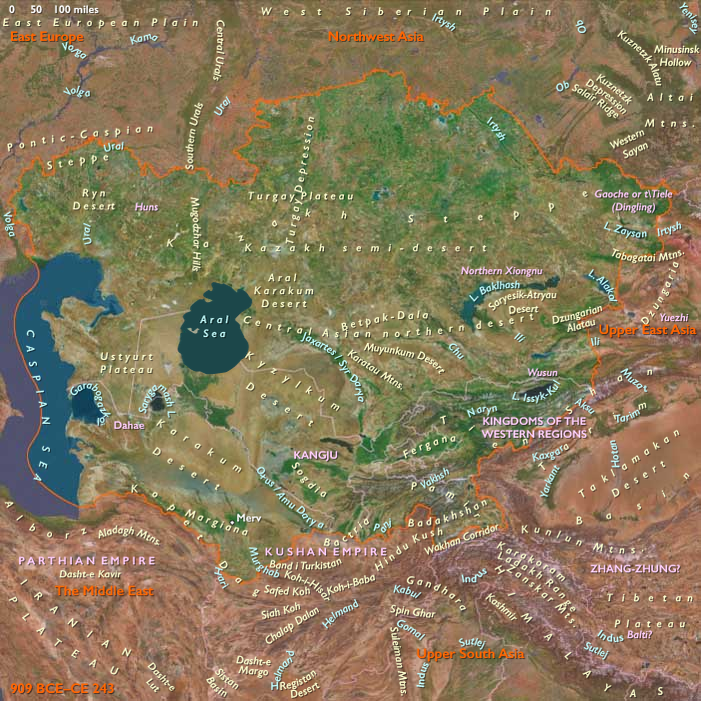
Between 621 and 478 BCE, Central Asia experienced deeper integration into broader Eurasian dynamics, prominently marked by the westward expansion of the Achaemenid Persian Empire and the continued dominance and cultural integration of Scythian pastoralist societies. This era witnessed heightened economic connectivity, cross-cultural interactions, and significant political realignment as Central Asia emerged as an essential nexus between the Persian heartland, eastern steppes, and the distant emerging Chinese states.
Expansion of Achaemenid Persian Authority
The rise of the Achaemenid Empire under Cyrus the Great (559–530 BCE) and his successors, notably Darius I (522–486 BCE), significantly impacted Central Asia:
-
Bactria, Sogdiana, and Margiana were incorporated as Persian satrapies, governed by local satraps accountable to Persian central authority. Major cities, including Balkh (Bactra), Marakanda (Samarkand), and Merv, became vital administrative and economic centers within the Persian imperial framework.
-
Persian administration facilitated unprecedented stability, enhancing trade, taxation efficiency, and local governance, establishing a robust bureaucratic infrastructure that integrated Central Asia into a wider economic and political network extending from the Mediterranean to India.
Interaction and Integration with Scythian Nomads
The Persian Empire skillfully managed relations with powerful Scythian nomadic tribes inhabiting the northern steppes (modern Kazakhstan and Kyrgyzstan):
-
Persian rulers generally maintained diplomatic relations with Scythian elites, often relying on them as allies, mercenaries, or trading partners, thus stabilizing frontier regions and securing critical trade routes.
-
Scythians themselves increasingly participated in trade networks fostered by Persian administration, providing horses, livestock products, and valuable commodities in exchange for Persian manufactured goods, textiles, metals, and agricultural products.
Enhanced Economic Networks and the Silk Road Precursors
Central Asia’s economic significance grew notably, with Persian integration fostering unprecedented levels of trade connectivity and regional prosperity:
-
Central Asian oasis cities became crucial nodes in burgeoning trade networks stretching from Persia to East Asia. Early forms of the Silk Road began to crystallize, connecting emerging Chinese states, Indian kingdoms, Persia, and even Greek cities of Anatolia and the Mediterranean.
-
Notably, Sogdiana (particularly Samarkand) became a critical intermediary, facilitating exchanges of silk, precious stones, spices, metals, and horses, reinforcing its historical position as a vibrant commercial crossroads.
Cultural and Religious Developments
The era was marked by dynamic cultural exchanges and significant religious developments, shaped profoundly by Persian administrative and cultural influence:
-
Zoroastrianism expanded into the region through Persian administrators and settlers, especially in urban centers such as Balkh and Merv. Zoroastrian practices coexisted and interacted with local Iranian beliefs, setting the stage for later widespread acceptance of Zoroastrian traditions throughout Central Asia.
-
Scythian nomads maintained their shamanistic traditions, yet also adopted elements of Persian culture, particularly visible in decorative arts, weaponry, and burial customs, signifying significant cultural exchange and hybridization.
Technological and Artistic Advancements
Central Asia experienced substantial technological innovations and artistic flourishing, stimulated by Persian patronage and cultural exchanges:
-
Advancements in irrigation, infrastructure, and urban planning occurred under Persian oversight, enhancing agricultural productivity and urban prosperity in oasis cities.
-
Artisans produced intricate metalwork, elaborate pottery, textiles, and jewelry blending Scythian animal motifs with Persian artistic sensibilities, reflecting Central Asia’s unique position as a melting pot of diverse influences.
Societal Changes and Urbanization
Urban centers in Central Asia continued to thrive and grow under Persian administration, fostering increased social complexity and economic specialization:
-
Cities such as Balkh, Samarkand, and Merv expanded significantly, with more complex administrative structures, improved urban planning, fortified walls, palaces, and temples.
-
The urban elite, including Persian administrators and local rulers, wielded substantial influence, shaping local governance and facilitating significant urban-rural integration and economic specialization.
Long-Term Significance and Legacy
The era from 621 to 478 BCE profoundly shaped Central Asia’s subsequent historical trajectory:
-
Persian integration solidified Central Asia’s enduring role as a central hub of Eurasian trade and cultural exchange, providing vital infrastructure and political frameworks that endured beyond the Achaemenid period.
-
The strengthened regional trade networks and early Silk Road connections became foundational to Central Asia’s long-standing role in global commerce, facilitating future imperial and cultural interactions.
-
The cultural syncretism between Persian, Scythian, and local traditions significantly enriched Central Asian society, fostering lasting artistic and religious traditions that defined the region’s unique identity.
By 478 BCE, Central Asia was firmly established as a vibrant, interconnected region, intricately woven into broader Persian imperial networks, thriving culturally and economically, and poised to play a critical role in Eurasian history for centuries to come.
People
Groups
- Tajik people
- Iranian peoples
- Persian people
- Scythians, or Sakas
- Zoroastrians
- Achaemenid Empire
- Sogdia
- Margiana
Topics
Commodoties
- Weapons
- Hides and feathers
- Domestic animals
- Grains and produce
- Textiles
- Ceramics
- Strategic metals
- Manufactured goods
- Spices
Subjects
Regions
Subregions
Related Events
Showing 10 events out of 66140 total
Years: 621BCE - 478BCE
People
Groups
- Tajik people
- Iranian peoples
- Persian people
- Scythians, or Sakas
- Zoroastrians
- Achaemenid Empire
- Sogdia
- Margiana
Topics
Commodoties
- Weapons
- Hides and feathers
- Domestic animals
- Grains and produce
- Textiles
- Ceramics
- Strategic metals
- Manufactured goods
- Spices
Subjects
Regions
Subregions