
Southern Australasia (28557 – 7822 BCE): Southern …
Years: 28577BCE - 7822BCE
Southern Australasia (28557 – 7822 BCE): Southern Lands of Long Continuity
Geographic and Environmental Context
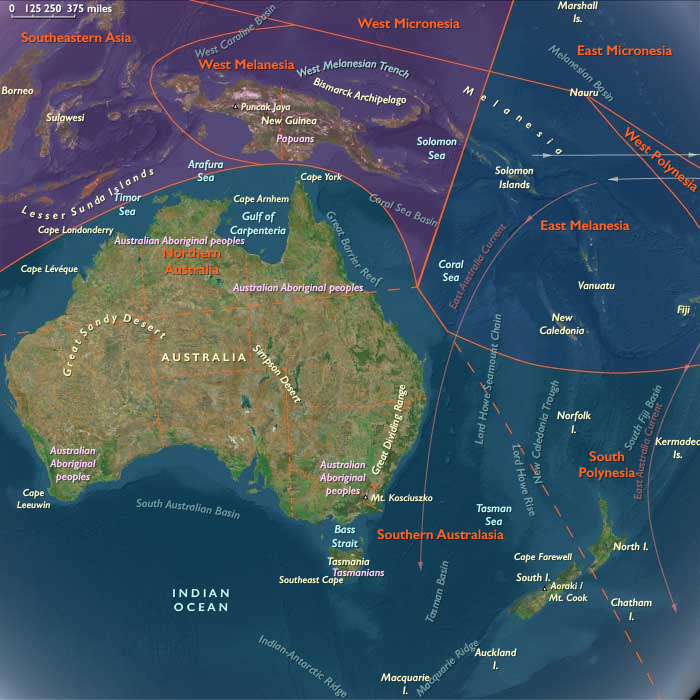
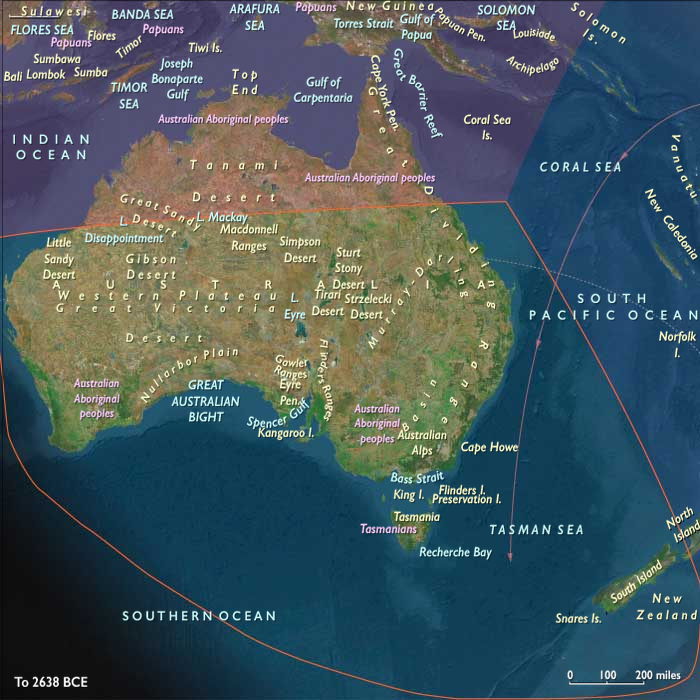
Southern Australasia—including southern Australia (New South Wales, Victoria, South Australia, southern Western Australia, Tasmania) and the temperate regions of New Zealand’s North and South Islands—was defined by varied landscapes: eucalyptus forests, open grasslands, alpine highlands, and extensive river systems such as the Murray–Darling Basin.
-
Tasmania was joined to mainland Australia by a dry Bassian Plain during much of this period due to lower sea levels.
-
New Zealand remained uninhabited by humans, but its forests, wetlands, and alpine zones supported rich endemic fauna.
Climate and Environmental Shifts
-
Last Glacial Maximum (c. 26,500 – 19,000 BCE): Cooler and drier; Tasmania and southern mainland Australia experienced expanded grasslands and reduced forest cover. Glacial and periglacial conditions occurred in alpine regions of Tasmania and New Zealand. Lower sea levels exposed broad coastal plains, altering resource distribution.
-
Bølling–Allerød (c. 14,700 – 12,900 BCE): Warmer, wetter conditions favored forest regeneration, increased river flows, and more stable seasonal resources. Coastal productivity rose as sea levels began to climb.
-
Younger Dryas (c. 12,900 – 11,700 BCE): A return to cooler, drier conditions contracted forests again and reduced water availability in some inland basins.
-
Early Holocene (after c. 11,700 BCE): Warmer and more stable climates brought renewed forest expansion in Australia’s south, rising seas flooded the Bassian Plain, isolating Tasmania, and reshaped coastlines.
Subsistence and Settlement
-
Aboriginal Australians in southern Australia and Tasmania practiced highly mobile seasonal foraging, exploiting coastal fisheries, estuarine shellfish beds, kangaroos, wallabies, emus, and a wide array of plant foods—roots, tubers, seeds, and fruits.
-
Coastal and riverine camps were favored in warmer months; uplands and inland plains were used for hunting in cooler periods.
-
In Tasmania, marine resources such as seals and shellfish were crucial in winter when plant foods were scarce.
-
New Zealand, still without humans, supported moa, giant eagles, waterfowl, and dense forests unaffected by human hunting or fire.
Technology and Material Culture
-
Stone toolkits featured ground-edge axes, scrapers, and microliths hafted into composite implements.
-
Wooden spears, clubs, and digging sticks were crafted and maintained with stone tools; bark and plant fibers were used for nets and baskets.
-
Coastal groups used canoes or rafts for nearshore travel and fishing.
-
Ochre was widely used for body decoration, ceremonial purposes, and possibly hide preparation.
Movement and Interaction Corridors
-
Seasonal mobility linked inland hunting grounds with coastal and riverine resource zones.
-
In the LGM, expanded coastal plains provided rich but temporary habitats that were later submerged in the Holocene.
-
Rivers such as the Murray–Darling provided both resource corridors and travel routes across otherwise dry inland areas.
Cultural and Symbolic Expressions
-
Rock art in southern Australia and Tasmania depicted animals, human figures, and symbolic designs, often tied to Dreaming narratives and ecological knowledge.
-
Ceremonial gatherings coincided with seasonal abundance—such as fish migrations or plant harvests—reinforcing social ties and shared territorial understandings.
Environmental Adaptation and Resilience
-
Fire-stick farming maintained open hunting grounds, promoted edible plant species, and reduced wildfire risks.
-
Knowledge of seasonal cycles, animal migrations, and plant fruiting patterns was central to survival.
-
Mobility and diversified diets ensured resilience during climate swings, especially in drier Younger Dryas years.
Transition Toward the Holocene
By 7822 BCE, rising seas had isolated Tasmania, New Zealand remained untouched by humans, and southern Australia’s foragers had fully adapted to postglacial landscapes. The enduring ecological knowledge systems in southern Australia would maintain cultural continuity for millennia.
Groups
Topics
Commodoties
Subjects
Regions
Subregions
Related Events
Showing 10 events out of 76 total
Years: 28577BCE - 7822BCE
Groups
Topics
Commodoties
Subjects
Regions
Subregions