
Cædwalla of Wessex grants land at Farnham …
Years: 688 - 688
Cædwalla of Wessex grants land at Farnham for a minster in a charter of 688, so it is evident that Cædwalla controls Surrey.
He had also invaded Kent in 686 and may have founded a monastery at Hoo, northeast of Rochester, between the Medway and the Thames.
He had installed his brother, Mul, as king of Kent, in place of its king Eadric.
Mul had been "burned" along with twelve others in a subsequent Kentish revolt the following year, according to the Anglo-Saxon Chronicle.
Cædwalla had responded with a renewed campaign against Kent, laying waste to its land and leaving it in a state of chaos.
He may have ruled Kent directly after this second invasion.
Cædwalla had been unbaptized when he came to the throne of Wessex, and has remained so throughout his reign, but though he is often referred to as a pagan this is not necessarily the most apt description; it may be that he was already Christian in his beliefs but delayed his baptism to a time of his choice.
He is clearly respectful of the church, with charter evidence showing multiple grants to churches and for religious buildings.
Wilfrid had been at the court of King Æthelwealh when Cædwalla first attacked the South Saxons, and on Æthelwealh's death Wilfrid had attached himself to Cædwalla; the Life of Wilfrid records that Cædwalla sought Wilfrid out as a spiritual father.
Bede states that Cædwalla vowed to give a quarter of the Isle of Wight to the church if he conquered the island, and that Wilfrid was the beneficiary when the vow was fulfilled; Bede also says that Cædwalla agreed to let the heirs of Arwald, the king of the Isle of Wight, be baptized before they were executed.
Two of Cædwalla's charters are grants of land to Wilfrid, and there is also subsequent evidence that Cædwalla worked with Wilfrid and Eorcenwald, a bishop of the East Saxons, to establish an ecclesiastical infrastructure for Sussex.
However, there is no evidence that Wilfrid exerted any influence over Cædwalla's secular activities or his campaigns.
Wilfrid's association with Cædwalla may have benefited him in other ways: the Life of Wilfrid asserts that the Archbishop of Canterbury, Theodore, expressed a wish that Wilfrid succeed him in that role, and if this is true it may be a reflection of Wilfrid's association with Cædwalla's southern overlordship.
Cædwalla abdicates in 688 and goes on a pilgrimage to Rome, possibly because he is dying of the wounds he had suffered while fighting on the Isle of Wight.
Cædwalla has never been baptized, and Bede states that he wished to "obtain the particular privilege of receiving the cleansing of baptism at the shrine of the blessed Apostles".
The throne of Wessex passes in 688 to Ine, …
Locations
People
Groups
- Saxons
- Jutes
- Anglo-Saxons
- Christianity, Chalcedonian
- Kent, Kingdom of
- Sussex, Kingdom of
- Wessex, English Kingdom of
- Essex, Kingdom of
- Britain, Medieval
Topics
Commodoties
Subjects
Regions
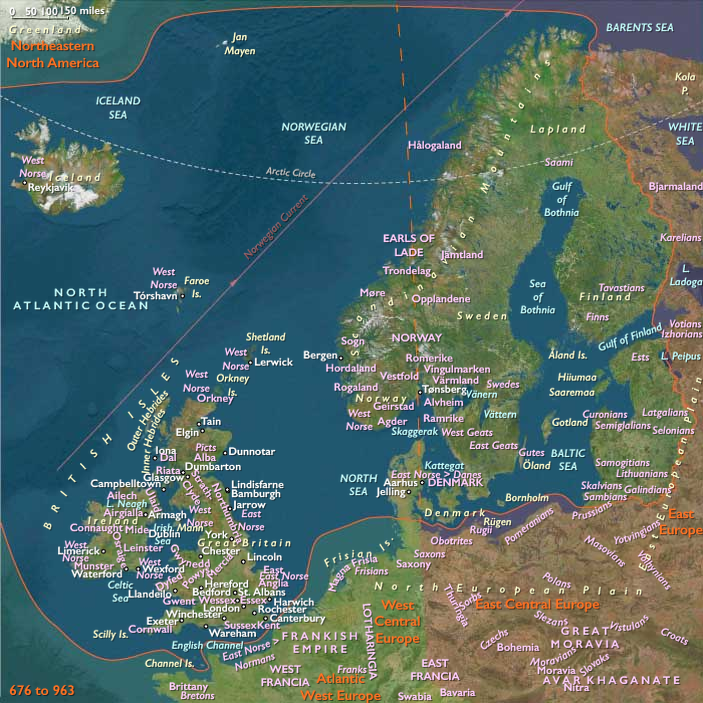
Subregions
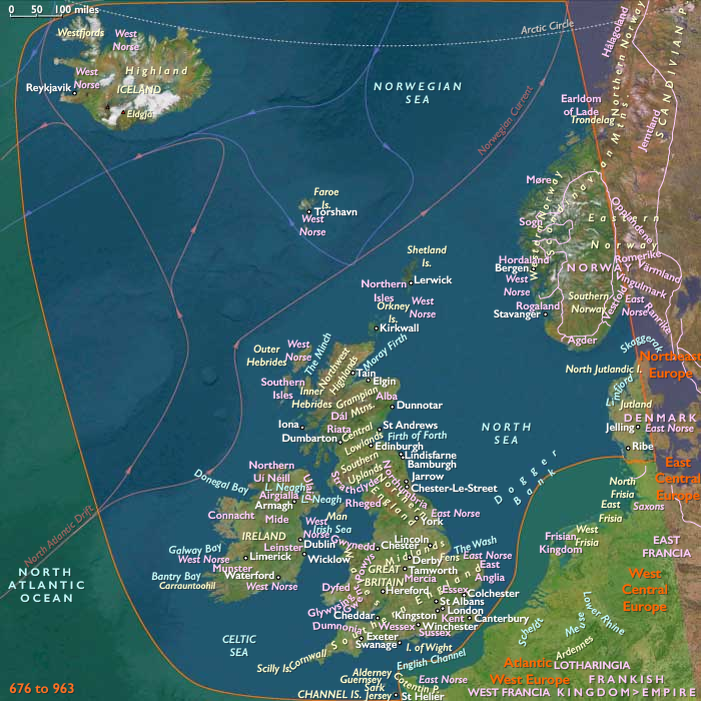
Related Events
Showing 10 events out of 55975 total
Years: 688 - 688
Locations
People
Groups
- Saxons
- Jutes
- Anglo-Saxons
- Christianity, Chalcedonian
- Kent, Kingdom of
- Sussex, Kingdom of
- Wessex, English Kingdom of
- Essex, Kingdom of
- Britain, Medieval
Topics
Commodoties
Subjects
Regions
Subregions