
Caterina Sforza, the wily countess of Forli …
Years: 1494 - 1494
Caterina Sforza, the wily countess of Forli and Imola, has continued to defend her domains from the papacy following the death of her first husband.
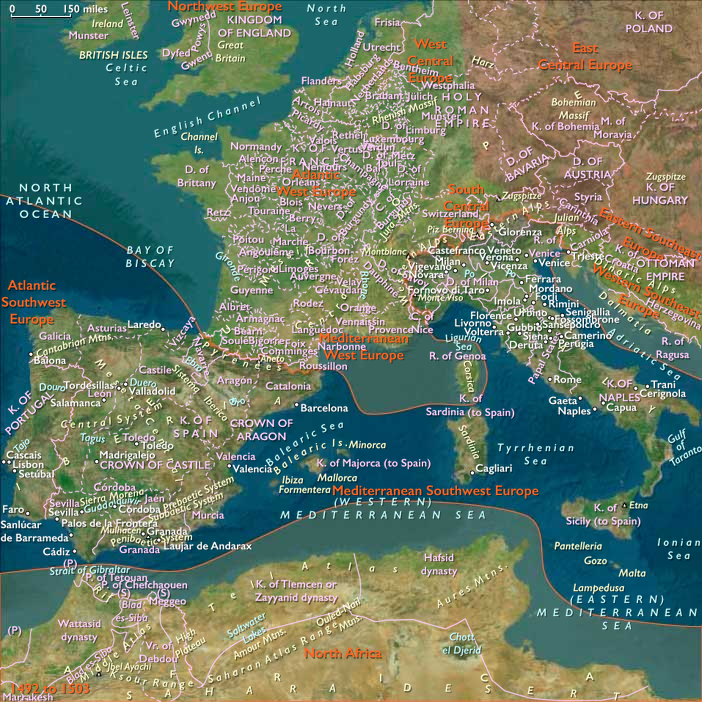
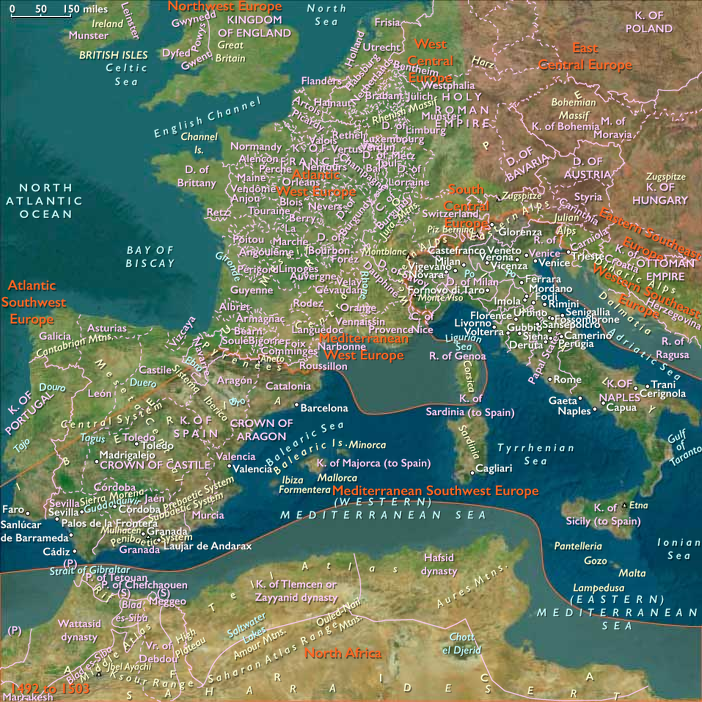
The states of Forlì and Imola are smaller than the great Italian states but, due to their geographical position, have a considerable strategic importance on the political affairs.
In these years there are significant events that change the geopolitical situation of Italy.
Lorenzo il Magnifico, whose shrewd policy had curbed claims and rivalries of the various Italian states, had died on April 8, 1492.
On 25 July of that year, Pope Innocent VIII also died, and was replaced by Cardinal Rodrigo Borgia, who had taken the name of Pope Alexander VI.
His election would seem to have to strengthened Caterina's rule, as while she and her husband had lived in Rome, the Cardinal had often been a guest at their home, and was godfather to her son Ottaviano.
These events directly threaten the stability and peace in Italy.
With the death of Lorenzo there had come about friction between the Duchy of Milan and the Kingdom of Naples, leading up to the crisis of September 1494, when, incited by Ludovico il Moro, King Charles VIII of France enters into Italy to claim Naples as the Anjou heir.
At first Pope Alexander VI also gives his support to Charles' claim, leading to four years of war.
During the conflict between Naples and Milan, Caterina, who knows that she is placed in a strategic position of passage for anyone who wants to go to the south, tries to remain neutral.
She knows Forlì is exposed to invasion, located in a strategic position on the way to Rome.
On one side, her uncle Ludovico had allied with Charles VIII; on the other side, Pope Alexander VI now oppose France's ambitions in Italy, and her brother-in-law, Cardinal Riario, argues in favor of the incumbent King Ferdinand II.
Caterina chooses to join Naples and the Pope, and prepares the defense of Imola and Forlì against the French.
Betrayed by her Neapolitan allies, who at the first French attack do not help her, Caterina changes sides and submits to Charles VIII, giving his army via libera ("free passage") to Naples; however, he prefers to avoid the Romagna and cross the Apennines, following the road of the Cisa pass.
Locations
People
- Caterina Sforza
- Charles VIII of France
- Ludovico Sforza
- Ottaviano Riario
- Pope Alexander VI
- Raffaele Riario
Groups
- Papal States (Republic of St. Peter)
- Christians, Roman Catholic
- Venice, (Most Serene) Republic of
- France, (Valois) Kingdom of
- Naples, Aragonese Kingdom of
- Milan, Duchy of
Topics
Commodoties
Subjects
Regions
Subregions
Years: 1494 - 1494
Locations
People
- Caterina Sforza
- Charles VIII of France
- Ludovico Sforza
- Ottaviano Riario
- Pope Alexander VI
- Raffaele Riario
Groups
- Papal States (Republic of St. Peter)
- Christians, Roman Catholic
- Venice, (Most Serene) Republic of
- France, (Valois) Kingdom of
- Naples, Aragonese Kingdom of
- Milan, Duchy of
Topics
Commodoties
Subjects
Regions
Subregions