
Filters:
The Death of Carloman II and the …
Years: 884 - 884
The Death of Carloman II and the Last Reunion of the Frankish Kingdom (884–885)
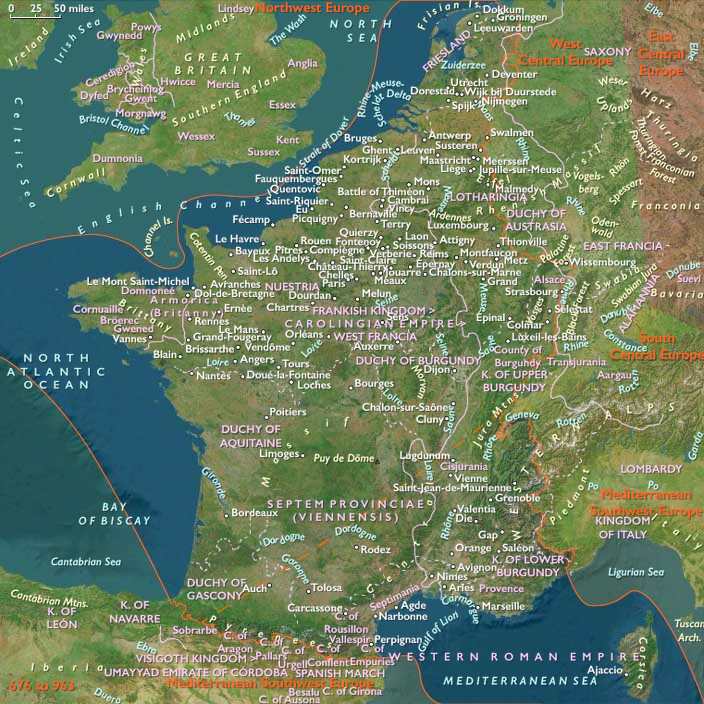
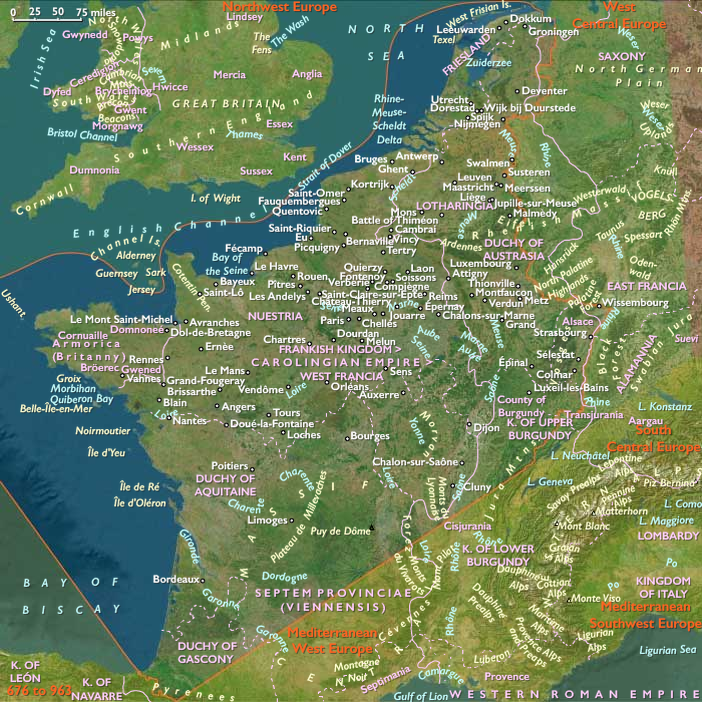
On December 12, 884, Carloman II, King of West Francia, dies while hunting, leaving his kingdom without a direct heir. His sudden death forces the Frankish nobility to seek a new ruler, leading them to invite his cousin, Emperor Charles the Fat, to assume the kingship of West Francia.
Charles the Fat Becomes King of West Francia (885)
- Charles the Fat, already ruler of East Francia and Italy, gladly accepts the offer, reuniting the entire Carolingian Empire for the last time.
- This moment marks the final restoration of Charlemagne’s empire, though Charles lacks the strength or political acumen to hold it together for long.
- The Anglo-Saxon Chronicle claims that Charles inherited all of Carloman’s kingdom except Brittany, but contemporary sources do not support this fully—Brittany had already been semi-independent for decades under its own rulers.
Coronation and Governance of West Francia
- Charles is likely crowned King of West Francia by Geilo, Bishop of Langres, on May 20, 885, at Grand in the Vosges (southern Lorraine).
- Geilo even develops a special West Frankish royal seal for Charles, symbolizing his new role in the western kingdom.
- However, Charles' rule in West Francia is distant and impersonal:
- He largely delegates authority to the higher nobility rather than ruling directly.
- Unlike earlier Carolingian rulers, he does not actively engage with West Frankish affairs, leaving the kingdom weak and vulnerable to Viking and feudal threats.
Challenges Facing Charles the Fat
- Viking Raids → Even as Charles takes the throne, the Vikings are preparing for one of their most devastating sieges—Paris in 885–886.
- Fragmentation of Authority → The feudal nobility continues to gain power, as Charles fails to assert strong centralized control.
- Lack of Personal Leadership → Unlike his predecessors, Charles governs impersonally, allowing regional lords to act independently, further weakening royal influence.
Significance of Charles the Fat’s Accession
- Marks the last time the Frankish kingdom is fully reunited under one Carolingian ruler.
- Demonstrates the weakening of the Carolingian monarchy, as Charles is chosen by the nobility but does not govern effectively.
- Sets the stage for the eventual disintegration of the Carolingian Empire, as regional lords and external threats erode central authority.
Though Charles the Fat’s reign briefly restores Charlemagne’s empire, his inability to govern effectively or decisively ensures that West Francia and East Francia will soon separate permanently, leading to the emergence of France and Germany as distinct medieval realms.
Locations
People
Groups
- Franks
- Italy, Carolingian Kingdom of
- Aquitaine, (Carolingian) Kingdom of
- Bavaria, Carolingian Duchy of
- Frankish, or Carolingian (Roman) Empire
- Saxony, Duchy of
- Brittany, Kingdom of
- Francia Occidentalis (West Francia, or France), Kingdom of
- Francia Orientalis (East Francia), Kingdom of
- Flanders, County of
Subjects
Regions
Subregions
Years: 884 - 884
Locations
People
Groups
- Franks
- Italy, Carolingian Kingdom of
- Aquitaine, (Carolingian) Kingdom of
- Bavaria, Carolingian Duchy of
- Frankish, or Carolingian (Roman) Empire
- Saxony, Duchy of
- Brittany, Kingdom of
- Francia Occidentalis (West Francia, or France), Kingdom of
- Francia Orientalis (East Francia), Kingdom of
- Flanders, County of
Subjects
Regions
Subregions